Heavy Duty Truck Repair Is Moving to a New Location
Heavy Duty Truck Repair is currently going through an exciting period of reorganization and relocation to a new facility. As we prepare for this…
 Tomas Labinskis
Aug 24, 2026
Heavy Duty Truck Repair is Temporarily Closed While We Get Settled Into Our New Space. Read more

Homer Glen, IL
Tomas Labinskis
Jun 4, 2026
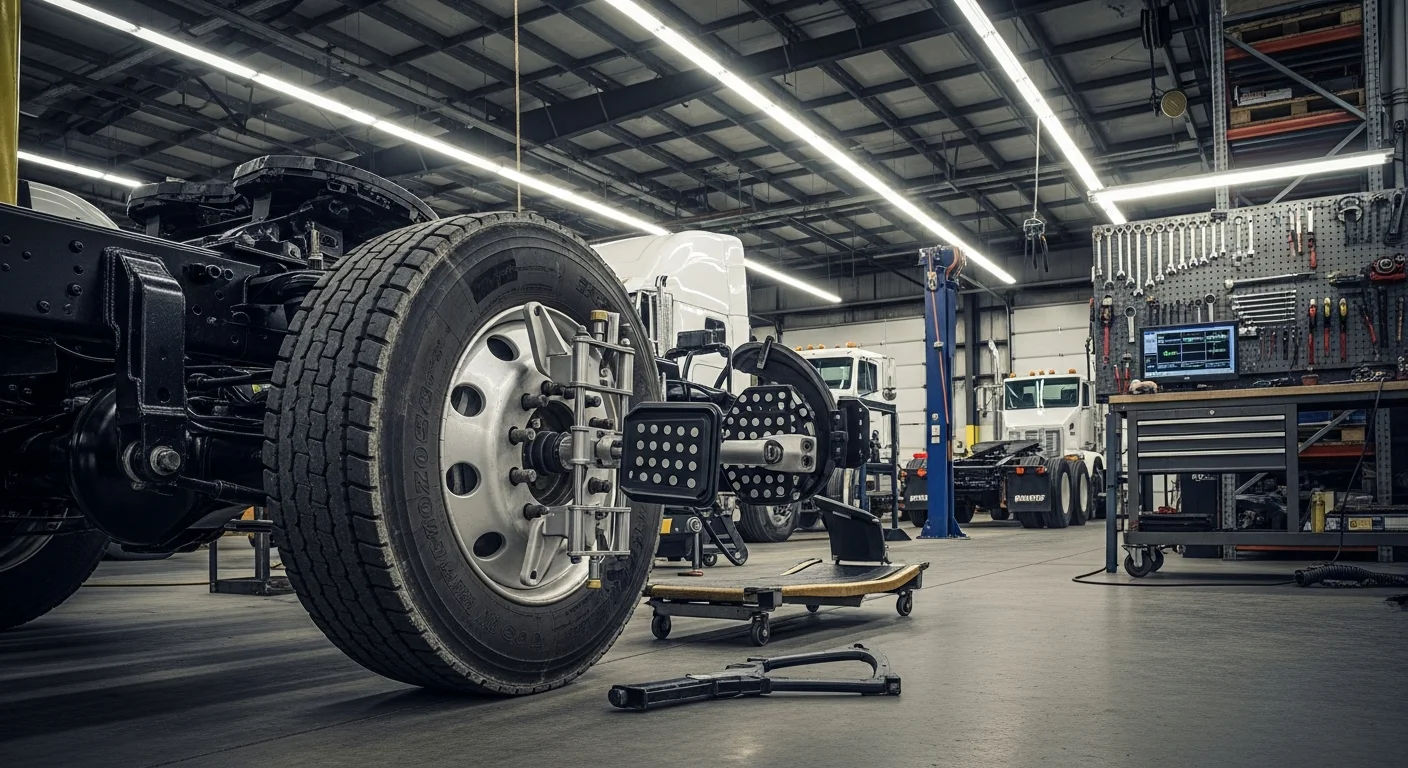
Improper tire alignment on a heavy-duty truck causes uneven wear, steering problems, and a higher chance of losing a tire before its service life is up. On a semi-truck or trailer, that is not just a tire issue. It turns into driver fatigue, poor handling, higher fuel and tire cost, roadside downtime, and a bigger chance of getting flagged during an inspection.
If a truck starts pulling, the steering wheel sits off-center, or one shoulder of the tire wears faster than the other, the alignment problem is already costing money. Ignore it long enough and you can end up with a ruined steer tire, a vibration complaint that keeps coming back, or a truck that fails inspection over wear that should have been caught earlier.
Bad alignment shows up in the tires before it shows up anywhere else.
Alignment problems do not always feel dramatic right away. A lot of drivers first notice a pull, a crooked steering wheel, or front tires wearing faster than they should. On trailers, you may not feel much in the cab, but the tires tell the story.
Truck tire makers and chassis service guidance have long pointed out that misalignment can cause pulling, an off-center steering wheel, and uneven wear, all of which affect handling and increase driver fatigue. That matters on long runs because a driver who is constantly correcting the wheel is fighting the truck all day, not just dealing with a comfort issue. See tire alignment.
The most common wear patterns tied to alignment include:
Not every uneven wear pattern is caused by alignment alone. Inflation, suspension wear, loose steering parts, bad shocks, bent components, and wheel end issues can all change how the tire contacts the road. That is why a real alignment check should not be separated from a suspension and steering inspection.
Uneven wear is not just expensive. It can turn into an out-of-service problem if the tread gets too low or the casing is damaged.
Under 49 CFR 393.75, a commercial motor vehicle can be placed out of service if a tire has less than 2/32 inch of tread depth on a steering axle or less than 4/32 inch on any other axle. If alignment is scrubbing one shoulder off a steer tire, you can reach that point faster than expected even when the rest of the tread still looks usable.
Severe wear is even more serious when it cuts deep enough to expose the casing. The North American Standard Out-of-Service Criteria treat exposed ply or cord as an out-of-service condition. That means a tire that was just “wearing funny” last week can become a roadside failure this week.
This is where fleets and owner-operators get hurt twice. First, they lose the tire early. Then they deal with a service call, missed load, late delivery, or tow bill that could have been avoided by fixing the root cause before the tire was destroyed.
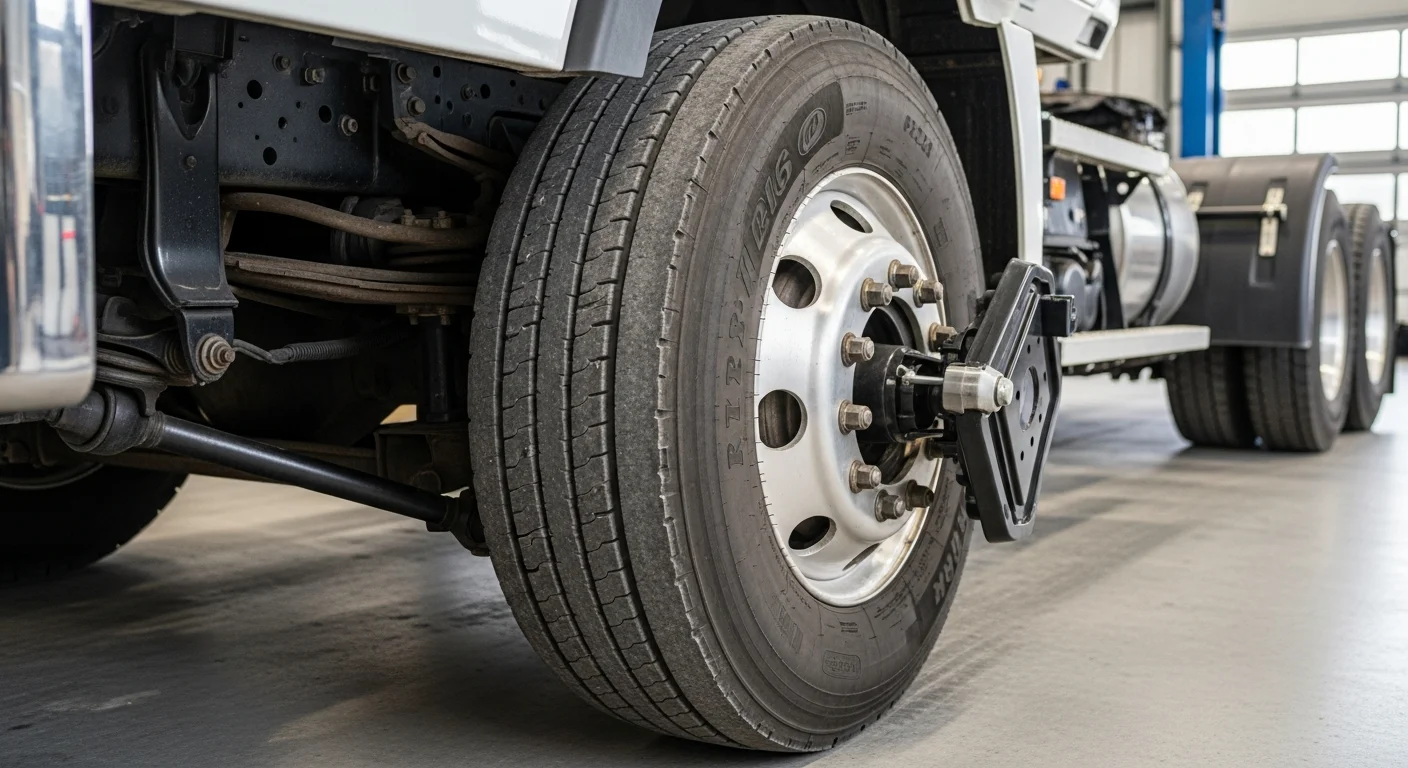
If a truck has uneven tire wear, do not assume the tire brand is the problem. Most of the time, the tread pattern is telling you something about the chassis.
Start with what the driver is reporting. If the truck pulls left or right, wanders, or needs constant correction, that points you toward steer axle alignment, suspension wear, or steering play. If the steering wheel is crooked going straight, that is another strong clue.
Then look at the tires closely. A good walk-around can tell you a lot:
Drivers are already required to catch obvious tire trouble before they leave. The pre-trip rule in 49 CFR 396.13 requires the driver to be satisfied the vehicle is in safe operating condition, and that includes checking tires and wheels for damage or unsafe conditions. That matters because alignment wear usually does not appear overnight. It starts as a pattern that can be seen before it turns into a failure.
For fleet managers, one bad wear pattern should also trigger a check on the truck’s recent history. Ask whether the unit hit a curb, dropped into a pothole hard, was overloaded, had front-end parts replaced, or was in a minor collision. Any of those can change alignment or hide bent parts.
A truck with uneven wear needs more than a quick toe set. If worn or bent parts stay in the system, the alignment numbers may be adjusted today and the tires will still wear wrong tomorrow.
A proper process usually includes an inspection of the full front end or trailer running gear first. That means checking tie rod ends, drag link ends, kingpins, wheel bearings, bushings, torque rods, spring hardware, axle position, ride height where applicable, and signs of impact damage. On trailers, axle alignment, suspension equalization, and worn hanger or bushing points matter just as much as the tires themselves.
After that, the shop can measure alignment angles and compare them to spec. If parts are loose, bent, or shifted, those issues should be repaired before setting alignment. Otherwise, you are paying for numbers on a screen, not a real fix.
This is also why repeat tire failures happen. A truck gets one new steer tire, maybe a quick alignment, but nobody catches the steering play, weak shock, or suspension wear behind it. A few thousand miles later the new tire starts feathering or wearing one shoulder again. Now the truck owner has bought tires twice and still has the same complaint.
Tires stay high on the inspection list because they are easy to spot and easy to write up. If the tread is worn wrong, the sidewall is damaged, or the casing is exposed, the truck is the one sitting on the shoulder while the load waits.
CVSA’s 2024 International Roadcheck put special focus on tires, which is a reminder that tire and wheel conditions remain a major roadside issue. For truck owners, that means uneven wear is not something to push to the next PM if the truck is already showing a clear pattern.
The practical decision is simple. If the truck has a mild wear pattern with no handling complaint, you still want it scheduled before the tires get expensive. If the truck is pulling, wandering, has visible shoulder wear, or shows exposed cord, it needs attention now. Waiting usually turns an alignment and suspension repair into tires, downtime, and inspection trouble on top of it.
If your semi-truck, trailer, or fleet unit is wearing tires unevenly, pulling, or showing steering-wheel-off-center complaints, get it checked before it turns into a roadside breakdown or an out-of-service violation. HDTR in Homer Glen, IL handles heavy-duty diagnostics, suspension and steering repair, tire-wear related inspections, and alignment-related mechanical issues under one roof. Walk-ins are welcome during business hours, and if the truck cannot make it in safely, HDTR can help with business-hours road service within 50 miles or arrange tow-in if needed.
Yes. On a heavy-duty truck, a toe or axle alignment problem can scrub a tire every mile the truck moves. Once the wear pattern starts, the tire usually keeps wearing wrong until the alignment issue or worn chassis parts are fixed.
Shoulder wear, feathering, and a steer tire wearing more on one side are common alignment clues. On trailers, multiple tires on the same axle wearing oddly can point to axle tracking or suspension alignment issues.
Fix the cause first, or at least inspect it first. If you put new tires on a truck with bad alignment, loose steering parts, or worn suspension, the new tires can start wearing unevenly right away.
Yes. If alignment wear takes tread below the legal minimum or exposes ply or cord, the truck can be placed out of service. That is why uneven wear is more than a maintenance issue; it can become a roadside safety and compliance problem.

Heavy Duty Truck Repair is currently going through an exciting period of reorganization and relocation to a new facility. As we prepare for this…
Tomas Labinskis
Aug 24, 2026
Your truck can need body repair even when the obvious crash damage looks minor, because hidden structural movement often shows up in the way…
Tomas Labinskis
Jul 17, 2026
A warning light on a heavy-duty truck is not just a reminder on the dash. It is the truck telling you a system has…
Tomas Labinskis
Jul 14, 2026