Heavy Duty Truck Repair Is Moving to a New Location
Heavy Duty Truck Repair is currently going through an exciting period of reorganization and relocation to a new facility. As we prepare for this…
 Tomas Labinskis
Aug 24, 2026
Heavy Duty Truck Repair is Temporarily Closed While We Get Settled Into Our New Space. Read more

Homer Glen, IL
Tomas Labinskis
Jun 9, 2026
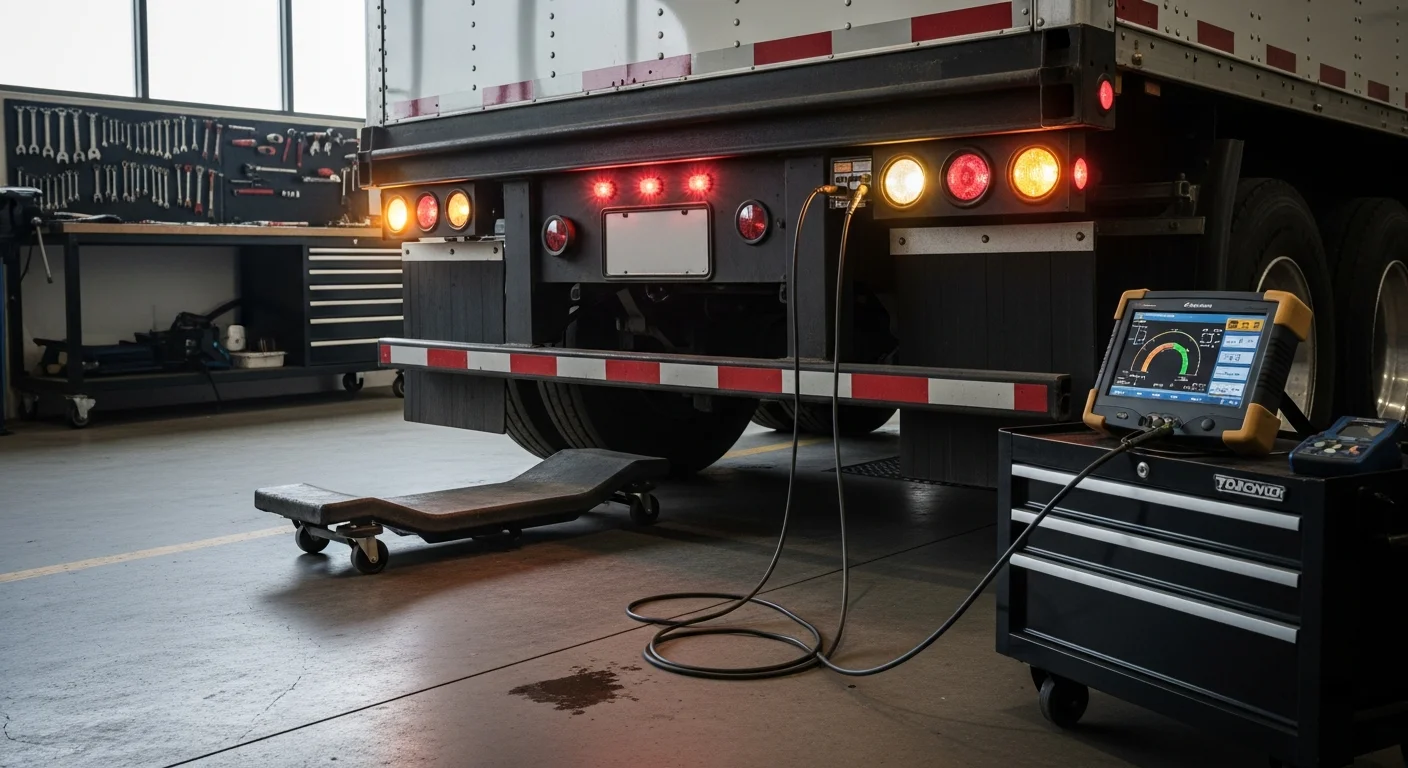
Most trailer light problems start small: one dim marker, an intermittent turn signal, or brake lights that work only when the plug is wiggled. That is exactly why they get missed until a driver is sitting on the shoulder, getting written up in an inspection lane, or losing time on a load because the trailer is not legal to move.
For a fleet manager or owner-operator, trailer light trouble is not just an electrical nuisance. It creates DOT risk, dispatch delays, frustrated drivers, repeat roadside calls, and wasted labor because the same issue keeps coming back. A light problem that looks random usually is not random at all. It usually traces back to a bad ground, connector corrosion, broken wiring, or a power feed issue that was never isolated correctly.
Trailer lighting faults are usually predictable if you check the right failure points before the lights quit completely.
Most repeat trailer light failures happen because the first repair fixed the symptom, not the cause. A bulb gets changed, a fuse gets replaced, or the harness gets taped up, but nobody checks voltage drop, ground quality, or connector corrosion.
That is why the light works in the yard and fails again in rain, after a hard turn, or halfway through a route.
Trailer lighting has a simple job, but it lives in a rough environment. You have constant vibration, water intrusion, road spray, salt, impact damage, and trailer plugs getting yanked, bent, or dragged. Even a solid truck-side electrical system can still have trailer light trouble if the trailer harness or ground path is weak.
There is also the compliance side. Under 49 CFR 393.9, required lamps and reflective devices have to be in proper working order. If stop lamps, turn signals, tail lamps, or clearance lamps are not working, that can turn into inspection trouble fast.
The most common failure points are not complicated. They are the places that see the most moisture, movement, and corrosion.
If you want to prevent road calls, start with these areas:
Poor grounds cause more trouble than most drivers realize. One loose or corroded ground can make multiple lights go dim, flash incorrectly, backfeed into another circuit, or fail only when brakes or turn signals are applied. That is why a trailer can show strange combinations like one side blinking fast, both tail lamps glowing weakly, or marker lights changing brightness when another circuit is turned on.
In Illinois and across the Midwest, winter makes this worse. Road salt corrosion speeds up damage on plugs, sockets, frame grounds, and exposed splices. By spring, trailers that looked fine in January start showing intermittent light failures because the metal contact surfaces are already eaten up.
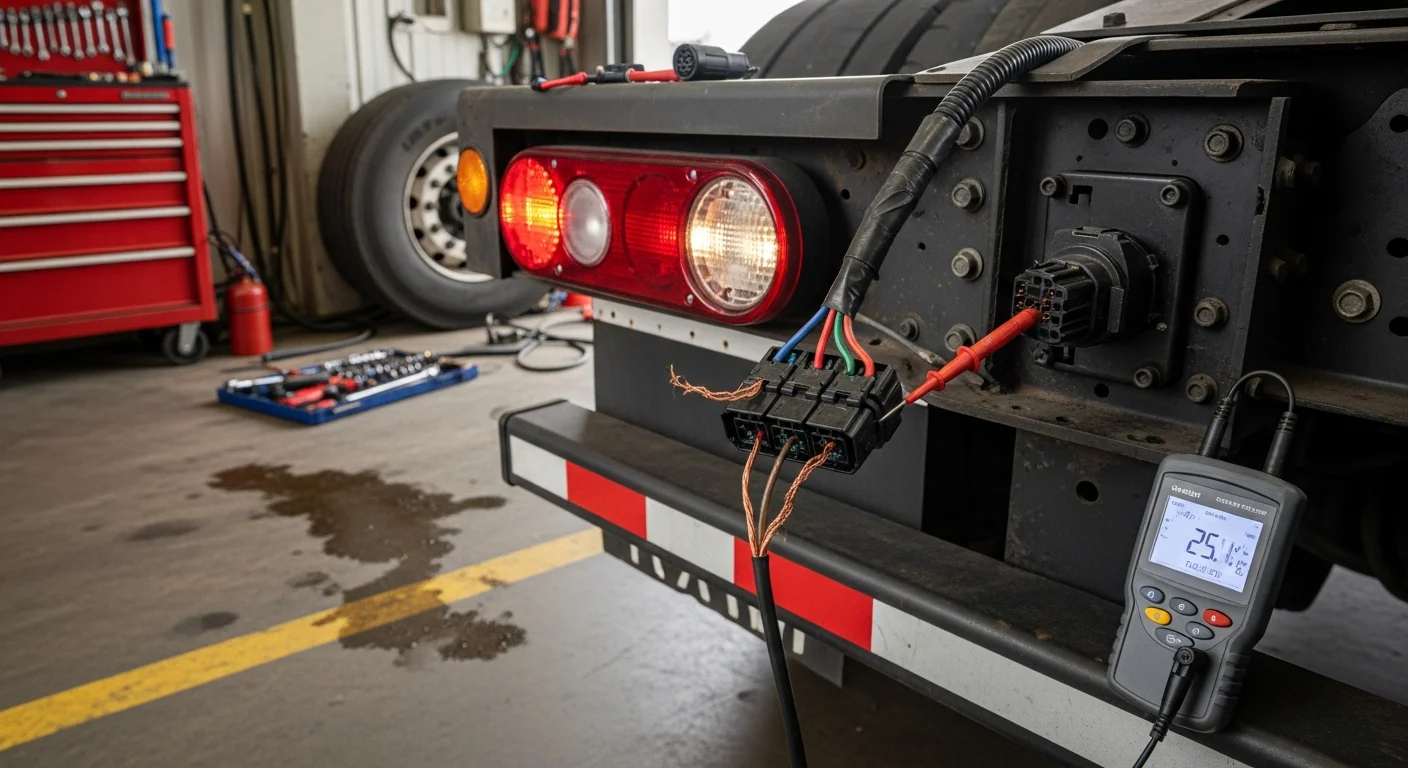
You do not need a full wiring teardown to catch most trailer light issues early. You need a consistent inspection routine and a basic understanding of what the symptoms mean.
During pre-trip or yard checks, do more than confirm that a light turns on once. Watch for lights that are weak, delayed, or affected by movement. Those are warning signs.
A simple preventive check should include:
If the problem changes when the trailer is moved, turned, or connected to a different tractor, that tells you a lot. A fault that follows the trailer points to trailer wiring, lamps, or grounds. A fault that stays with the tractor points more toward the truck-side receptacle, fuse, wiring, or chassis ground issue.
For fleets, one of the smartest habits is matching driver write-ups to trailer numbers. If the same trailer keeps getting “left turn intermittent” or “markers out sometimes,” stop treating those as separate events. That trailer already told you it has a wiring or grounding problem.
The right way to diagnose trailer lights is to divide the circuit. Check power feed, then ground, then the affected section of harness. Guessing at bulbs and pigtails gets expensive when the real problem is upstream.
Start at the truck-side socket with a test light or meter. Verify the tractor is sending power on the correct pins. Then load the circuit and watch for voltage drop. Good voltage with no load does not always mean the circuit is healthy. A weak connection can still fail once the lights are actually drawing current.
After that, check the trailer plug and nose box. If power is getting through but the rear lamps are weak or dead, move farther back section by section. On a lot of trailers, the fault is in a splice, a rubbed section over an axle area, or a corroded branch to one lamp assembly.
Ground testing matters just as much as power testing. If you have power at the lamp but the light still acts wrong, run a temporary known-good ground to the lamp or ground point. If the light comes back strong, you found the issue.
Look for these symptom patterns:
This is also where many roadside repairs fall short. A tech may get the lights back on long enough to move the truck, but if corrosion inside the connector or harness is still there, the breakdown comes right back. That is why repeat electrical failures are so common.
If a trailer has had more than one lighting write-up, it is usually cheaper to inspect and repair the whole affected circuit than to keep chasing single failures. Electrical downtime adds up fast, especially when a driver is waiting on dispatch, a load is time-sensitive, or the trailer gets red-tagged during an inspection.
Preventive repair usually means cleaning or replacing corroded connectors, repairing damaged harness sections properly, rebuilding bad grounds, sealing lamp connections, and checking the truck-side receptacle at the same time. That costs less than repeated missed deliveries, after-hours calls, and replacement parts thrown at the wrong problem.
It also helps with inspections. The CVSA Level I inspection process includes checking required lighting items, so dim, inoperative, or intermittent trailer lights are not something to brush off until later.
If your trailer lights are flickering, working only part of the time, or failing on multiple circuits, do not wait for the next roadside stop to figure it out. Heavy Duty Truck Repair handles truck electrical repair for wiring, grounds, connectors, and trailer light faults that keep coming back. For shop diagnostics in Homer Glen, IL, or road service during business hours within 50 miles when the issue can be handled on-site, contact Heavy Duty Truck Repair before a small lighting problem turns into downtime or a DOT violation.
That usually points to an intermittent connection, not a bad bulb by itself. Common causes are loose 7-way pins, broken wire strands inside the insulation, corroded grounds, or a harness rubbing through and losing contact over bumps.
Yes. A weak or corroded ground can affect several circuits at once and create strange symptoms like dim lamps, fast flashing turn signals, or brake lights that make marker lights glow. Ground issues are one of the first things to check on any trailer lighting problem.
If it is the first isolated failure, a local repair may be enough. If the same trailer has repeated light write-ups or multiple lamps acting up, the smarter move is a full circuit inspection so the root problem gets fixed instead of coming back on the road.
Hook the trailer to another known-good tractor or test the tractor-side socket directly. If the fault follows the trailer, the problem is in the trailer wiring, lamp, or ground path. If the issue stays with the tractor, check the truck receptacle, fuses, wiring, and chassis grounds.

Heavy Duty Truck Repair is currently going through an exciting period of reorganization and relocation to a new facility. As we prepare for this…
Tomas Labinskis
Aug 24, 2026
Your truck can need body repair even when the obvious crash damage looks minor, because hidden structural movement often shows up in the way…
Tomas Labinskis
Jul 17, 2026
A warning light on a heavy-duty truck is not just a reminder on the dash. It is the truck telling you a system has…
Tomas Labinskis
Jul 14, 2026