Heavy Duty Truck Repair Is Moving to a New Location
Heavy Duty Truck Repair is currently going through an exciting period of reorganization and relocation to a new facility. As we prepare for this…
 Tomas Labinskis
Aug 24, 2026
Heavy Duty Truck Repair is Temporarily Closed While We Get Settled Into Our New Space. Read more

Homer Glen, IL
Tomas Labinskis
Jun 7, 2026
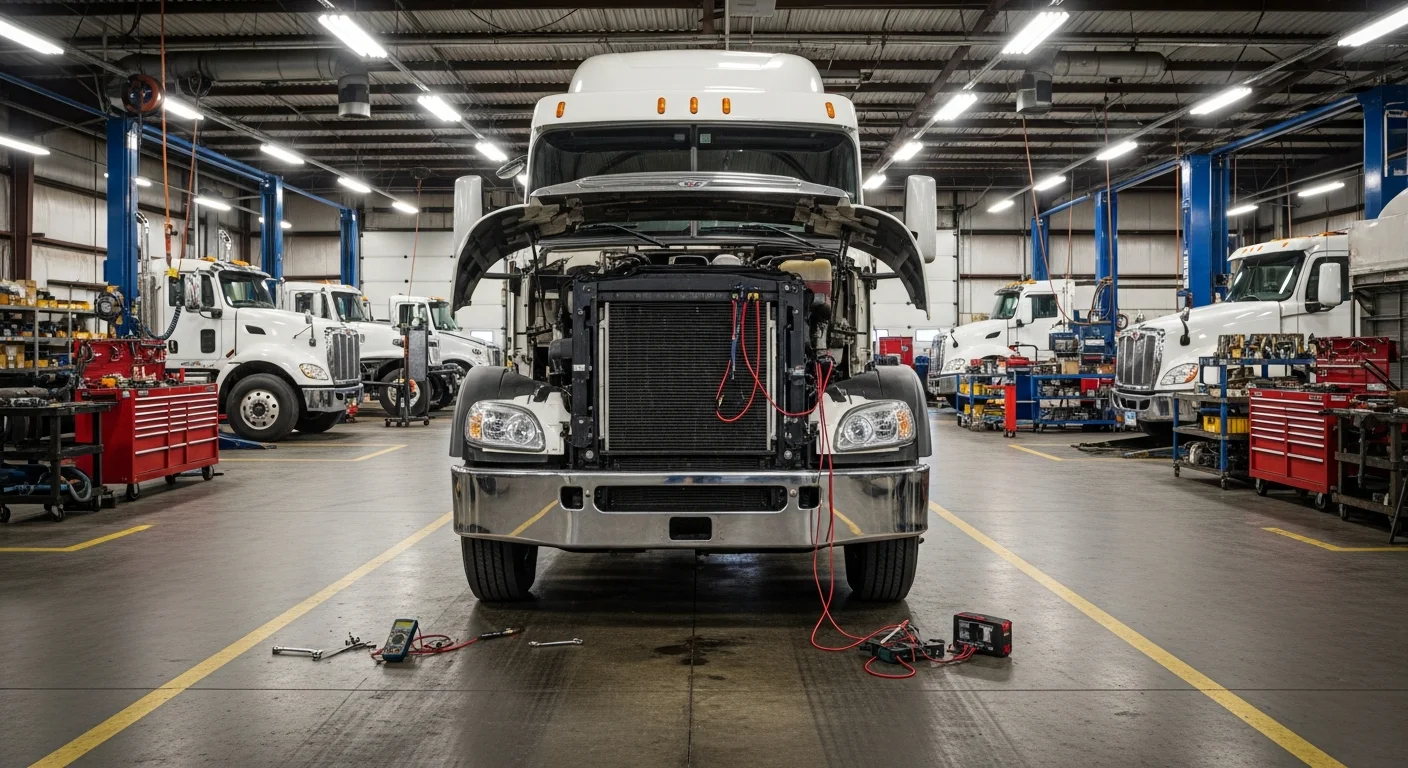
A heavy-duty truck no-start problem usually comes down to one of two things: the engine will not crank at all, or it cranks but will not fire. That difference matters because it tells you where to start looking first instead of throwing parts at the truck. A no-crank problem usually points to batteries, cables, grounds, the starter circuit, or a safety interlock. A crank-no-start problem points more toward fuel delivery, electronic faults, or engine inputs the ECM needs before it will let the truck start.
For a driver or fleet, a no-start is not just an inconvenience. It can turn into missed loads, a truck stuck at a shipper, a road call, a tow bill, and wasted time replacing the wrong part. If the truck has been acting up before this happened, the repair usually goes faster when you tie the no-start back to recent warning lights, battery problems, fuel work, or other service history.
A no-start diagnosis starts with one question: does the engine crank, or does it stay dead when you turn the key?
This is the fastest way to narrow the problem. If the engine does not turn over, stay on the electrical side first. If it spins normally but does not fire, move toward fuel, sensor, or control issues.
That sounds simple, but a lot of expensive mistakes happen right here. Owners replace starters when the batteries are weak. Drivers call for fuel work when the truck actually has no ECM power. Fleets lose time because the first person checking it did not pin down what the truck was or was not doing.
A strong rule of thumb is this: a no-crank condition usually points to the starting circuit, while a normal crank with no firing points more toward fuel delivery, heat, or electronic control problems. That basic split saves time and keeps diagnostics focused.
Also look at the truck’s recent service history. Under 49 CFR Part 396, commercial vehicles are supposed to be under systematic inspection, repair, and maintenance. If batteries were replaced last month, fuel filters were changed yesterday, or a starter cable was repaired recently, that matters. A lot of no-starts show up after service because something was left loose, not fully charged, or not properly primed.
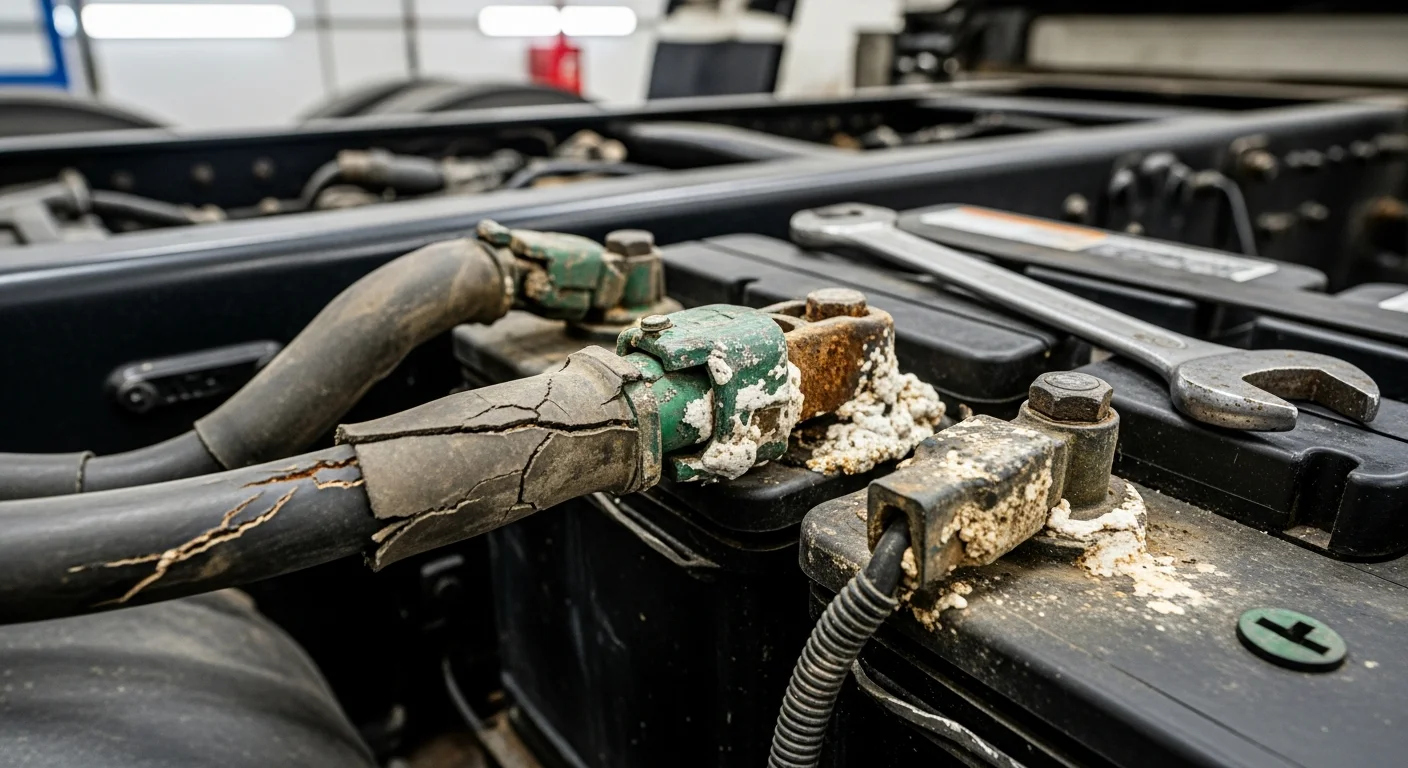
If the truck does nothing or just clicks, start with battery power and cable condition. Most no-crank calls still come back to low voltage, a bad connection, or a ground issue.
Drivers are already supposed to be watching starting-system-related items in the pre-trip, including batteries and wiring, under driver inspection rules. That is why the first checks should be basic but direct, not complicated.
Here is the order that makes the most sense:
Battery voltage matters more than many people think. A fully charged battery should be around 12.6 volts with the engine off, and readings below about 12.2 volts are a warning sign. On a diesel truck, you can have dash lights and still not have enough amperage to pull in the starter or keep module voltage stable during crank.
This is where voltage drop testing helps. A cable can look fine from the outside and still be bad inside the insulation or loose at one end. If voltage drops too much across the positive side or ground side during crank, the starter may never get what it needs. We see this a lot on trucks with older battery boxes, frame corrosion, and repaired cable ends.
If the engine turns over normally but will not start, stop focusing on the starter. The truck is telling you the crank side is at least working enough to spin the engine. Now you need to find out what the engine is missing.
On diesel engines, fuel supply is one of the first things to verify. Low fuel rail pressure can keep the engine from starting even when it cranks strongly, so diagnosis should include supply pressure, fuel filter condition, and whether the system was properly primed after service or after the truck ran out of fuel, as noted in this diesel no-start overview.
Common crank-no-start checks include:
A truck can crank all day and never start if the ECM does not see the right inputs. A failed crank sensor, cam sensor fault, bad key or anti-theft issue, or low ECM voltage can all shut down starting. That is why scan tool data matters. You want to see active fault codes, rail pressure during crank, battery voltage while cranking, and whether the ECM is seeing RPM.
If the truck had recent aftertreatment or electrical work, do not ignore that history either. A disconnected sensor, blown fuse, or pinched harness can create a no-start that looks like a fuel problem at first.
A lot of no-start calls get treated as battery or starter problems because those are the quickest things to access. Sometimes that gets the truck going. Sometimes it just delays the real repair.
The most common bad outcome is replacing the obvious part without proving the cause. A new starter will not fix a poor engine ground. Fresh batteries will not fix a charging problem or a parasitic draw that killed the old set. Priming the fuel system may get the truck started once, but if there is a cracked suction line or leaking check valve, it will be hard-starting again tomorrow.
This is where good diagnostics save money. If the truck is in a yard or on the shoulder, basic checks can tell you whether roadside repair even makes sense. If it needs battery replacement, cable repair, jump-start verification, or a simple fuel prime, that may be handled on-site. If it needs live data, voltage drop testing through the starter circuit, fuel pressure checks, harness repair, or deeper ECM diagnostics, the truck usually belongs in the shop.
From a business side, that decision matters. Waiting too long on a roadside guess can turn one service call into a second call plus a tow, while rushing to tow every no-start can waste money on something simple.
If the truck has repeated no-starts, intermittent cranking, or starts only after being jumped, do not treat it like a one-time fluke. Intermittent failures are usually warning signs. They often point to cable resistance, a weak battery set, failing starter draw, ignition switch problems, or a ground issue that is getting worse.
You should also move past guesswork if any of these are happening:
At that point, the next step is not another random part. It is a real diagnostic process: battery and load testing, voltage drop checks, starter circuit checks, code scan, live data review, fuel supply verification, and inspection of recent repair areas. That is how you avoid repeat breakdowns and trucks that keep stranding drivers at the worst time.
If your truck is dealing with a no-crank or crank-no-start problem, HDTR in Homer Glen, IL can help diagnose what is actually failing instead of guessing at batteries, starters, or fuel parts. HDTR handles heavy-duty truck electrical diagnostics and mechanical repair under one roof, and road service is available during business hours within 50 miles when the truck cannot make it in. If the issue needs deeper shop testing or the truck will not start roadside, they can help with the next step and arrange tow-in if needed.
First, figure out whether the engine cranks or does nothing at all. If it does not crank, start with battery voltage, cable condition, grounds, and the starter circuit. If it cranks but will not fire, move to fuel delivery, fault codes, and ECM inputs.
Yes. A truck can still power the dash and accessories but not have enough battery strength to crank the engine or keep module voltage stable during starting. That is why battery voltage and voltage drop testing matter more than just seeing lights on the dash.
A normal crank with no start usually points away from the starter and toward fuel delivery or electronic control problems. Common causes include low fuel rail pressure, air in the fuel system, bad crank or cam signals, or an ECM power issue.
Sometimes, yes, if the problem is a dead battery, loose cable, simple connection issue, or a fuel system that just needs proper priming. If the truck needs live data, repeated electrical testing, or fuel pressure diagnosis, shop repair is usually the better call.

Heavy Duty Truck Repair is currently going through an exciting period of reorganization and relocation to a new facility. As we prepare for this…
Tomas Labinskis
Aug 24, 2026
Your truck can need body repair even when the obvious crash damage looks minor, because hidden structural movement often shows up in the way…
Tomas Labinskis
Jul 17, 2026
A warning light on a heavy-duty truck is not just a reminder on the dash. It is the truck telling you a system has…
Tomas Labinskis
Jul 14, 2026