Heavy Duty Truck Repair Is Moving to a New Location
Heavy Duty Truck Repair is currently going through an exciting period of reorganization and relocation to a new facility. As we prepare for this…
 Tomas Labinskis
Aug 24, 2026
Heavy Duty Truck Repair is Temporarily Closed While We Get Settled Into Our New Space. Read more

Homer Glen, IL
Tomas Labinskis
May 13, 2026
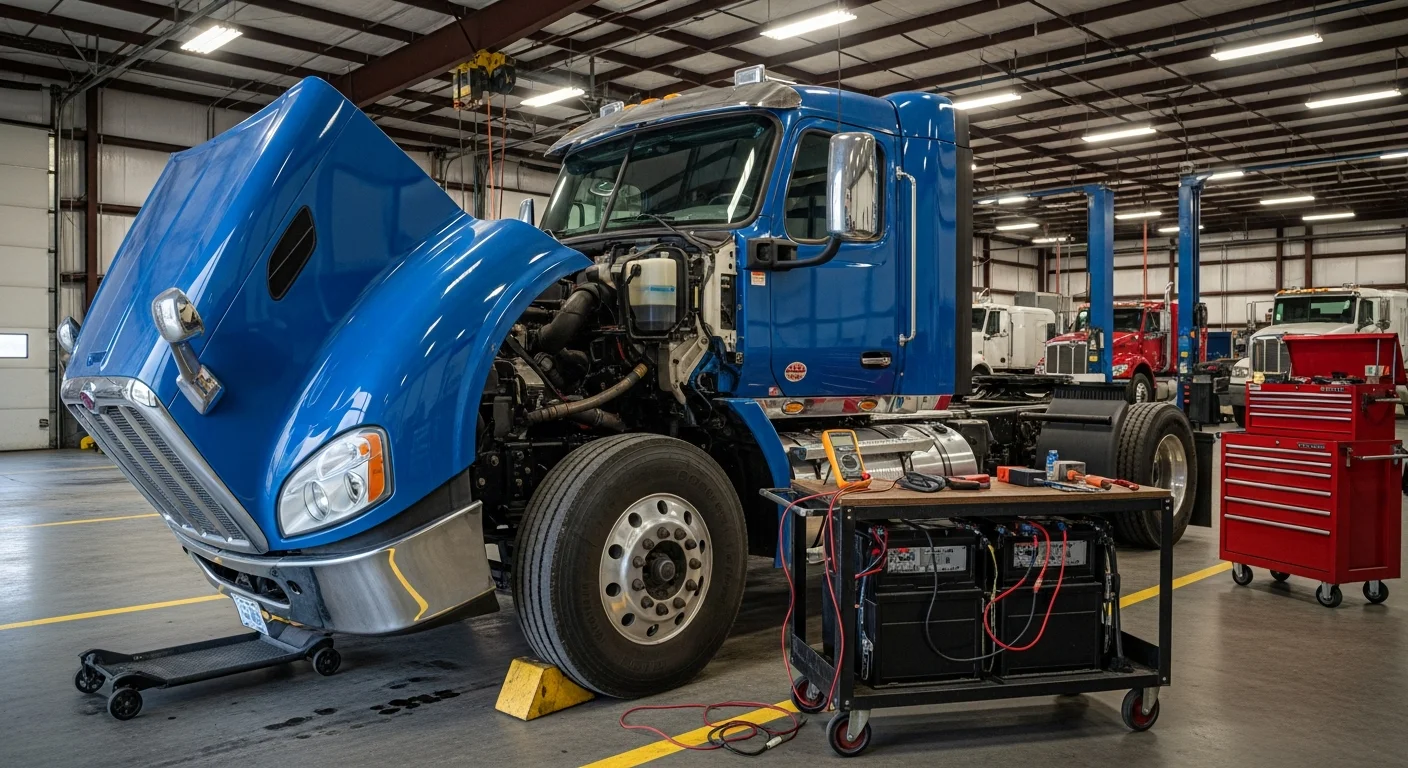
Regular charging system inspections matter because a truck can seem fine one day and leave a driver with a no-start, warning lights, or electrical problems the next. The charging system is not just the alternator. It is the batteries, cables, grounds, connections, belt drive, and the truck’s ability to keep voltage stable under load.
For an owner-operator or fleet, this is a downtime issue first. A weak charging system can turn into a roadside start problem, fault codes, poor lighting, ABS or trailer light complaints, and repeat battery replacements that never fix the real cause. It can also create inspection trouble if lights, warning systems, or other electrical equipment do not work the way they should.
A charging problem usually shows up before the truck goes completely dead.
One of the most useful checks is basic battery voltage. A battery at rest should usually read about 12.4 to 12.7 volts. If it is dropping under normal range, the truck may still crank for now, but you are already headed toward a no-start, slow crank, or charging complaint.
Scheduled inspections are what catch those problems early. That matters a lot more on heavy-duty trucks than people think, because these trucks ask much more from the electrical system than a pickup or passenger car. Sleeper loads, liftgates, inverters, telematics, extra lighting, PTO-related electrical use, and long idle periods all put stress on batteries and charging components.
A charging system inspection is checking whether the truck can produce, carry, and hold voltage under real working conditions. It is not just a quick glance at the batteries.
A good inspection starts with the batteries, but it should also include cable condition, terminal tightness, grounds, alternator output, belt condition and tension, and signs of voltage drop. On a heavy-duty truck, a corroded ground or loose connection can act just like a bad alternator.
This is why drivers get fooled. The truck may start in the morning, then show a battery light later, dim cab lights at idle, weak blower motor speed, trailer light issues, or random sensor faults. That does not always mean the alternator failed internally. Sometimes the truck is losing charging performance through resistance in cables or a bad ground path.
If the inspection stops at “battery is dead, replace battery,” the real problem may stay in the truck. Then the new batteries get damaged by undercharging or overworking, and the same breakdown comes back a few weeks later.
Waiting until the truck will not start is the expensive way to deal with charging issues. By that point, what could have been a simple inspection may turn into a road call, tow bill, missed load, driver delay, and damaged batteries.
Charging problems often build slowly. The alternator may still be working, but not well enough to keep up with demand. The batteries may still crank the engine, but only because they are carrying more of the load than they should. Over time, that stress shortens battery life and can cause low-voltage faults across different systems.
That is where regular testing helps. Monthly battery voltage checks can catch drops early and point to a charging issue before it turns into dim lights or a dead truck, according to monthly battery voltage testing guidance used in fleet maintenance advice. Even if the truck is still running, low voltage is a warning sign worth taking seriously.
The business impact is straightforward:
For fleets, these failures also create scheduling problems. One truck down can force trailer shuffles, late dispatches, and driver pay issues. For an owner-operator, it can mean losing the day over a problem that was building for weeks.
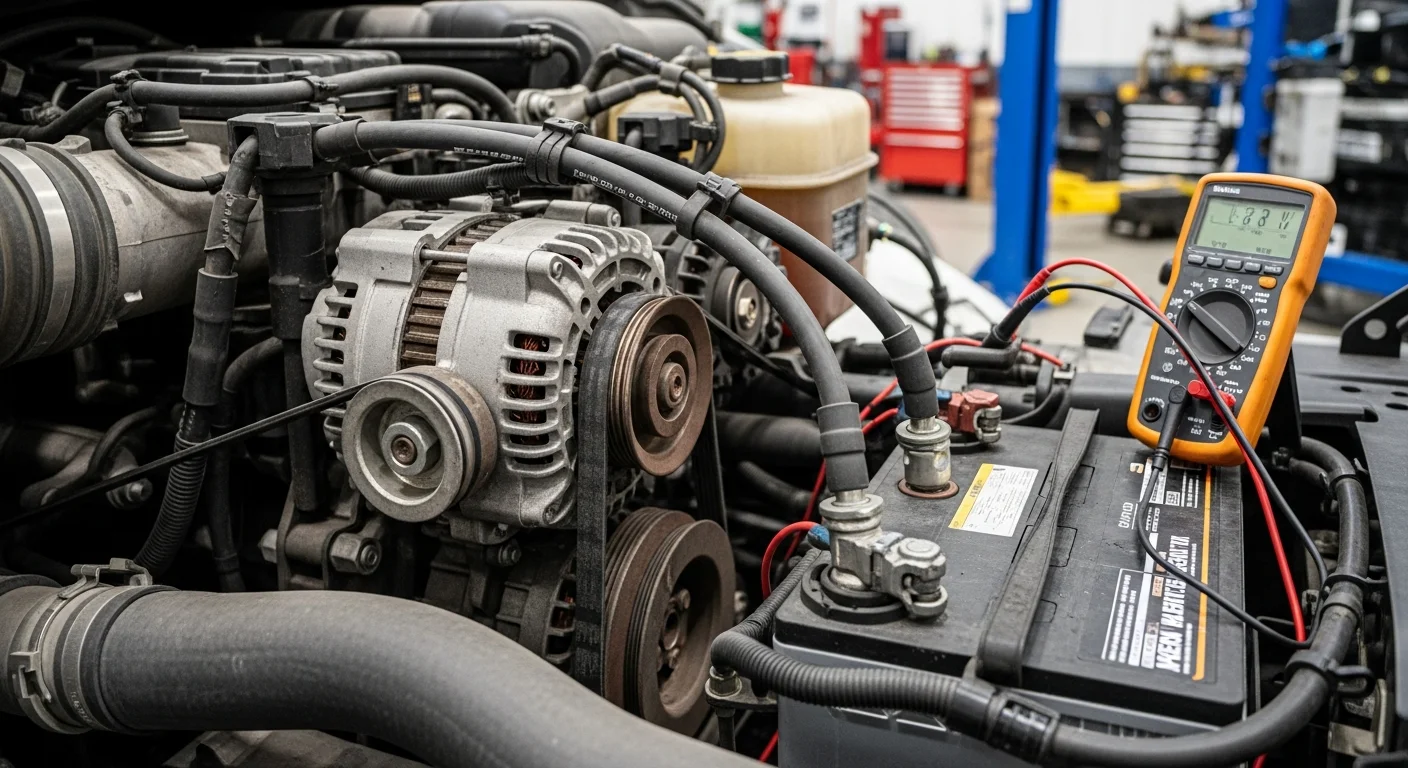
The right time to inspect the charging system is during preventive maintenance, before the driver notices a problem. It should be part of regular service, especially on trucks with recurring battery complaints or a lot of electrical demand.
A useful inspection normally includes these checks:
The key is testing under load, not just checking voltage with the engine off. A truck can show decent voltage sitting still and still fail once the electrical demand goes up.
That is why load testing matters. Doing it at least twice a year helps expose weak batteries before they strand the truck. A battery that barely passes a simple static check may fall apart fast once real operating demand is applied.
Shops should also pay attention to pattern failures. If one truck keeps eating batteries, there is usually another issue in the system. It could be a weak alternator, a parasitic draw, poor ground connection, cable resistance, or even driver habits like extended parked loads without enough recharge time.
If the truck is already showing symptoms, do not wait for the next PM. Charging issues can escalate fast, especially in cold weather or on trucks with heavy accessory use.
Watch for these signs:
Low voltage can create false leads in diagnostics. A truck may throw multiple fault codes that look unrelated, when the root problem is unstable system voltage. That is why electrical complaints should start with battery and charging checks before replacing sensors or modules.
It is also worth checking what happened right before the problem started. If new batteries were installed, if electrical accessories were added, or if the truck had starter or alternator work, a poor connection or wiring issue may have been introduced during that repair.
Some charging issues are caught early enough that an inspection and minor repair can stop a bigger failure. Others need full electrical diagnostics right away.
If the issue is obvious corrosion, a loose cable, poor ground, or a worn belt, the repair may be straightforward once the bad part is found. But if voltage is unstable, batteries keep failing, or the truck has multiple electrical symptoms, the next step should be proper testing with load checks and voltage drop testing.
This is where guessing gets expensive. Replacing batteries, then an alternator, then a starter without proving the cause can cost more than diagnosing it correctly the first time. Electrical problems on heavy-duty trucks often involve the full circuit, not just one component.
If your truck has slow cranking, repeat dead batteries, charging warnings, or electrical faults that keep coming back, get the system checked before it turns into a no-start on the road. Heavy Duty Truck Repair handles truck electrical repair in Homer Glen, IL, including charging system problems, wiring issues, and battery-related diagnostics. If you need a shop that can inspect the electrical side before you start throwing parts at it, Heavy Duty Truck Repair can help you find the real cause and get the truck back to work.
It should be looked at during regular preventive maintenance, not only after a no-start. Trucks with heavy electrical loads, recurring battery problems, or a lot of idle time should be checked more often because charging issues build slowly.
Yes. A poor ground or high-resistance cable can reduce charging performance, cause voltage drop, and create the same symptoms drivers blame on the alternator. That is why cable and ground testing matters before parts are replaced.
New batteries will not fix an alternator problem, a parasitic draw, cable resistance, or a bad ground. If batteries keep failing, the truck needs charging system and electrical circuit testing to find the root cause.
Slow cranking, dim lights, warning lamps, repeated dead batteries, and random low-voltage fault codes are common early signs. Many trucks still start at this stage, which is why the problem gets missed until the truck finally will not crank.

Heavy Duty Truck Repair is currently going through an exciting period of reorganization and relocation to a new facility. As we prepare for this…
Tomas Labinskis
Aug 24, 2026
Your truck can need body repair even when the obvious crash damage looks minor, because hidden structural movement often shows up in the way…
Tomas Labinskis
Jul 17, 2026
A warning light on a heavy-duty truck is not just a reminder on the dash. It is the truck telling you a system has…
Tomas Labinskis
Jul 14, 2026