Heavy Duty Truck Repair Is Moving to a New Location
Heavy Duty Truck Repair is currently going through an exciting period of reorganization and relocation to a new facility. As we prepare for this…
 Tomas Labinskis
Aug 24, 2026
Heavy Duty Truck Repair is Temporarily Closed While We Get Settled Into Our New Space. Read more

Homer Glen, IL
Tomas Labinskis
May 12, 2026
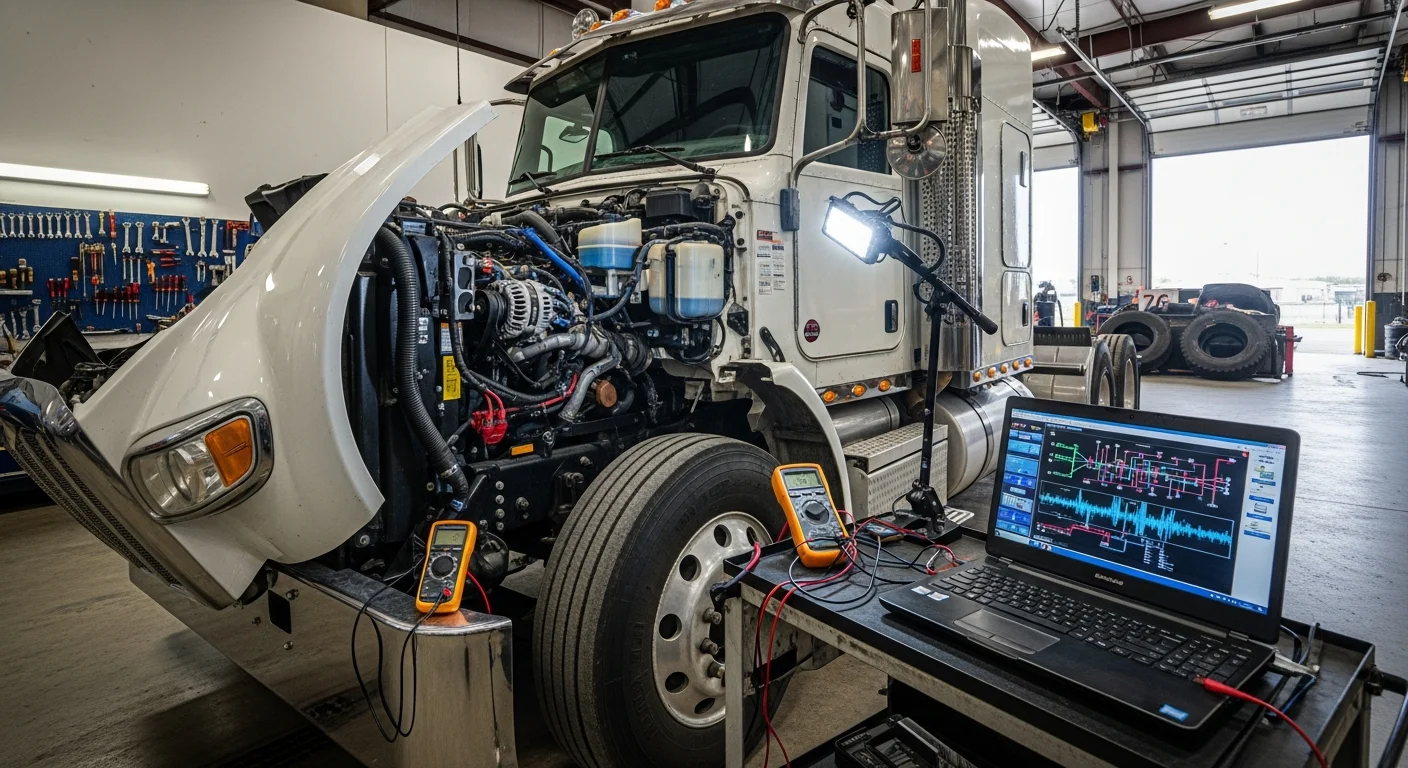
Intermittent electrical faults are some of the hardest truck problems to pin down because the truck can act normal one minute and fail the next. The warning signs are usually small at first: a dash light that comes and goes, a no-start that only happens in the morning, headlights that flicker over bumps, a trailer light issue that disappears when the plug gets moved, or a sensor fault that will not stay active long enough for a quick check.
That is exactly why these problems cost fleets and owner-operators so much money. If the fault does not show up in the bay, it gets missed, the truck goes back out, and then the breakdown happens on a load, at a shipper, or during an inspection. Electrical issues can trigger derates, no-starts, charging problems, lighting violations, and repeat downtime that eats up hours without fixing the root cause.
Intermittent electrical problems usually start small, then turn into breakdowns once heat, vibration, moisture, or load makes the weak part fail completely.
One reason they get missed is that minor voltage drops, sensor irregularities, and short-lived faults often do not look serious during normal operation. But those little glitches are usually early warning signs, not random truck behavior.
An intermittent fault means the circuit does not fail all the time. It fails only under certain conditions, like startup, rain, vibration, heat soak, high electrical load, or steering and suspension movement.
That is why the complaint from the driver matters as much as the scan tool. If the truck only acts up after hitting rough pavement, after sitting overnight, or with the A/C, lights, and blower on, that pattern points the diagnostic process in the right direction.
Common symptoms include:
Loose wiring connections, corroded grounds, and faulty relays are some of the most common causes. A bad ground can create all kinds of false symptoms because modules and sensors stop seeing stable voltage. That is why a good electrical diagnosis always includes load testing power and ground sides, not just checking whether voltage is present.
Not every truck lives the same life, and duty cycle matters a lot. Delivery trucks, box trucks, service trucks, and other units that make constant short trips put much more stress on batteries, starters, and charging systems than a long-haul truck that stays running for hours.
Some trucks in stop-and-go service see three to four times more electrical wear than long-haul units. Short runs do not give batteries enough time to recover after repeated starts, so the alternator keeps trying to catch up. That unstable charging pattern can lead to weak battery performance, premature alternator wear, and weird low-voltage complaints that show up as intermittent faults instead of a simple dead battery.
Vibration is another big factor. Heavy-duty trucks shake wire harnesses, fuse panels, connectors, battery cables, and grounds every day. Add road salt, water intrusion, and engine heat, and you get corrosion inside connectors and broken strands inside cable insulation where the damage is not always visible from the outside.
This is where owners and fleet managers sometimes make the wrong call. They replace the battery because the truck had a no-start, or replace a sensor because of a stored code, but the real problem is poor charging, high resistance in a cable, or a rubbed-through harness under the cab, at the frame, or near the engine.
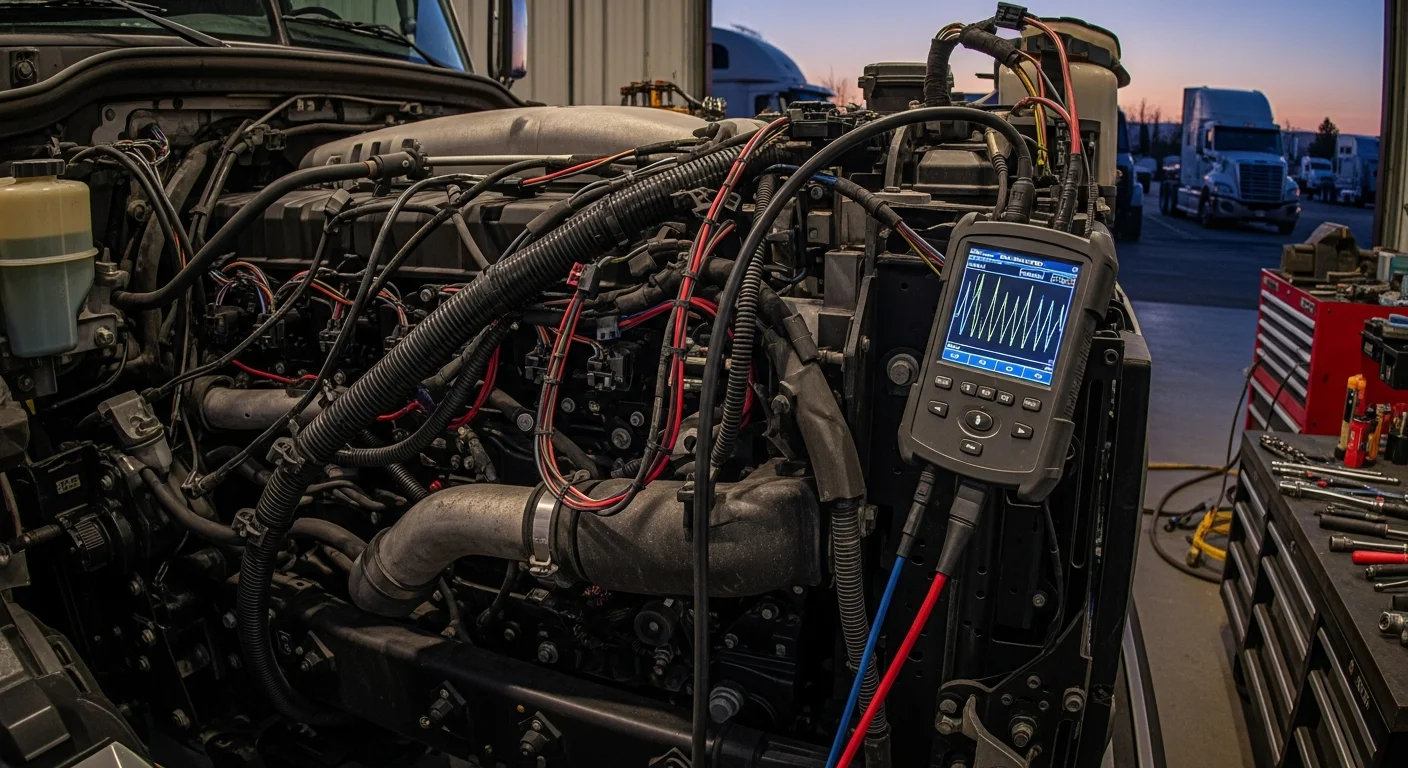
Start with the basics, because a lot of intermittent faults come from power and ground problems. If system voltage is unstable, the truck can set false codes and act like multiple parts are failing at once.
A healthy charging system should usually be in the 13.8 to 14.8 volts range while driving. If charging voltage falls below that, the batteries may not recover properly and the truck may show dim lights, hard starting, module communication problems, or accessories that work slowly or cut out.
Before replacing anything, check these areas in order:
The key is to test the circuit while the problem is happening, or recreate the condition that causes it. Wiggle tests, heat tests, loaded voltage-drop tests, and live data review are often what expose the fault.
Good intermittent electrical diagnosis is not guesswork. It is a process of narrowing down which circuit loses power, ground, signal, or communication, and under what condition.
First comes fault code review, but codes are only the starting point. A code for a sensor or module does not always mean that component is bad. Low voltage, a poor ground, or a damaged reference wire can make a good component look defective.
Then comes live data. If voltage drops when the blower motor kicks on, if a sensor reading cuts out when the harness is moved, or if a module drops offline after warm-up, that is the kind of evidence that leads to the actual repair.
After that, technicians isolate the circuit. That may mean checking connector pin tension, doing continuity checks, measuring voltage drop under load, inspecting splice packs, or opening harness loom where rubbing is common. On multiplexed trucks, it may also mean checking network communication between modules, because one bad power feed or ground can create several unrelated-looking complaints.
This matters because the wrong repair is expensive in a different way than a hard breakdown. You pay for parts you did not need, the truck still has the same issue, and now you have more downtime with less trust in the truck.
Some electrical problems are annoying but manageable for a short time. Others can put the truck out of service fast.
If the fault is limited to an interior accessory, a non-critical work light, or a minor intermittent body function, the truck may be able to finish the shift and come in for scheduled diagnostics. But if the issue affects starting, charging, exterior lighting, trailer lights, ABS warnings, engine operation, or electronic controls tied to safety and emissions, do not treat it like a maybe-later problem.
Here are signs the truck should be checked right away:
Ignoring those symptoms can turn a shop visit into a tow bill, a missed load, a failed DOT inspection, or a roadside call that still ends with the truck going to the shop anyway.
If your truck has flickering lights, random no-starts, repeat low-voltage codes, or electrical problems that no one has pinned down yet, Heavy Duty Truck Repair can help diagnose the fault before it turns into a breakdown. The shop handles heavy-duty electrical diagnostics in Homer Glen, Illinois, and road service is available during business hours within 50 miles when the truck cannot make it in. If the issue is bigger than a roadside repair, they can help arrange tow-in and track down the real cause instead of guessing at parts.
The most common causes are weak batteries, low alternator output, loose or corroded grounds, damaged wiring, bad connectors, and relays that fail only under heat or vibration. These faults often show up only under certain conditions, which is why they are easy to miss without proper testing.
Yes. A bad ground can make several modules or sensors lose stable voltage, which can trigger multiple warning lights and fault codes at the same time. That is why electrical diagnosis should always include voltage-drop testing on the ground side, not just part replacement.
If system voltage is low or unstable, you may see dim lights, hard starts, batteries that do not recover, and accessories that cut in and out. The alternator needs to be tested under load because a quick idle check does not always catch a weak charging system.
Sometimes, but not always. If the problem is a loose battery connection, a failed cable end, or an obvious lighting issue, roadside repair may get the truck going. If the fault involves hidden wiring damage, repeat low-voltage events, module communication issues, or random shutdowns, the truck usually needs shop diagnostics.

Heavy Duty Truck Repair is currently going through an exciting period of reorganization and relocation to a new facility. As we prepare for this…
Tomas Labinskis
Aug 24, 2026
Your truck can need body repair even when the obvious crash damage looks minor, because hidden structural movement often shows up in the way…
Tomas Labinskis
Jul 17, 2026
A warning light on a heavy-duty truck is not just a reminder on the dash. It is the truck telling you a system has…
Tomas Labinskis
Jul 14, 2026