Heavy Duty Truck Repair Is Moving to a New Location
Heavy Duty Truck Repair is currently going through an exciting period of reorganization and relocation to a new facility. As we prepare for this…
 Tomas Labinskis
Aug 24, 2026
Heavy Duty Truck Repair is Temporarily Closed While We Get Settled Into Our New Space. Read more

Homer Glen, IL
Tomas Labinskis
May 26, 2026
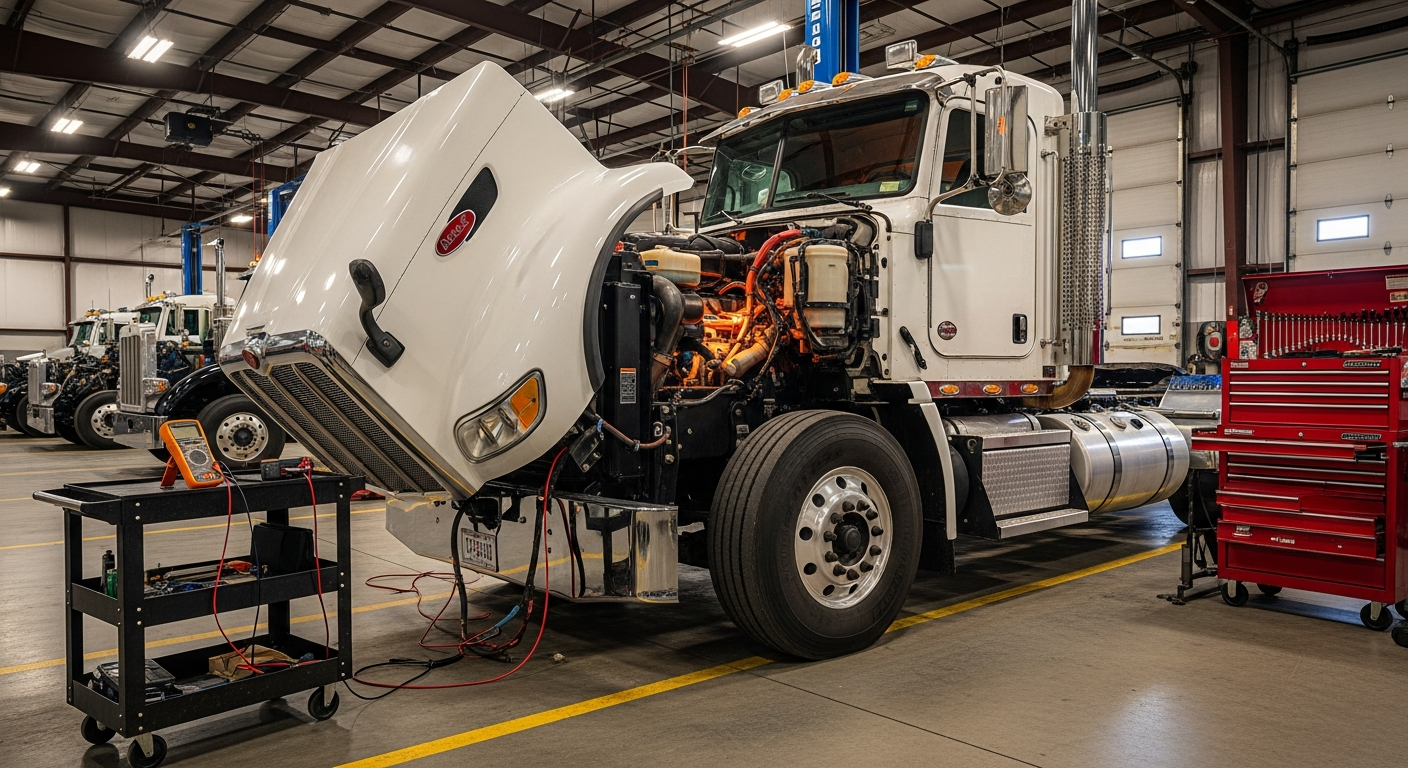
Intermittent electrical issues in a heavy-duty truck usually come from a connection problem, a weak ground, battery or charging trouble, or wiring damage that only acts up under vibration, heat, moisture, or load.
That is what makes these problems expensive. The truck may start fine in the yard, then lose dash power, throw random fault codes, drop trailer lights, or crank slow at a fuel stop. For an owner-operator or fleet, that means downtime you cannot schedule, repeat parts swapping, missed loads, roadside calls, and inspection risk if lights or safety systems quit at the wrong time.
Intermittent electrical faults are usually not random. They are often connection problems that show up only under certain conditions.
If the issue comes and goes, the first thing to suspect is not always a bad module. Most of the time, it is a bad path for power or ground.
Vehicle standards inspection guidance points back to the basics: wiring and connectors have to be in good condition. On heavy-duty trucks, loose, corroded, or damaged wiring and connectors are common trouble spots, especially where vibration, flexing, and road spray keep opening and closing a weak connection.
Drivers usually notice this as a problem that never stays consistent. Maybe the ABS light comes on after a bump. Maybe one headlamp or marker circuit cuts out in wet weather. Maybe the truck cranks normally in the morning but clicks after a hot shutdown. Those changing symptoms push a lot of people toward guessing, and guessing gets expensive fast.
A weak ground is another big one. Electrical systems on heavy-duty trucks depend on low-resistance grounds so sensors, lights, and control modules can work and talk to each other the way they should. When a ground strap, frame ground, battery ground, or cab ground gets loose or corroded, the truck can do strange things that do not point to one obvious failed part.
That is why intermittent electrical work has to start with voltage drop testing, connector inspection, battery cable checks, and ground checks before anyone starts replacing control modules.
A battery can pass a quick visual check and still be part of the problem. A lot of trucks come in with batteries that look acceptable until the system is put under load.
Bendix electrical maintenance material notes that a battery may look fine at rest but still fail under load if the terminals are loose or corroded. That can create starting problems, lighting issues, and module power interruptions that come and go instead of failing all at once.
This matters because modern trucks do not just need enough power to crank. They need stable voltage for the engine ECM, aftertreatment controls, transmission controls, ABS, body controllers, and dash electronics. A voltage dip during crank or while driving can trigger sensor faults, communication faults, and no-start complaints that look like a bad computer when the real problem is poor battery cable contact.
The charging side can be just as tricky. Cummins support explains that charging faults can be intermittent when an alternator, drive belt, or regulator only acts up under heat or vibration. That is why a truck may run normally for days, then suddenly have a low-voltage warning, slow crank, or dead batteries the next morning.
If the truck has electrical complaints after hot restarts, after long runs, or when extra loads are on like blower motors, work lights, liftgate power, or reefer-related circuits, the charging system needs to be tested under real operating conditions. A quick check at idle in the bay does not always catch it.
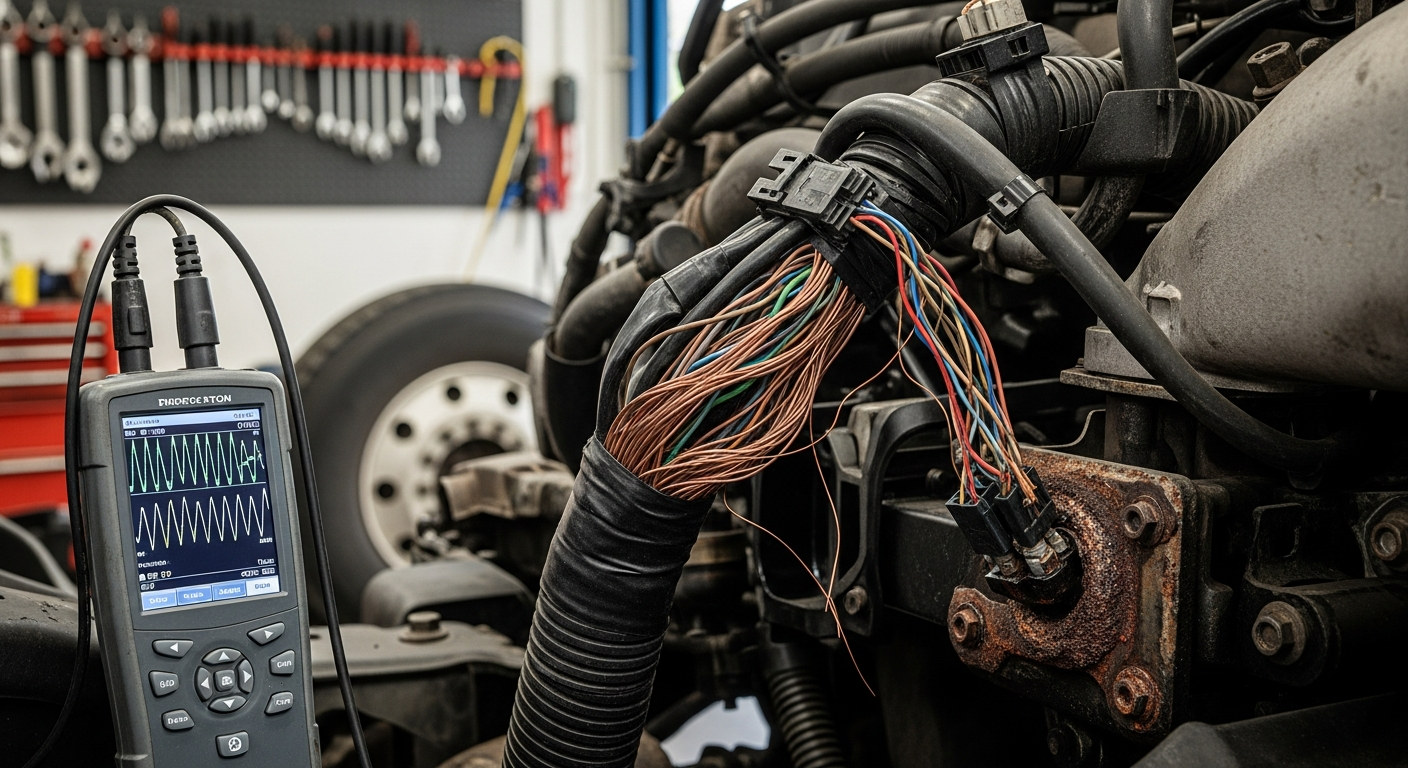
In Illinois and across the Midwest, weather speeds up electrical problems. Cold, moisture, and road chemicals get into places that already have wear.
FHWA research shows how road salt and freeze-thaw exposure drive corrosion. On trucks, that corrosion builds inside battery terminals, trailer plugs, frame grounds, light connectors, fuse panels, and junction points. The result is a fault that may disappear when things dry out and come right back after rain, snow, or a hard wash.
This is one reason fleets in dry climates sometimes go longer before they see the same kind of wiring decay. Around here, winter can turn a minor resistance problem into a no-start, light failure, or communication issue by spring.
Corrosion does not always show on the outside either. A cable can look decent with swollen insulation hiding green corrosion under it. A trailer harness can ohm out one minute and fail when it flexes. A ground eyelet can be tight but still have rust or paint under the contact surface. That is why electrical diagnostics often take longer than drivers expect. The problem has to be found in the condition that makes it fail.
You do not need to tear the truck apart on the side of the road, but there are a few things worth checking before a small issue turns into a tow bill or an out-of-service problem.
Start with the symptoms. Ask what changes when the fault shows up. Heat, rain, rough roads, engine speed, trailer connected or disconnected, and hot restarts all matter. That pattern helps narrow down where to look.
Then check the basics:
If the truck has multiple unrelated codes, random warning lights, or modules dropping offline, do not assume all those parts failed. Low system voltage and bad grounds can create false trails.
If lights are flickering, if the truck has occasional no-crank or no-start problems, or if power cuts in and out over bumps, it is time for electrical diagnostics before the fault leaves the driver stuck. Waiting usually means more damage to wiring, discharged batteries, starter stress, and more time chasing the problem later.
If someone already replaced batteries, an alternator, or a sensor and the issue came back, the first repair probably treated the symptom and not the cause.
This is common with intermittent faults because the failed connection may test okay once the truck is parked in the shop. A proper repair often means checking live data, load-testing batteries, measuring voltage drop across cables and grounds, tug-testing connectors, and inspecting harnesses where they move, rub, or collect road spray.
For fleets, this is where repair decisions matter. If the complaint affects lighting, starting, charging, ABS, or engine controls, putting the truck back out without finding the root cause can lead to repeat roadside downtime. It can also create DOT trouble if lamps fail, warning lights stay on, or the truck cannot start after shutdown.
Roadside repair is enough only if the problem is obvious and accessible, like a loose battery terminal, damaged pigtail, or visibly failed cable end. If the fault involves repeated low-voltage events, module communication issues, hidden wiring damage, or charging problems that only show under load, the truck needs shop-level diagnostics.
If your truck has electrical problems that come and go, do not keep throwing batteries, sensors, or alternators at it and hope one sticks. HDTR in Homer Glen, IL handles heavy-duty electrical diagnostics, wiring repair, charging-system testing, and starting-system faults under one roof. Road service is available during business hours within 50 miles when the issue is something that can be checked safely on site. If not, the truck can be brought into the shop for a proper diagnosis before the next no-start, lighting failure, or roadside breakdown costs you another load.
Most intermittent electrical problems come from loose or corroded connections, weak grounds, damaged wiring, or charging issues that act up only under heat, vibration, or moisture. That is why the truck may work fine in the yard and fail later on the road.
Yes. A bad ground can disrupt sensor signals and module communication, which can trigger fault codes that do not point directly to the real problem. It can also cause lighting issues, hard starts, and strange dash behavior.
That often points to battery cable problems, terminal corrosion, a weak charging system, or an intermittent starter or relay feed. Heat soak after shutdown and vibration during operation can make the problem appear inconsistent.
Not always. Batteries may be part of the issue, but replacing them without load testing and checking cables, grounds, and charging output can waste money. The better move is to diagnose the full power and ground path first.

Heavy Duty Truck Repair is currently going through an exciting period of reorganization and relocation to a new facility. As we prepare for this…
Tomas Labinskis
Aug 24, 2026
Your truck can need body repair even when the obvious crash damage looks minor, because hidden structural movement often shows up in the way…
Tomas Labinskis
Jul 17, 2026
A warning light on a heavy-duty truck is not just a reminder on the dash. It is the truck telling you a system has…
Tomas Labinskis
Jul 14, 2026