Heavy Duty Truck Repair Is Moving to a New Location
Heavy Duty Truck Repair is currently going through an exciting period of reorganization and relocation to a new facility. As we prepare for this…
 Tomas Labinskis
Aug 24, 2026
Heavy Duty Truck Repair is Temporarily Closed While We Get Settled Into Our New Space. Read more

Homer Glen, IL
Tomas Labinskis
May 27, 2026
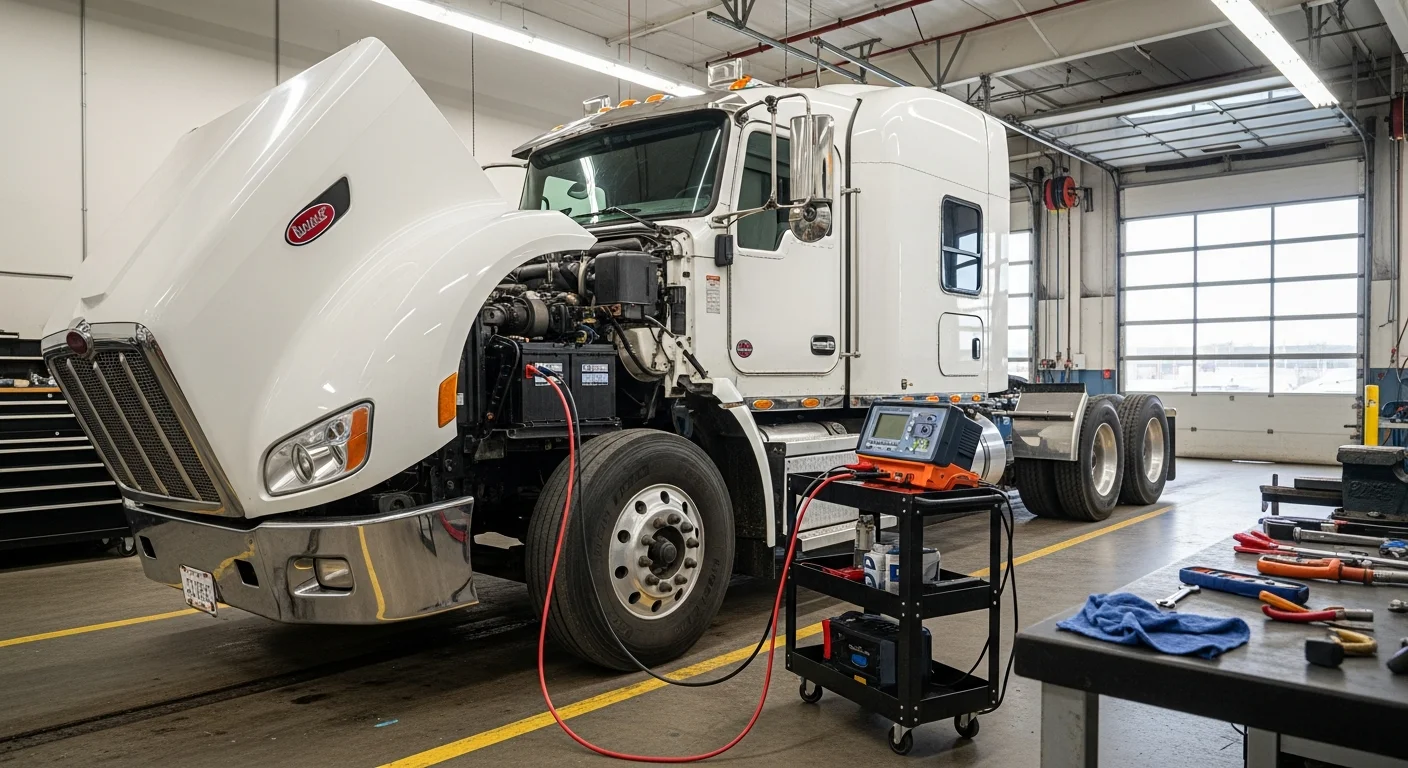
Battery load testing tells you whether your truck batteries can actually deliver starting power under stress, not just show decent voltage sitting at rest.
That matters more than a lot of drivers realize. A truck can have lights, dash power, and even pass a quick voltage check, then still crank slow or not start when the weather turns, the truck sits over a weekend, or the engine is hot after a delivery run. For an owner-operator or fleet, that means roadside downtime, missed dispatch windows, jump-start calls, tow bills, and repeat no-start complaints that never really get fixed.
A battery can look fine on a simple voltage check and still fail under load.
On heavy-duty trucks, weak batteries also create confusion because the problem may look like a bad starter, a charging issue, or an electrical fault. If the batteries are not tested correctly, parts get replaced that were not the real problem. That is why load testing matters before peak cold weather, before summer heat starts cooking older batteries, and anytime cranking speed starts changing.
A proper load test checks whether the battery can hold voltage while supplying real current. That is the difference between a battery that looks charged and a battery that can actually start a diesel engine.
One standard method is applying half the battery’s CCA rating for 15 seconds and watching voltage. If the voltage drops too far during that test, the battery may not have enough reserve to crank the engine reliably. On a 700 CCA battery, that means loading it to 350 amps for 15 seconds and checking whether it stays above the acceptable threshold.
That matters on heavy-duty trucks because starting demand is high. Big diesel engines need strong battery output to spin the starter fast enough, especially in cold weather. If cranking speed is weak, you can end up with hard starts, voltage drop to modules, nuisance fault codes, and extra wear on the starter and charging system.
This is also why a truck with multiple batteries should never be judged by one battery alone. In a dual- or quad-battery setup, one weak battery can drag the whole system down. The truck may still start some days, then leave the driver stuck the next morning.
Resting voltage is useful, but it does not finish the job. A battery can show acceptable voltage after charging and still collapse once a real load hits it.
That is where a lot of bad calls happen. Somebody checks with a meter, sees decent voltage, and assumes the batteries are good. Then the truck needs a jump start again two days later. The real issue was battery capacity under load, not just open-circuit voltage.
Electronic testers help, but only if the information entered is right. The CCA rating has to match the exact battery, the battery type has to be right, and temperature matters because cold cuts battery performance. On some trucks, batteries from different makers can look almost identical from the outside even though their ratings are different. If the technician enters the wrong CCA, the test result can mislead you.
That is one reason battery problems get misdiagnosed as alternator, starter, or cable problems. Another is that batteries may test differently depending on whether they were just charged, just run, or have been sitting. Good diagnostics look at the whole starting and charging system, not one number in isolation.
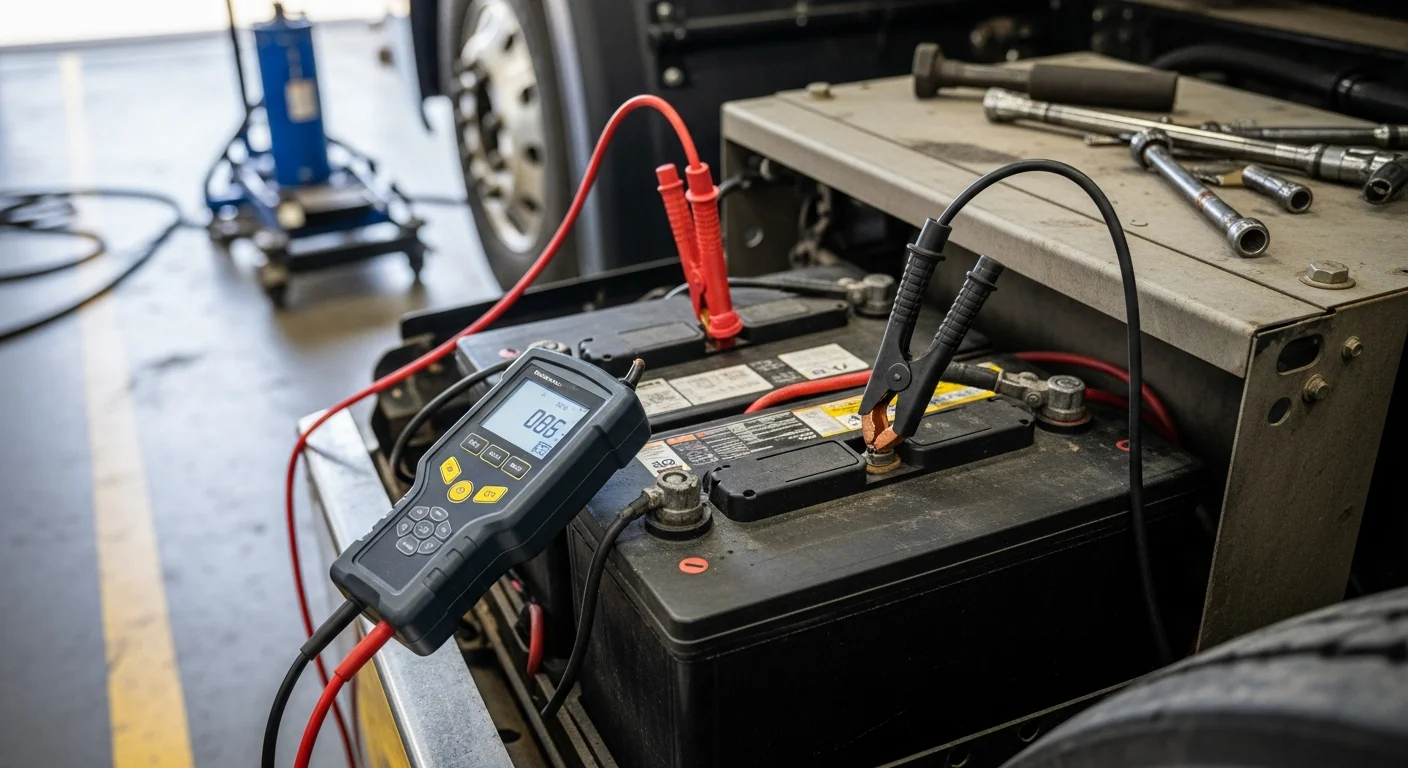
A load test should not be the very first thing done. The batteries need a basic inspection first, or the test result may not mean much.
Before testing, look for physical damage and condition issues that already tell you the battery is questionable. That includes cracked cases, leaks, swelling, loose hold-downs, corrosion at the terminals, and signs the battery may have frozen at some point. Battery voltage should also be checked first, because a surface charge or an undercharged battery can throw off the result.
On a heavy-duty truck, every battery in the bank should be tested, not just the one that is easiest to reach. A mismatched set causes plenty of trouble. One battery may be carrying more of the load, getting overworked, and failing early. Then the truck has slow cranking that keeps coming back even after one battery was replaced.
It also pays to inspect the cables while you are there. A battery may test weak because the terminals are dirty, a crossover cable is damaged, or there is too much voltage drop in the connections. If the batteries are good but the cables are bad, the truck still cranks poorly.
At minimum, check these items before blaming the batteries alone:
Load testing is one of the fastest ways to keep a no-start complaint from turning into a parts-swapping mess. It helps separate battery failure from starter, alternator, and wiring problems.
For example, if the truck cranks slowly after sitting overnight, batteries are the first place to look. If it cranks slowly even with known-good batteries, then you start checking starter draw, cable resistance, grounds, and engine drag. If the truck starts but repeatedly needs jumps, now you are looking harder at charging output, parasitic draw, or a battery bank that is not matched.
This matters for fleets because repeat electrical comebacks burn labor and kill uptime. For owner-operators, it is even more direct. One bad call can mean a service truck at 5 a.m., a missed appointment, and a load you cannot recover.
Peak seasons make this worse. Winter exposes weak batteries because cold cuts available cranking power. Summer is rough too because heat shortens battery life and cooks older units. The truck that was “getting by” in mild weather can suddenly become the truck that will not restart at the fuel island.
If your truck has any of these symptoms, a battery load test should move up the list fast:
A failed load test does not always mean batteries are the only repair. Sometimes the test shows the batteries are weak because another problem has been beating them up.
If new batteries keep failing early, look deeper. The alternator may be undercharging. A poor ground may be forcing the batteries and starter to work harder. A parasitic draw may be draining the truck while it sits. On some units, liftgate equipment, PTO circuits, inverters, sleeper accessories, or trailer power demands can hide the real cause.
This is also why replacing one battery in an old set can be a bad move. The new battery gets paired with older, weaker ones, and the whole set works unevenly. That often leads to another no-start complaint and another service call. In many cases, matched replacement and a full charging-system check are the smarter next step.
Roadside help may get the truck running, but it may not answer why the batteries went down in the first place. If the truck has repeated starting issues, the better decision is a full electrical and charging-system check before it strands the driver again.
If your truck is cranking slow, needs frequent jump starts, or keeps coming back with starting complaints, do not guess at batteries, starters, and alternators one part at a time. Heavy Duty Truck Repair handles truck electrical repair and can check the battery bank, charging system, cable condition, and voltage drop to find the real cause. Road service is available during business hours within 50 miles of Homer Glen if the truck will not start on site. For shop diagnostics or the next step, contact Heavy Duty Truck Repair.
Yes. A battery can show acceptable resting voltage and still fail once the starter puts a real load on it. That is why load testing matters more than a quick voltage check when you are dealing with slow cranking or repeat no-start problems.
All batteries in the system should be tested. One weak battery can drag down the whole battery bank, and mismatched batteries often cause repeat starting issues even after one battery is replaced.
Bad cables, poor grounds, excessive voltage drop, a weak starter, and charging problems can all look like battery trouble. That is why a proper no-start diagnosis should include the battery bank, cable connections, and charging system together.
It should be done anytime the truck cranks slow, needs jump starts, sits for periods and struggles to restart, or before weather extremes hit. It is also a smart check before peak winter operation or if a fleet truck has repeated electrical complaints.

Heavy Duty Truck Repair is currently going through an exciting period of reorganization and relocation to a new facility. As we prepare for this…
Tomas Labinskis
Aug 24, 2026
Your truck can need body repair even when the obvious crash damage looks minor, because hidden structural movement often shows up in the way…
Tomas Labinskis
Jul 17, 2026
A warning light on a heavy-duty truck is not just a reminder on the dash. It is the truck telling you a system has…
Tomas Labinskis
Jul 14, 2026