Heavy Duty Truck Repair Is Moving to a New Location
Heavy Duty Truck Repair is currently going through an exciting period of reorganization and relocation to a new facility. As we prepare for this…
 Tomas Labinskis
Aug 24, 2026
Heavy Duty Truck Repair is Temporarily Closed While We Get Settled Into Our New Space. Read more

Homer Glen, IL
Tomas Labinskis
Jun 16, 2026
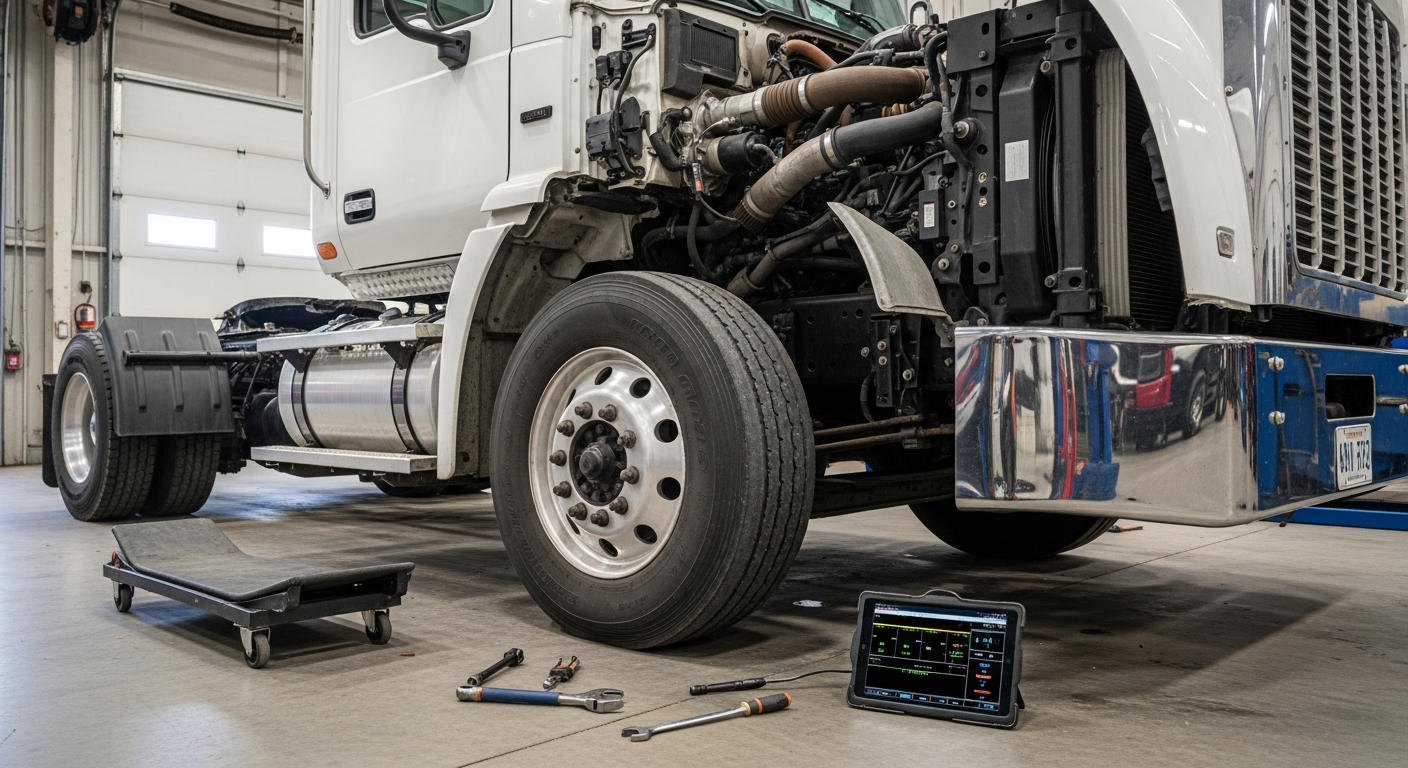
A failing starter usually shows itself before it quits completely, and the biggest warning is trouble cranking the engine even though the truck still has power. If your dash lights come on, accessories work, and you get a no-crank or weak-crank condition, the starter needs to move high on your suspect list.
For a driver or fleet, this is not a small electrical annoyance. A starter problem can turn into a no-start at the fuel island, shipper, jobsite, or truck stop, and that means missed loads, roadside downtime, a tow bill, and a truck that is making no money. If the truck has to be jump-started again and again, you can also end up chasing the wrong repair and spending money on batteries or cables that were never the real problem.
A starter problem often gives warning before it becomes a complete no-start.
Starter problems are often mistaken for battery problems because the symptoms overlap. The difference is the pattern.
If the batteries are weak, the truck usually cranks slow in a consistent way. If the starter is failing, the truck may crank fine one time, then do almost nothing the next time. That kind of intermittent starting is a classic sign that the starter motor, solenoid, or internal contacts are wearing out.
Listen to the sound, not just whether it starts. A clicking, grinding, or whirring noise during startup can mean the starter drive is not engaging correctly, the motor is struggling, or the gear is not meshing the way it should. On a heavy-duty truck, that noise should never be ignored, because repeated attempts can damage more than the starter itself.
Some drivers notice the truck starts normally when cold, then acts up after a fuel stop or after shutting down hot. Others notice the opposite: hard starts first thing in the morning, then better behavior later. Either pattern matters. Heat soak, worn internal contacts, cable resistance, and poor grounds can all change how the starter acts from one start cycle to the next.
If you have to cycle the key several times, tap on the starter, or wait and try again, the truck is already past the early-warning stage.
Repeated crank attempts can make a bad problem worse. If the starter is overheating, you can damage cables, terminals, or the starter windings.
One of the most serious warning signs is a burning smell or smoke during repeated start attempts. That means the starter or related electrical parts may be overheating, and it should be treated as urgent. At that point, continuing to crank the engine is not worth the risk.
There are a few situations where the truck should not keep being forced to start:
For an owner-operator, ignoring these signs can turn one shop visit into a bigger electrical repair. For a fleet, one truck with a repeat no-start can throw off dispatch, delay appointments, and tie up a driver waiting on roadside help.
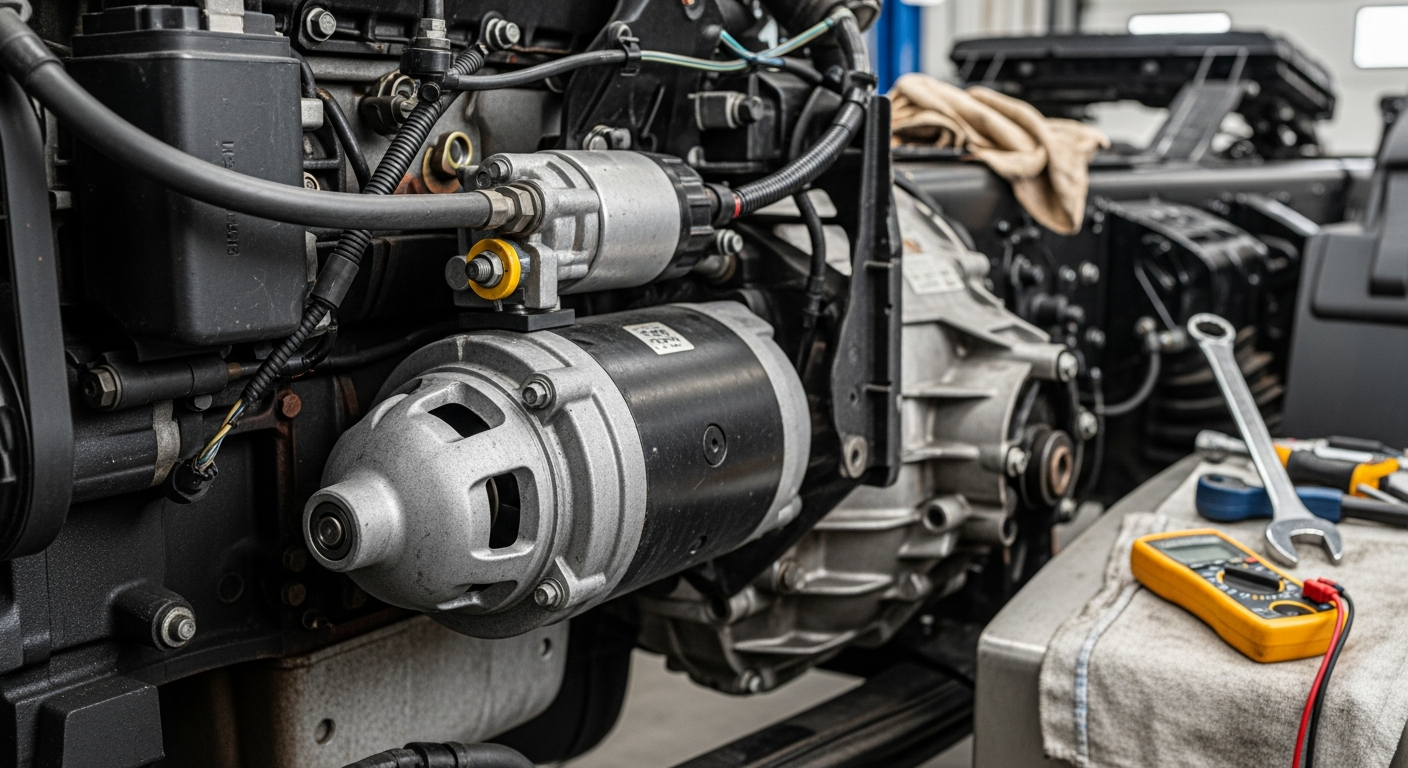
Do not assume the starter is bad just because the truck will not crank. Batteries, cable ends, grounds, ignition circuit issues, and starter relay problems can create nearly the same complaint.
A basic checkpoint is system voltage. A fully charged 12-volt battery should read 12.6 volts or higher, and during cranking the system should generally stay around 9.6 volts or more. If voltage drops too far, the starter may be fine and the real problem may be weak batteries, bad connections, or too much resistance in the cables.
On heavy-duty trucks, technicians should also look at the whole starting circuit instead of swapping parts. That means checking:
This matters because a bad ground can act just like a dead starter. So can a corroded battery box connection or a cable that looks fine outside but has internal resistance. On some trucks, drivers replace the batteries, get one or two more starts, and think the issue is fixed. Then the truck fails again because the starter was drawing too much current the whole time.
If the engine cranks slowly with known-good batteries, or the starter gets hot while cable connections test good, the case against the starter gets much stronger.
The right call depends on what the truck is doing right now. Some starting problems can be diagnosed roadside. Others need a full electrical check in the shop.
Roadside service may make sense if the truck is in a safe location and the complaint is limited to a no-crank, weak-crank, bad cable connection, or obvious battery issue. A technician may be able to test voltage, inspect connections, verify starter command, and determine whether the starter itself has failed.
Shop diagnostics usually make more sense if the problem is intermittent, if the truck has already had batteries or cables replaced, or if there are multiple electrical complaints at the same time. Intermittent starting issues are where guesswork gets expensive. You need actual testing, not parts swapping.
Towing is often the safer decision if the starter is smoking, the truck is stuck in an unsafe area, the cables are overheating, or the truck has a deeper electrical problem that cannot be repaired on the shoulder or in a yard.
| What you are seeing | Most practical next step |
|---|---|
| Dash lights work but no crank, batteries recently weak | Test batteries, cables, and voltage drop first |
| Single click, repeated no-start, starts sometimes | Starter circuit and starter diagnostics |
| Grinding, whirring, or harsh engagement noise | Stop repeated attempts and inspect starter drive |
| Burning smell, smoke, hot cables | Do not keep cranking; arrange repair or tow-in |
| Multiple failed repair attempts already | Full shop electrical diagnosis |
The key decision point is simple: if the truck is giving warnings now, deal with it before it becomes a dead truck in the wrong place. A starter rarely picks a convenient time to fail completely.
The cost of a starter repair is usually not the biggest expense. Downtime is.
If a truck will not start at a receiver, truck stop, yard, or construction site, you may lose half a day or more before the real diagnosis even begins. Add a road call or tow, lost driver time, and a missed dispatch window, and the repair bill stops being the main problem.
Early diagnosis also helps prevent repeat breakdowns. If the real issue is cable resistance, poor grounds, or a failing starter drawing too much amperage, catching it early can prevent damage to batteries and other electrical parts. If the starter drive is making noise and gets ignored, it can leave you with a bigger repair and a truck that will not move on its own.
If your semi-truck or heavy-duty truck is showing early starter symptoms, get it checked before it turns into a no-start on the road. HDTR in Homer Glen, IL handles heavy-duty electrical diagnostics and starting system repair, and road service is available during business hours within 50 miles when the truck cannot make it in. If roadside testing shows the repair is not practical where the truck sits, HDTR can help arrange a tow-in and finish the diagnosis in the shop.
If the dash lights come on but the engine will not crank, or it starts one time and fails the next, the starter may be the problem. The right way to tell is to test battery voltage, cable condition, and voltage drop during cranking before replacing parts.
Yes. A starter can work normally on one key cycle and fail on the next as the internal contacts, solenoid, or motor wear out. That is one reason intermittent no-start complaints often get misdiagnosed as battery problems.
No. A burning smell or smoke during repeated start attempts can mean the starter or wiring is overheating. Stop cranking the engine and have the starting system checked right away.
Sometimes, but not always. If the issue is a loose connection, battery problem, or accessible starter fault, roadside testing may be enough to confirm it. If the problem is intermittent or involves deeper electrical issues, the truck usually needs shop diagnostics.

Heavy Duty Truck Repair is currently going through an exciting period of reorganization and relocation to a new facility. As we prepare for this…
Tomas Labinskis
Aug 24, 2026
Your truck can need body repair even when the obvious crash damage looks minor, because hidden structural movement often shows up in the way…
Tomas Labinskis
Jul 17, 2026
A warning light on a heavy-duty truck is not just a reminder on the dash. It is the truck telling you a system has…
Tomas Labinskis
Jul 14, 2026