Heavy Duty Truck Repair Is Moving to a New Location
Heavy Duty Truck Repair is currently going through an exciting period of reorganization and relocation to a new facility. As we prepare for this…
 Tomas Labinskis
Aug 24, 2026
Heavy Duty Truck Repair is Temporarily Closed While We Get Settled Into Our New Space. Read more

Homer Glen, IL
Tomas Labinskis
Jun 1, 2026
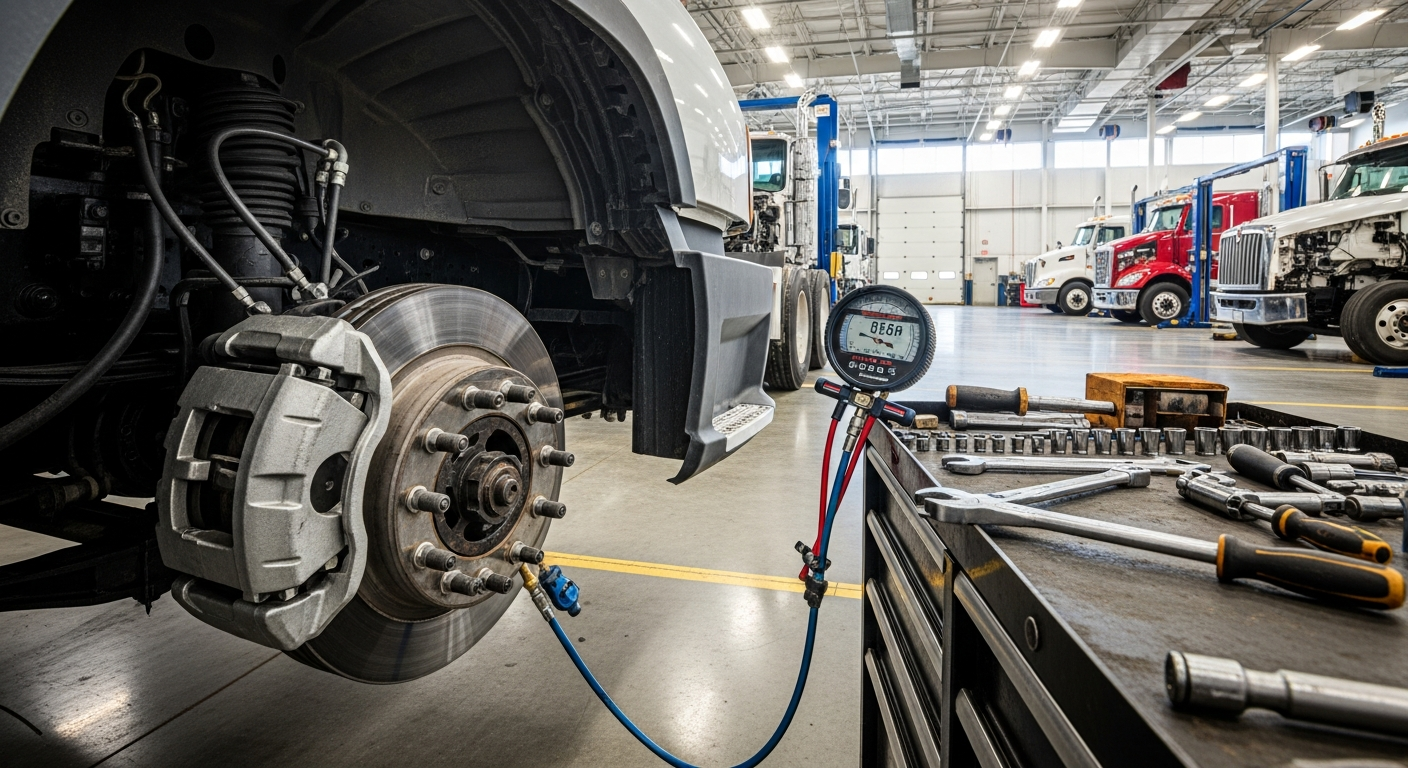
Hydraulic brakes meet safety standards when the system can stop the truck straight and predictably, the pedal feels firm, the fluid stays sealed in the system, and no brake components are worn, loose, or leaking. That sounds simple, but hydraulic brake problems on medium-duty and some vocational trucks often start small, then turn into failed inspections, unsafe stopping, rotor and caliper damage, or a driver stuck on the shoulder waiting on help.
If you run box trucks, straight trucks, service trucks, tow trucks, or mixed fleets, hydraulic brake checks are not something to leave until the brake warning light comes on. A soft pedal, fluid leak, dragging brake, or worn hardware can turn into longer stopping distance, uneven braking, a DOT problem, or a repeat breakdown that costs more than catching it early.
Hydraulic brake trouble usually shows up first as pedal feel, pull, noise, leaks, or uneven braking.
The basic standard is not complicated: the brakes have to be in proper operating condition and capable of safe operation. Under 49 CFR 393.47, brake systems must be maintained in good working order, and serious brake defects can put a vehicle out of service.
For a driver or fleet manager, that means you are not just checking whether the truck still stops. You are checking whether it stops safely, consistently, and without defects that an inspector or technician can see. Hydraulic brakes can still have enough braking to move around the yard while already being unsafe on the road.
This is where people get caught. They think, “The pedal still works, so I can run it another day.” But a brake fluid leak, loose caliper hardware, worn pads, or a seized slide pin does not stay small for long. Ignore it and you may end up with metal-to-metal contact, overheated rotors, a pull during hard braking, or one wheel doing more work than the rest.
That turns into downtime, tire wear, higher parts cost, and a truck that cannot pass inspection.
Inspectors and drivers are looking for visible defects, not just obvious failure. If there is a leak, worn friction material, or hardware coming apart, that can become a much bigger issue than a brake complaint that has not shown up yet behind the wheel.
During roadside inspections, CVSA out-of-service criteria treat a hydraulic or service-brake leak, worn linings, or missing or loose brake parts as serious defects. That is why a real brake check includes looking closely at calipers, hoses, backing plates, mounting hardware, rotors, and the area around each wheel end for fluid contamination.
Pre-trip rules matter here too. Under FMCSA inspection rules, drivers are required to check brake components during inspection, including brake lining, drums or rotors, and leaks in the brake system.
If you manage a mixed fleet, do not confuse hydraulic brake checks with air brake checks. For air-braked trucks, the low-air warning has to come on before pressure drops below 55 psi. That is not a hydraulic-brake standard, but it matters if your drivers move between different units and assume one brake system checks the same way as another.
A missed pre-trip brake issue usually costs more later. What could have been a pad set and hose can turn into a tow bill, rotor replacement, wheel seal contamination, or a full front-end brake job after the truck starts pulling and overheats a wheel end.
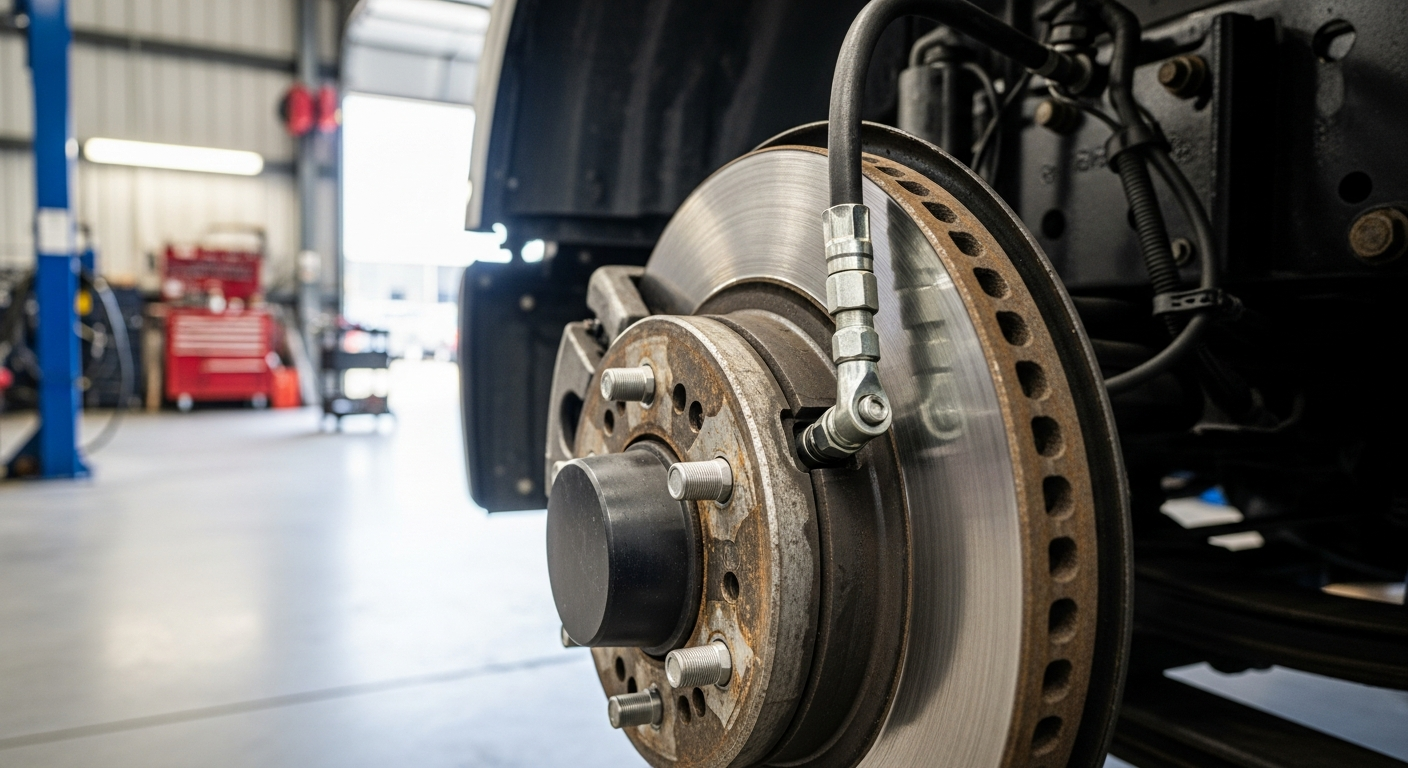
Start with what you can see and feel before the truck leaves. A lot of hydraulic brake problems show up before they become a total loss of braking.
Focus on these checks:
Do not ignore wheel temperature after a run. One wheel hotter than the others often points to a dragging caliper, restricted hose, frozen slide, or a pad hanging up in the bracket.
If the truck has ABS, do not treat an ABS light as “just electrical.” A bad wheel speed sensor, tone ring issue, or wiring problem can affect brake control and hide other brake problems. On wet pavement or in panic braking, that matters.
Hydraulic brakes depend on clean fluid and a sealed system. If the fluid is contaminated or the system has air in it, pedal feel changes and braking performance can drop fast.
Bendix brake maintenance guidance warns that a spongy pedal or changed pedal travel can mean air or moisture in the system, and the brake fluid or system may need service. That matters because moisture lowers the fluid’s boiling point. Once brake heat builds up, especially on loaded stop-and-go routes, the truck can lose pedal feel and braking consistency.
This is one of the most misunderstood hydraulic brake issues. Fleets often replace pads and rotors but skip the fluid condition and bleeding side of the repair. Then the truck still has a soft pedal, uneven braking, or brake fade complaints, and everyone wonders why the “brake job” did not fix it.
If fluid is dark, contaminated, or has been neglected for too long, you may need more than a simple bleed. Rust and moisture inside the system can damage calipers, ABS hydraulic units, and master cylinder parts. That raises repair cost fast.
If the pedal is soft, the truck pulls under braking, fluid is leaking, or one wheel is overheating, the safe move is to stop guessing and get the brake system checked. Hydraulic brake issues can go from manageable to dangerous in one shift.
Do not send the truck back out if you find any of these:
The tradeoff is simple. Running it another day may save one dispatch in the short term, but it can also turn into a roadside breakdown, missed delivery, driver delay, tow-in, and more damaged brake parts. A controlled shop repair is almost always cheaper than a failure that happens loaded and away from home.
If your truck has a soft pedal, brake leak, uneven braking, or a wheel that is heating up, get it checked before it turns into an out-of-service problem. HDTR in Homer Glen, Illinois handles heavy-duty brake diagnostics and repair for hydraulic-brake trucks, including related wheel-end and ABS issues. During business hours, road service is available within 50 miles when the truck cannot safely make it in, and if it is beyond a roadside fix, the next step is getting it into the shop for a proper brake inspection and repair.
You should not keep running a truck with a soft or spongy brake pedal. That usually points to air in the system, fluid loss, contaminated brake fluid, or a hydraulic component failing, and any of those can reduce stopping power.
Fluid leaks, badly worn brake linings, and missing or loose brake hardware are major problems. Even if the truck still stops, visible defects like those can put the vehicle at risk for an out-of-service decision.
A brake pull usually means one side is not applying the same as the other. Common causes include a sticking caliper, contaminated pads, uneven pad wear, a restricted brake hose, or rotor and hardware problems at one wheel end.
No. Hydraulic brake fluid does not normally disappear, so a low reservoir usually means a leak, worn components, or another problem that needs inspection. Topping it off without finding the cause can delay the repair and make the failure worse.

Heavy Duty Truck Repair is currently going through an exciting period of reorganization and relocation to a new facility. As we prepare for this…
Tomas Labinskis
Aug 24, 2026
Your truck can need body repair even when the obvious crash damage looks minor, because hidden structural movement often shows up in the way…
Tomas Labinskis
Jul 17, 2026
A warning light on a heavy-duty truck is not just a reminder on the dash. It is the truck telling you a system has…
Tomas Labinskis
Jul 14, 2026