Heavy Duty Truck Repair Is Moving to a New Location
Heavy Duty Truck Repair is currently going through an exciting period of reorganization and relocation to a new facility. As we prepare for this…
 Tomas Labinskis
Aug 24, 2026
Heavy Duty Truck Repair is Temporarily Closed While We Get Settled Into Our New Space. Read more

Homer Glen, IL
Tomas Labinskis
Jun 22, 2026
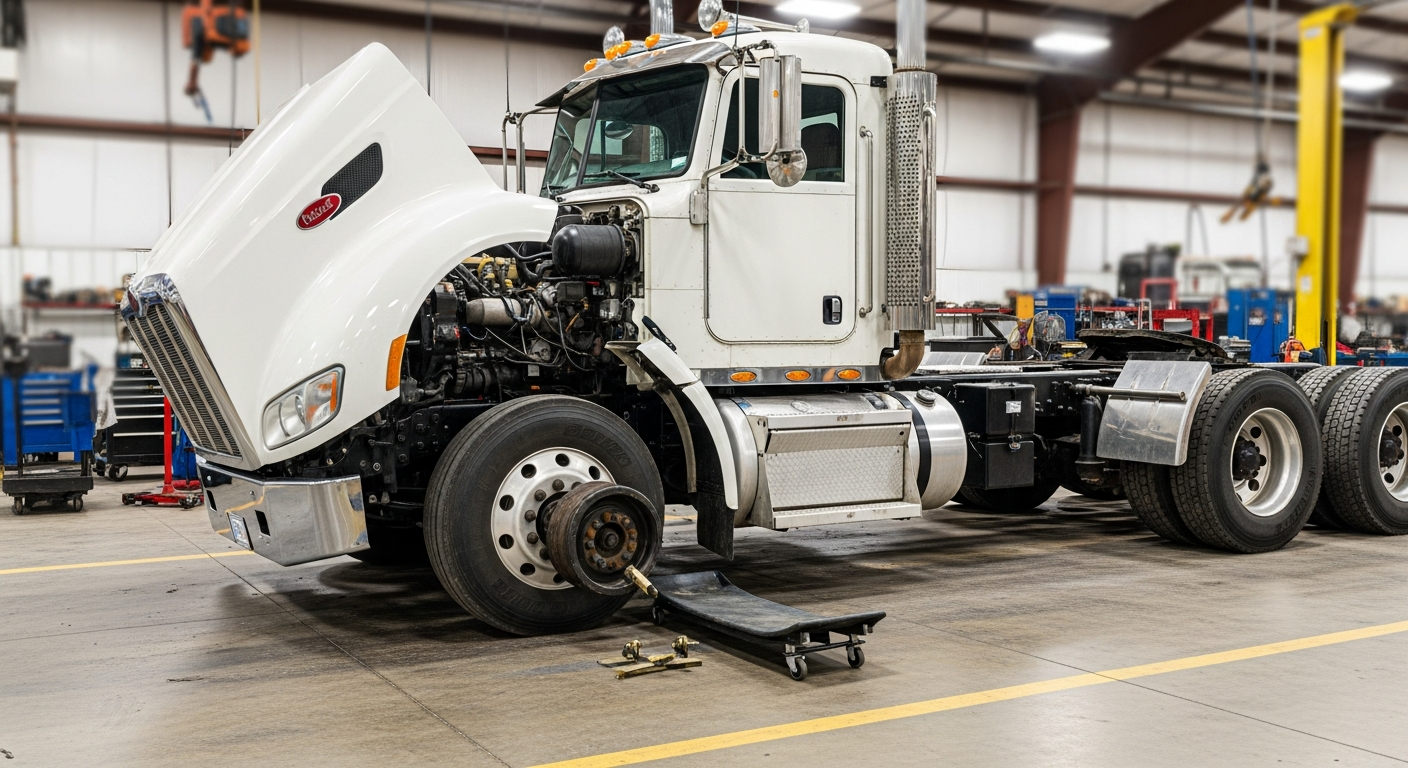
Your truck is ready for a DOT brake inspection only if the braking system can build, hold, and apply air correctly and every brake component is in safe working condition.
That matters because brake violations are one of the fastest ways to lose time on the road. A truck with air leaks, bad adjustment, worn linings, or damaged brake parts can get tagged, delayed, or put out of service. For an owner-operator, that can mean a missed load and a tow bill. For a fleet, it can mean schedule problems, repeat write-ups, and trucks coming back through the shop for the same issue.
A brake problem that seems minor in the yard can become a DOT violation at inspection time.
If you are trying to decide whether a truck is inspection-ready or just “good enough to run one more day,” the mistake is usually assuming that decent stopping feel means the system will pass. DOT inspectors are not just checking whether the truck stops. They are checking whether the brake system meets inspection standards at the chamber, pushrod, hose, drum, rotor, lining, and air-system level.
Brake readiness means the system is not just working, but working within inspection limits. A truck can still stop and still fail.
Motor carriers are required to keep brake systems maintained and serviced, and the person performing brake inspection work must meet qualification standards under FMCSA brake inspector rules. That matters for fleets because a rushed look by someone who does not understand slack adjusters, pushrod stroke, or chamber travel can miss the exact defects an inspector will catch.
Drivers usually notice the obvious problems first: low air pressure, a brake warning light, poor stopping, a pull during braking, or a trailer that feels lazy. But inspection failures also come from things that do not always show up as a clear complaint, like worn linings, cracked hoses, damaged fittings, or one wheel end doing less work than the others.
If a truck has already had one brake repair and still keeps getting flagged, the issue is often incomplete inspection. Somebody fixed the complaint, not the whole system.
Inspectors are looking for defect points, not guesses. They go after the parts that affect braking force, air integrity, and safe operation.
FMCSA inspection criteria for air brakes include air-brake system items such as air leaks, damaged or missing components, slack adjusters, pushrods, brake drums or rotors, linings, and the condition of hoses, tubes, and fittings. That is why a truck can fail even if the complaint started as “just a small air leak.” A small leak may be connected to dry-rotted lines, loose fittings, or poor brake response at one axle.
The biggest areas to stay ahead of are usually:
This is also why pre-trip brake checks still matter. The driver may not measure pushrod stroke on the shoulder, but they can catch weak air build, audible leaks, warning lights, and uneven brake response before the truck gets stopped.
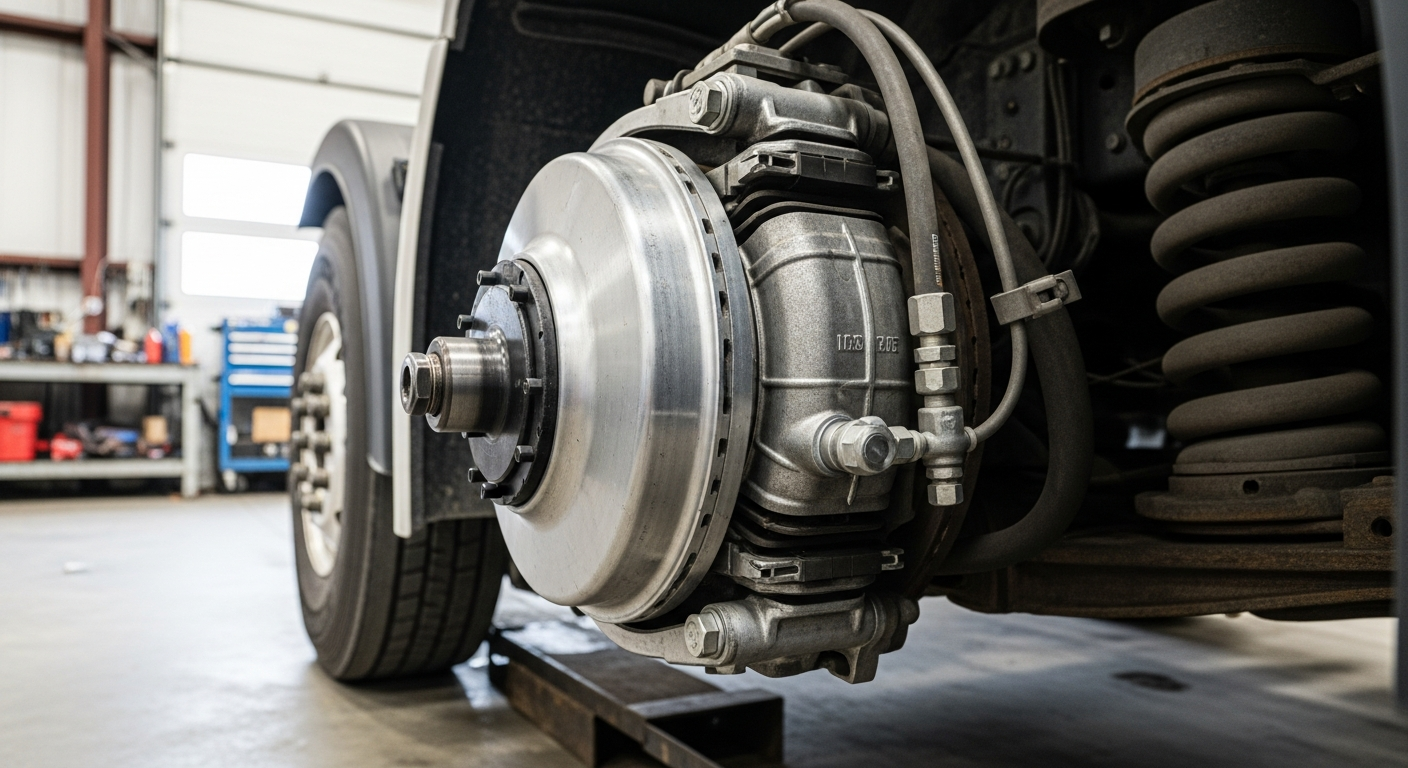
Brake adjustment is one of the most common failure points because it directly affects how much braking force reaches the wheel. If the pushrod travel is excessive, that brake may not be doing its share.
Inspectors specifically check pushrod stroke limits, and excessive stroke can point to an out-of-adjustment brake, a worn foundation brake, or a slack adjuster problem. On the road, that can show up as longer stopping distance, a pull, heat imbalance, or one wheel end wearing faster than the others.
What catches some fleets off guard is that one or two bad brakes may be enough to create an out-of-service issue depending on the total brake count. Under the 20% out-of-service rule, if defective service brakes reach 20% or more of the brakes on the vehicle or combination, the unit is placed out of service.
That means a truck and trailer combination does not have much room for “we will fix it later.” A couple of out-of-adjustment brakes, one inoperative chamber, and one contaminated lining can take a working unit off the road fast.
For owner-operators, that is why brake repair should be based on axle-by-axle condition, not just the one wheel end that is making noise. For fleets, it is a reason to document pushrod measurements, brake shoe condition, and air-leak checks during PM service instead of waiting for a violation report.
The best time to find brake trouble is in the yard, not during an enforcement stop. Inspection readiness starts with a real check, not a quick walk-around.
Before a scheduled DOT inspection or before sending a truck back into regular rotation, check these items:
If a truck has uneven tire wear, repeated wheel-end heat, poor fuel economy, or a trailer that seems to push the tractor, do not treat those as unrelated problems. Brake drag and brake imbalance often show up through tire wear, hub temperature, and handling complaints before somebody finds the actual brake defect.
Extra enforcement periods also matter. Brake Safety Week puts more attention on linings, adjustment, air pressure, and ABS operation, so fleets that inspect those areas ahead of time are less likely to deal with violations and roadside downtime during those campaigns.
If a truck keeps having brake write-ups, there is usually a reason beyond one bad part. Replacing a chamber or air hose may fix the symptom but not the cause.
Common repeat-failure patterns include automatic slack adjusters installed but not set up correctly, worn cam bushings causing poor adjustment, air leaks that return because the valve body is worn, trailer brake problems that are blamed on the tractor, and wheel-end contamination ruining new linings. A truck can leave the yard feeling better and still not be inspection-ready.
That is why the practical next step is to inspect the complete brake system any time you have repeated air loss, a failed DOT inspection, uneven braking, or out-of-adjustment readings. The goal is not just to clear a warning sign. The goal is to know whether the truck can stay on the road without another violation or breakdown.
If your truck has brake issues, low air, repeated adjustment problems, or a recent DOT write-up, HDTR in Homer Glen, Illinois can inspect the system and pinpoint what is actually causing the failure risk. HDTR handles heavy-duty brake diagnostics and repair, and road service is available during business hours within 50 miles when the truck cannot safely make it in. If the repair is more than a roadside fix, the truck can be brought into the shop for a full brake inspection and proper repair before it turns into another out-of-service problem.
Not always. A truck can feel like it stops normally and still fail for excessive pushrod stroke, air leaks, damaged hoses, worn linings, or other brake defects. DOT inspectors check component condition and brake adjustment, not just whether the truck can stop.
Out-of-adjustment brakes, inoperative brakes, major air leaks, damaged chambers, and worn or defective foundation brake parts are common out-of-service issues. The risk goes up fast on a tractor-trailer combination because several smaller defects can add up across the whole unit.
If one chamber failed, the whole brake system should still be checked. The same truck may also have bad hoses, poor adjustment, worn linings, or valve problems that caused the complaint in the first place. Fixing one part without checking the rest is how repeat brake write-ups happen.
Sometimes, but only for straightforward problems like a visible air-line issue or a single replaceable part if the rest of the system checks out. If the truck has multiple brake defects, adjustment problems, wheel-end damage, or repeated violations, it usually needs a full shop inspection and repair.

Heavy Duty Truck Repair is currently going through an exciting period of reorganization and relocation to a new facility. As we prepare for this…
Tomas Labinskis
Aug 24, 2026
Your truck can need body repair even when the obvious crash damage looks minor, because hidden structural movement often shows up in the way…
Tomas Labinskis
Jul 17, 2026
A warning light on a heavy-duty truck is not just a reminder on the dash. It is the truck telling you a system has…
Tomas Labinskis
Jul 14, 2026