Heavy Duty Truck Repair Is Moving to a New Location
Heavy Duty Truck Repair is currently going through an exciting period of reorganization and relocation to a new facility. As we prepare for this…
 Tomas Labinskis
Aug 24, 2026
Heavy Duty Truck Repair is Temporarily Closed While We Get Settled Into Our New Space. Read more

Homer Glen, IL
Tomas Labinskis
Jun 13, 2026
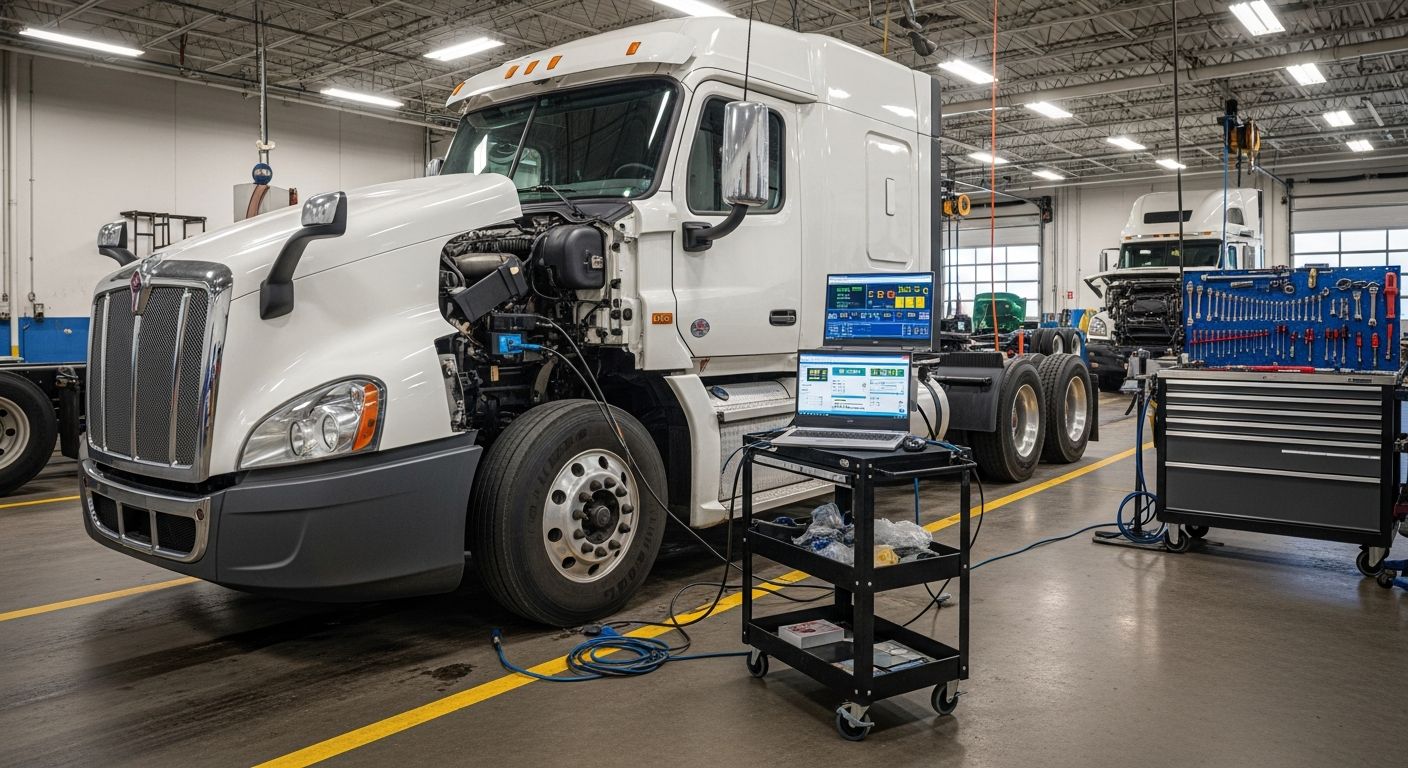
A truck warning light means the truck has already seen something wrong, and guessing based on symptoms alone is how small problems turn into breakdowns, derates, and roadside downtime.
Drivers and fleet owners get into trouble when the truck still runs, so the warning gets pushed off until after the load. That is when a simple sensor fault, charging issue, aftertreatment problem, or brake-related electrical problem turns into missed loads, tow bills, failed inspections, or repeat repairs because the root cause was never found. A warning light is not the repair. It is the truck asking for diagnostics.
A dash light can point to a fault long before the truck completely quits.
The same symptom can come from several different failures. Low power might be fuel delivery, boost leak, aftertreatment derate, sensor fault, or wiring. Hard starting might be batteries, starter draw, voltage drop, poor grounds, or an engine management issue.
That is where drivers lose money. They replace the part that seems most likely, clear the code, and get back on the road. Then the truck comes back with the same complaint because the actual problem was in the circuit, connector, air system, or data the ECM was seeing.
A warning light changes the job from guessing to testing. A proper diagnosis means reading fault codes, checking active versus inactive codes, looking at live data, and confirming the complaint with physical inspection. On a heavy-duty truck, that might include air pressure behavior, sensor readings, coolant pressure, charging voltage, DEF quality data, or a harness check for rub-through and corrosion.
A flashing or steadily illuminated malfunction indicator lamp means the engine-control system has detected a fault, and federal rules require the driver to inspect the vehicle before driving and not operate it if it is not in safe condition. That matters because a truck can still feel drivable while a serious fault is building in the background.
Ignoring the light usually makes the second repair more expensive than the first one would have been. The cost is not just the part. It is downtime, dispatch problems, roadside calls, damaged related components, and the chance of the truck shutting down in the wrong place.
Aftertreatment is a common example. A driver may notice only low power or a regen message and think the truck can finish the week. But diesel emissions systems such as the DPF and SCR can derate or stop protecting the engine when faults are ignored, which is how a manageable service visit turns into a truck that will not keep working.
Electrical warnings are another one that get underestimated. A charging problem may first look like a weak crank, dim lights, or random sensor faults. If nobody checks charging voltage, cable condition, and grounds, the truck can start dropping modules offline, set false codes, or leave the driver stuck after the next shutdown.
Cooling system warnings follow the same pattern. A driver sees high temp once, tops off coolant, and keeps going. If the real cause is a leaking EGR cooler, fan issue, plugged radiator, or pressure problem, the result can be overheating under load, engine protection derate, or major engine damage.
Even a light tied to lighting or chassis systems should not be treated as minor. A trailer ABS warning, brake warning, or body controller fault may not stop the truck immediately, but it can still point to a safety issue that gets worse with use.
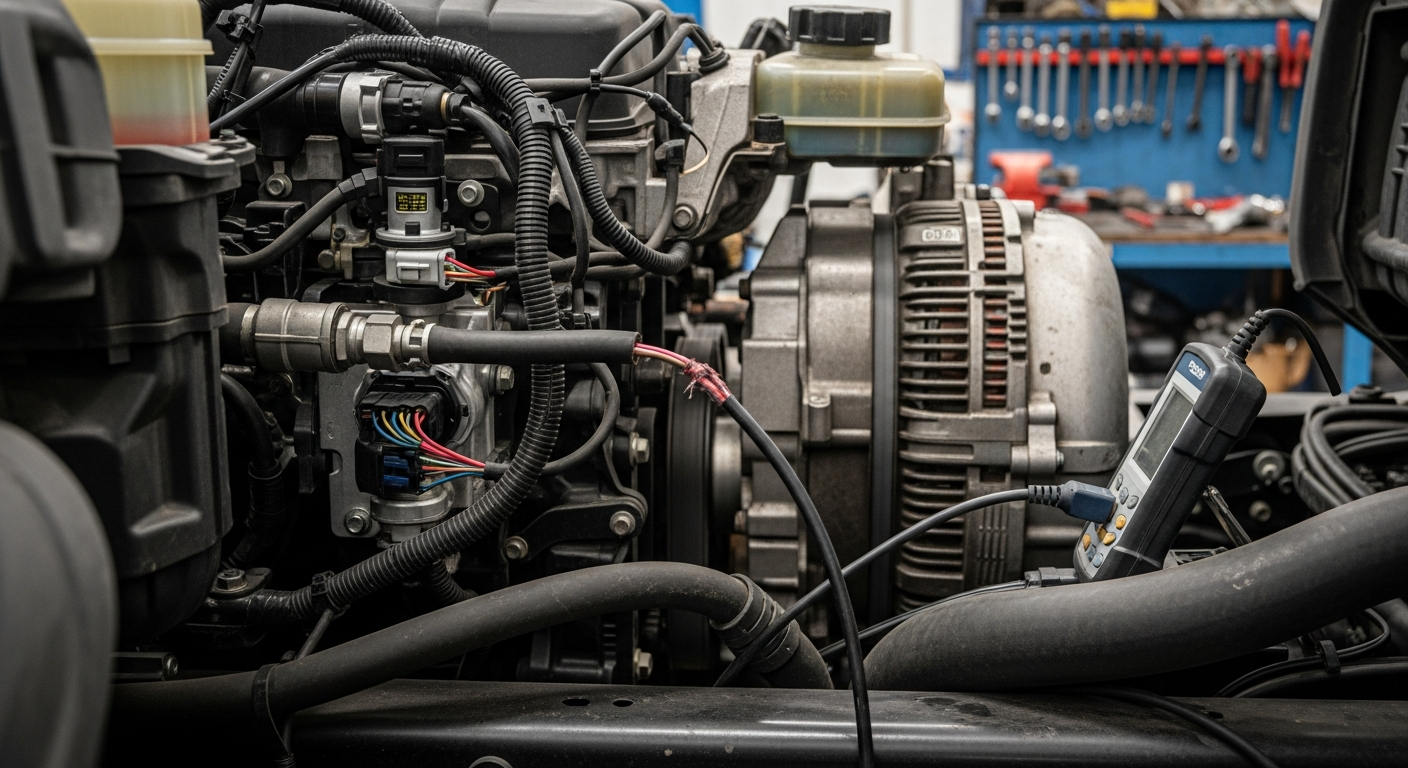
Clearing a warning light without fixing the cause only removes the evidence for a little while. The fault is still there if the conditions that triggered it are still present.
We see this a lot with NOx sensors, wheel speed sensors, pressure sensors, and DEF faults. A sensor code does not always mean the sensor failed. It can mean the sensor is reporting bad conditions caused by another issue, or that the sensor circuit has a wiring, connector, power, or ground problem.
That is why diagnosis has to include both the code and the reason behind the code. If a truck has an aftertreatment fault, for example, you may need to check dosing performance, exhaust temps, differential pressure, leaks, and commanded regen behavior. If a brake or ABS light is on, the test may need to include wheel-end inspection, tone ring condition, harness routing, and module communication.
Under federal CMV inspection rules, required lighting and other equipment must be in proper operating condition before the vehicle goes back on the road, which is why diagnosing the root cause matters more than just clearing a light under out-of-service criteria. If the light comes back and the defect is still there, the truck is right back at risk.
A real diagnosis is a process, not just plugging in a scan tool. The computer gives you a direction. It does not automatically give you the failed part.
On a heavy-duty truck, a good diagnostic path usually includes a few basic steps:
That process matters because many trucks have stacked problems. A battery voltage issue can create communication faults. An exhaust leak can trigger aftertreatment complaints. A worn wheel-end or bad tone ring can create ABS issues that get mistaken for a sensor failure. Without testing, it is easy to fix the symptom you saw first and miss the problem causing all of it.
Warning lights can also point to defects that belong on a recall check, not just a repair estimate. NHTSA recalls apply when a vehicle or equipment item has a safety-related defect or does not meet minimum safety standards, so it is smart to verify whether the issue is tied to a known campaign before paying out of pocket for the wrong repair path.
Some warnings can wait until the end of the day if the truck is operating normally and the fault is confirmed to be minor. Others should stop the trip right there. The hard part is that drivers often do not know which is which without diagnostics.
Do not gamble if the truck has any of these signs with a warning light:
Unsafe defects do get trucks parked. CVSA criteria are updated every year, and inspectors use them to place commercial vehicles out of service for serious defects involving brakes, steering, tires, lighting, and other critical systems. That is why waiting for a symptom to get worse is not a maintenance plan. It is a risk decision.
If your truck has a warning light and you are tired of replacing parts without fixing the problem, start with real diagnostics before the next breakdown costs more. HDTR in Homer Glen handles heavy-duty diagnostics, electrical repair, aftertreatment issues, inspections, and mechanical repair under one roof. If the truck is within 50 miles during business hours, road service may be enough to identify whether it can be repaired on-site or needs a tow-in for deeper testing. That is usually a lot cheaper than chasing symptoms until the truck derates, fails inspection, or leaves the driver stuck on the shoulder.
Maybe, but that depends on what system set the fault and whether the truck is still safe to operate. A truck can feel normal and still have a problem that leads to a derate, shutdown, or inspection issue. The smart move is to get the fault read and diagnosed before the next trip if there is any doubt.
That usually means the part swap did not fix the root cause. The real problem may be wiring, connector damage, a bad ground, low system voltage, an air leak, or another component causing the code. Repeated comebacks are a sign the truck needs proper diagnostics, not more guessing.
No. Clearing codes only removes the warning until the fault conditions happen again. If the cause is still there, the light will return and the truck may fail later under load, during regen, or on the next start cycle.
It usually starts with scanning all related modules for active and inactive fault codes, then checking live data and inspecting the affected system. A technician may test circuits, sensor values, pressure, voltage, or mechanical condition before replacing anything. That is how you avoid paying for parts the truck did not actually need.

Heavy Duty Truck Repair is currently going through an exciting period of reorganization and relocation to a new facility. As we prepare for this…
Tomas Labinskis
Aug 24, 2026
Your truck can need body repair even when the obvious crash damage looks minor, because hidden structural movement often shows up in the way…
Tomas Labinskis
Jul 17, 2026
A warning light on a heavy-duty truck is not just a reminder on the dash. It is the truck telling you a system has…
Tomas Labinskis
Jul 14, 2026