Heavy Duty Truck Repair Is Moving to a New Location
Heavy Duty Truck Repair is currently going through an exciting period of reorganization and relocation to a new facility. As we prepare for this…
 Tomas Labinskis
Aug 24, 2026
Heavy Duty Truck Repair is Temporarily Closed While We Get Settled Into Our New Space. Read more

Homer Glen, IL
Tomas Labinskis
May 12, 2026
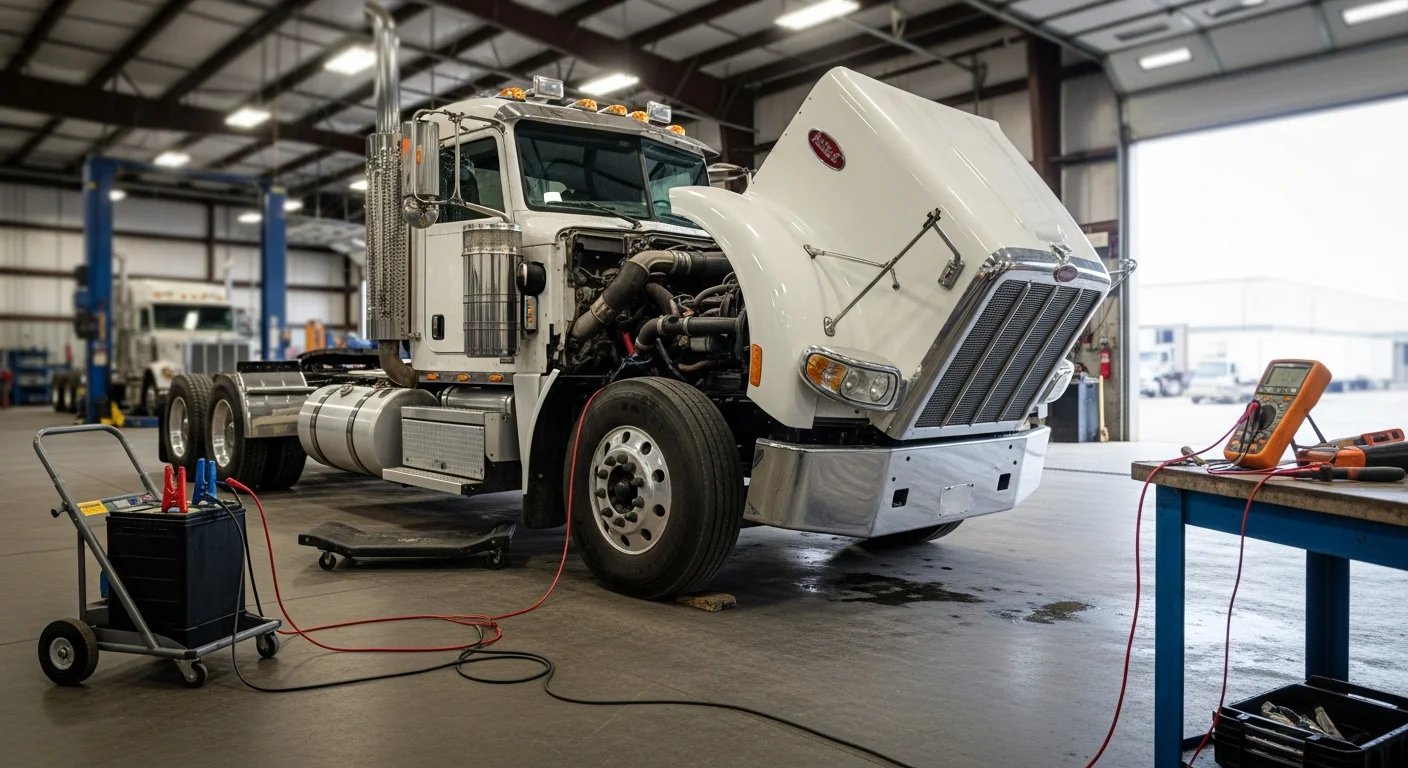
A heavy-duty truck that clicks, cranks slow, or does nothing when you turn the key often has a starter circuit problem, not just a bad starter motor.
That matters because a no-start can wreck a dispatch schedule fast. Drivers lose time at the fuel island or shipper, owner-operators risk a missed load, and fleets can end up paying for a road call, a tow, and the wrong part if nobody checks the basics first. A starter problem is also one of those repairs that gets misdiagnosed all the time, especially when the real cause is low voltage, a bad ground, or a relay issue.
A truck starter problem has to be diagnosed as a starting system problem, not just a starter replacement.
If you hear one click, rapid clicking, grinding, or the starter seems to stay engaged too long, the sound tells you a lot. Common starter-related symptoms include solenoid issues that cause clicking, grinding from poor gear engagement, slow cranking, no response at all, burning smell, smoke, or a starter that stays engaged after the engine should have fired. Those signs are common enough that they should push you toward a proper test routine before parts get thrown at the truck, as outlined by starter symptom guidance.
A single click usually means the solenoid is trying to work but the starter is not turning. That can come from weak battery power, high resistance in the cables, a bad relay, poor ground, or a failing starter.
Rapid clicking usually points harder toward low voltage. The solenoid pulls in, voltage drops, it releases, then tries again.
Slow cranking means the starter is turning, but not fast enough to spin the engine properly. That can be a battery issue, cable resistance, engine drag, or a starter drawing too much current.
Grinding is more serious. That can mean damaged starter drive teeth, flywheel ring gear damage, or poor engagement between the starter and flywheel. If a driver keeps hitting the key when it is grinding, the repair bill can get bigger fast.
No sound at all does not automatically mean the starter is dead. It can also mean the ignition switch signal is not reaching the starter relay, the neutral safety circuit is not allowing crank, a fuse is open, or there is a wiring problem.
Low voltage is one of the biggest reasons heavy-duty trucks get misdiagnosed with a bad starter. A starter needs strong battery power and clean cable connections to do its job.
Battery trouble often shows up as dim lights, clicking when the key is turned, or a crank that gets weaker with each attempt. One common reference point is that a healthy fully charged battery should be around 12.6 volts. If voltage is already low before cranking, replacing the starter may do nothing.
On heavy-duty trucks, cable and ground problems are just as common as battery failure. Corrosion hidden inside a cable, a loose frame ground, rust between a ground lug and metal surface, or heat-damaged battery connections can create enough voltage drop to keep the starter from working right.
This is where a lot of first repair attempts go wrong. Somebody sees a no-start, hears a click, installs a starter, and the truck still does not start because the actual problem was in the power or ground side of the circuit.
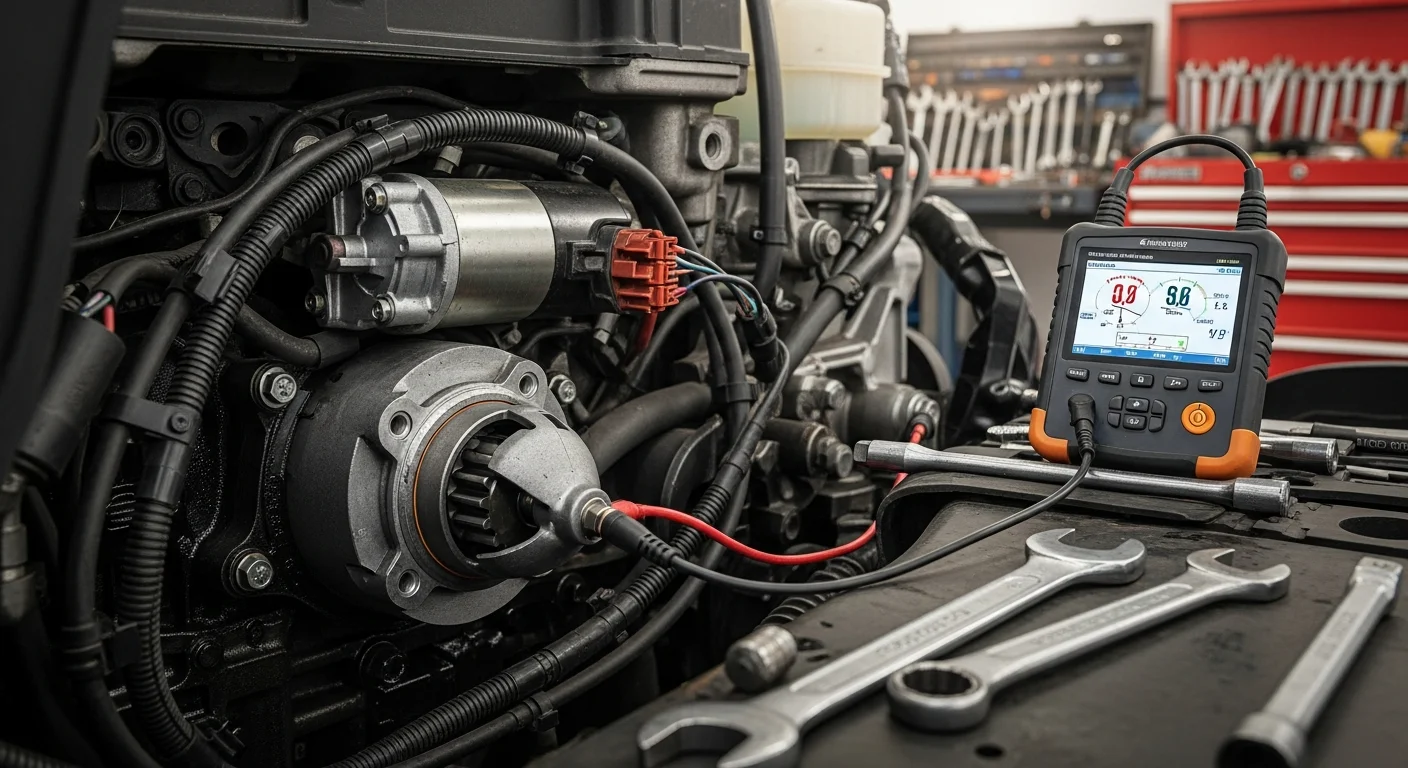
The first checks should be simple and aimed at avoiding a wrong call. You are trying to separate battery, cable, control circuit, and starter motor problems.
Start with a basic visual inspection. Look for loose battery terminals, swollen cables, corrosion, rubbed-through wiring near the starter, and signs of overheating at the terminals.
Then check the obvious operating conditions. Make sure the truck is in neutral, parking brakes are set, and any battery disconnect is fully on. On some trucks, an interlock or switch issue can mimic a starter failure.
Here is a practical order to follow:
If the headlights or dash lights go very dim during cranking, that points toward heavy current draw or major voltage drop. If the lights stay bright and nothing happens, the starter may not be getting the crank signal, or the relay circuit may have failed.
Another useful check is cranking voltage. A common rule is that the system should maintain at least 9.6 volts while cranking. If voltage stays up but the engine still cranks weakly, you may be dealing with a bad starter, resistance in the starter circuit, or even mechanical engine drag.
A proper diagnosis goes beyond listening for a click. The shop should test the whole starting circuit under load.
That usually means checking battery condition, measuring voltage drop on the positive side and ground side, verifying relay operation, and confirming whether the solenoid is receiving the right signal at the right time. If the starter is getting full power and ground but still cranks slow or not at all, then the starter itself moves much higher on the suspect list.
Voltage drop testing matters on heavy-duty trucks because big cables can look fine from the outside while failing under load. A cable can pass a visual check and still have internal corrosion or broken strands that choke current flow.
If grinding is present, inspection may have to go further. A damaged flywheel ring gear can keep chewing up replacement starters if nobody checks engagement and tooth condition. That is one reason repeat starter failures should never be treated as bad luck.
Control-side issues also get missed. A bad starter relay, ignition switch fault, poor connection at the solenoid trigger wire, or a ground issue in the start circuit can leave the truck dead even though the batteries and starter motor are good.
One or two careful attempts are fine during basic checks. Repeated cranking is where drivers get into trouble.
If the starter is clicking hard, cranking very slow, smoking, or grinding, stop trying to force it. More attempts can overheat cables, damage the starter, drain the batteries, and in some cases damage the flywheel. If the starter stays engaged after the key is released, shut power down as quickly as possible because that can destroy the starter fast.
For fleets, this is where downtime multiplies. A truck that might have needed cable repair can turn into a starter, battery, and flywheel job after repeated attempts on the road. For owner-operators, that means a bigger invoice plus lost revenue while the unit is stuck.
If your truck is clicking, cranking slow, or showing a no-start with no clear answer, do not guess and keep replacing parts. Heavy Duty Truck Repair can help with truck electrical repair for starting circuit, battery, relay, and wiring problems. If the truck is within 50 miles of Homer Glen during business hours, roadside service may be possible, and if not, tow-in can be arranged. For shop diagnostics and repair, contact Heavy Duty Truck Repair in Homer Glen, Illinois.
Yes. Low battery voltage or poor battery cable connections can cause clicking, slow cranking, or a complete no-start that feels like a bad starter. That is why voltage and connection checks should happen before a starter is replaced.
A single click usually means the solenoid is trying to engage but the starter motor is not turning. The cause could be weak batteries, cable resistance, a bad ground, a faulty relay, or a failed starter.
No. Grinding can mean bad starter engagement or damaged flywheel teeth, and repeated attempts can make the damage worse. Stop and have the starting system inspected before the repair gets more expensive.
You need circuit testing, not guesswork. A technician should verify battery power, ground quality, and whether the relay and solenoid are getting the correct crank signal under load. If the signal and voltage are good but the starter does not perform, the starter becomes the likely fault.

Heavy Duty Truck Repair is currently going through an exciting period of reorganization and relocation to a new facility. As we prepare for this…
Tomas Labinskis
Aug 24, 2026
Your truck can need body repair even when the obvious crash damage looks minor, because hidden structural movement often shows up in the way…
Tomas Labinskis
Jul 17, 2026
A warning light on a heavy-duty truck is not just a reminder on the dash. It is the truck telling you a system has…
Tomas Labinskis
Jul 14, 2026