Heavy Duty Truck Repair Is Moving to a New Location
Heavy Duty Truck Repair is currently going through an exciting period of reorganization and relocation to a new facility. As we prepare for this…
 Tomas Labinskis
Aug 24, 2026
Heavy Duty Truck Repair is Temporarily Closed While We Get Settled Into Our New Space. Read more

Homer Glen, IL
Tomas Labinskis
Jun 2, 2026
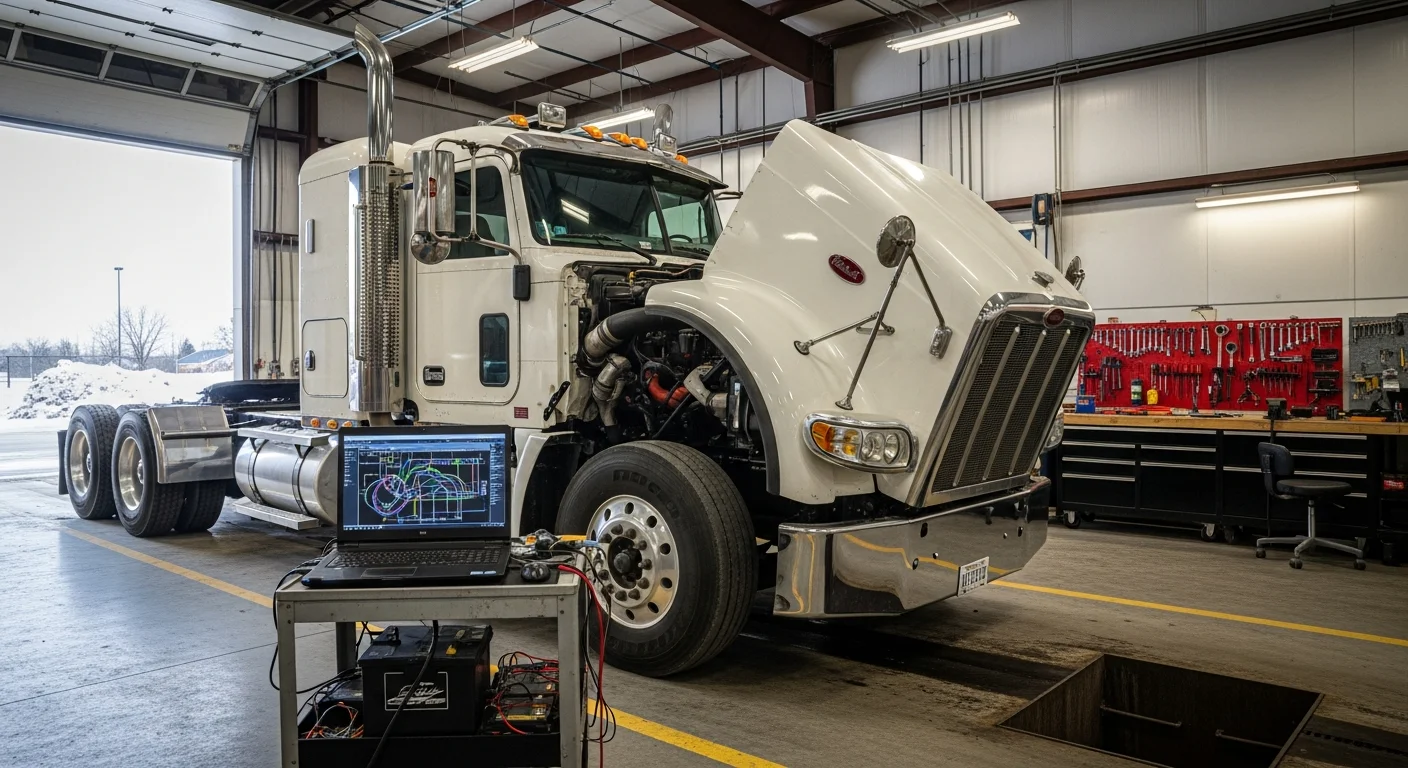
Seasonal weather changes can weaken a heavy-duty truck’s electrical system long before a battery, starter, alternator, or wiring problem becomes obvious. Winter usually brings slow cranking, hard starts, voltage drop, and battery failures. Summer brings heat-related charging issues, weak grounds, sensor faults, corroded connections, and wiring damage that shows up when the truck is under load or stuck in traffic.
For a fleet manager or owner-operator, electrical trouble is rarely just an electrical trouble. It turns into missed loads, no-start calls, derates that seem random, roadside downtime, and parts being replaced before the real fault is found. Seasonal problems also create repeat breakdowns because the truck may act normal in the shop, then fail again when temperatures swing hard.
Weather changes expose weak electrical systems before drivers see a complete failure.
Cold weather makes a marginal electrical system fail fast. A truck that started fine in October can become a no-start unit after the first real freeze.
The biggest reason is battery performance. As temperatures drop, battery output drops with it, and the starter has to work harder to spin an engine that already has more internal drag. That is why winter no-start complaints often begin with slow crank, clicking, dim dash lights, or a truck that only starts after a jump.
Cold weather also thickens oil and other fluids, which adds load to the starting system. That means the batteries, cables, starter, and grounds all have to carry more demand at the exact time the batteries are least efficient.
If one battery in a set is weak, or if there is corrosion hidden inside a cable end, winter will usually bring it out. The truck may still have voltage on a meter, but under load the voltage can collapse. That is where proper load testing and voltage drop testing matter more than guessing.
A common fleet mistake is replacing batteries without checking cable resistance, starter draw, and charging output. The truck may start again for a while, but the repeat failure comes back because the root cause was a bad ground path, high resistance in the cables, or a starter pulling too much amperage.
Summer is easier on cranking power, but harder on the rest of the electrical system. Heat speeds up corrosion, breaks down insulation, and pushes weak charging components over the edge.
Underhood temperatures climb fast in stop-and-go traffic, during PTO work, or while pulling heavy in construction and local delivery use. Alternators, batteries, relays, sensors, and control modules do not like sustained heat. A truck may start fine in the morning and still have charging problems by afternoon once the engine bay is heat-soaked.
Summer electrical complaints often sound different from winter complaints. Instead of a no-start, drivers report intermittent warning lights, A/C blower problems, aftertreatment faults, trailer light issues, battery lights, or a truck that dies after idling with accessories on.
Heat also exposes wiring problems around the engine, frame rail, battery box, and trailer connections. Wire insulation gets brittle. Loom rubs through. Grounds loosen. Connectors collect moisture and road salt from prior seasons, then expand and fail when heat builds. What looks like a sensor fault can really be a wiring fault or low system voltage.
This is why good diagnostics matter. Pulling fault codes is only the first step. You also need live data, charging system checks, and circuit testing to see whether the truck has a bad component or just poor power and ground supply.
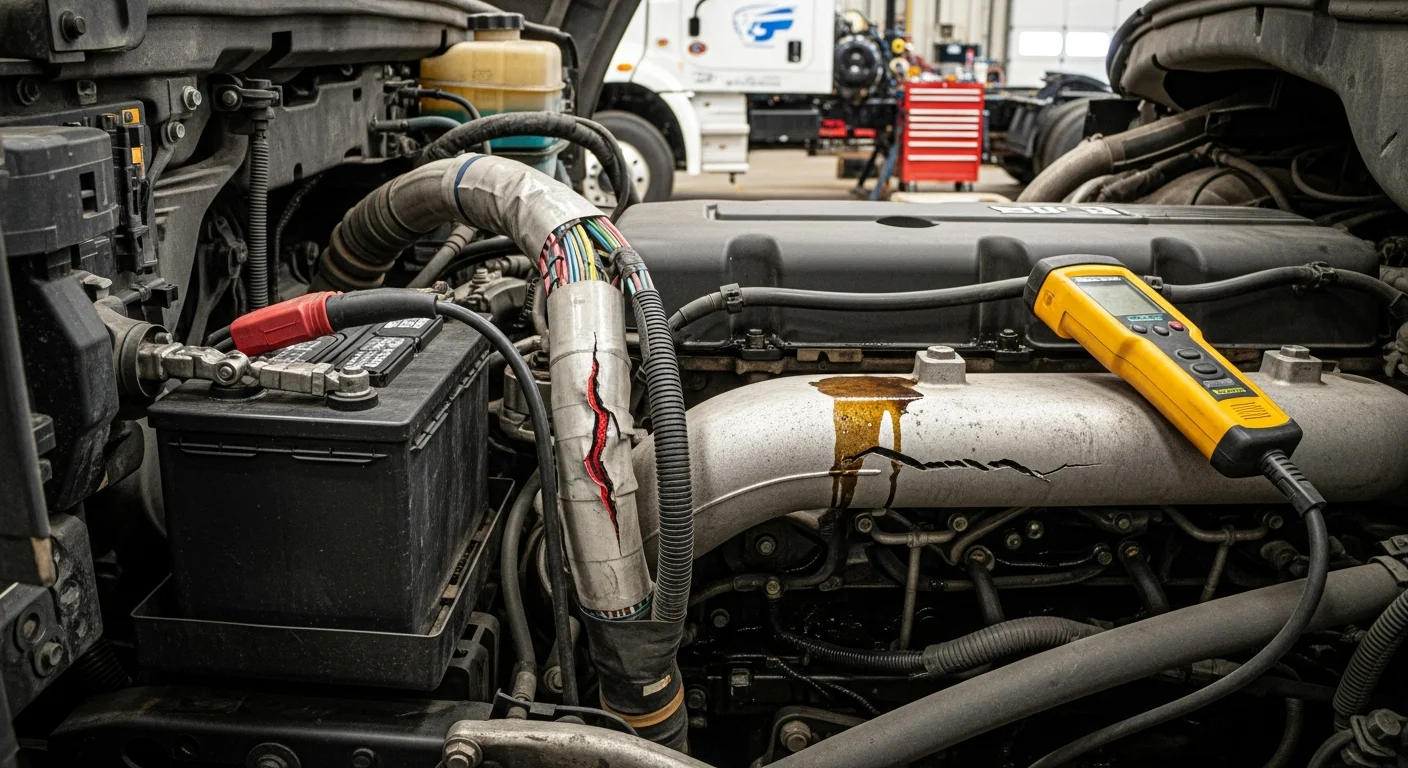
The season changes the way the same weak electrical system shows itself. That is what confuses drivers and dispatchers.
In winter, you are more likely to see:
In summer, you are more likely to see:
The practical point is simple: the weather may change the symptom, but the root problem is often still poor battery health, weak charging output, high resistance, bad grounds, or damaged wiring.
The best time to catch electrical trouble is before the weather shifts, not after trucks start failing on routes. A quick seasonal inspection costs far less than a road call, tow bill, or a truck missing dispatch because it will not start.
Before winter, focus on starting power. Test batteries under load, not just at rest. Check battery age, cable condition, terminal corrosion, starter draw, and charging output. Batteries that seem acceptable in warm weather can fail hard in freezing weather, and older units are especially risky once they get past the 3- to 4-year range.
Before summer, focus on heat-related weaknesses. Inspect alternator output hot, not just cold. Check battery box condition, grounds, harness routing, connector seals, trailer pigtails, and signs of rub-through near brackets and engine components. If the truck already has occasional sensor or lighting issues, summer heat usually makes them worse.
A useful inspection list includes:
If a truck already has random ABS, check engine, DEF, or lighting warnings, do not assume those are separate problems. Low voltage and bad grounds can trigger multiple systems at once and waste a lot of repair money if nobody checks the electrical basics first.
If the truck has already had batteries, a starter, or an alternator replaced and the problem came back, it is time for deeper testing. Replacing parts based on the symptom alone is where fleets lose money.
A proper diagnosis should answer a few direct questions. Is the battery actually weak, or is there a parasitic draw? Is the alternator failing hot? Is the starter drawing too much current? Is a control module losing voltage because of a ground issue? Is a trailer harness feeding back a fault into the truck electrical system?
That is the difference between a one-time repair and a repeat breakdown. Seasonal weather does not create every electrical fault, but it does expose every weak point that was already there.
For fleets, this matters even more with trucks that sit between runs, run short local routes, idle heavily, or spend time on PTO. Those trucks often do not recharge batteries the same way long-haul units do, so they go into weather extremes already behind.
If your trucks start acting up every first freeze or every summer heat wave, treat that pattern as a warning. The next step is not guessing which part to throw at it. The next step is finding where voltage is being lost and why.
If your fleet is dealing with slow cranking, repeat no-starts, charging issues, warning lights, or weather-related electrical faults, do not wait until a truck is dead on a jobsite or stuck on a load. Heavy Duty Truck Repair handles truck electrical repair for heavy-duty trucks in Homer Glen, IL, with diagnostics that help separate a bad part from a wiring or ground problem. For trucks that need a full electrical check before winter or summer hits, Heavy Duty Truck Repair can inspect the system, track down the fault, and help you avoid the repeat breakdown that keeps coming back with the weather.
Cold weather cuts battery cranking power and makes the engine harder to turn because fluids are thicker and internal drag is higher. A battery, cable, or starter that seemed acceptable in warm weather can fail quickly once temperatures drop.
Yes. Summer heat can expose weak alternators, bad grounds, damaged wiring, loose connectors, and heat-sensitive sensors or modules. A truck may crank normally but still have charging faults, warning lights, or intermittent electrical failures once it gets hot.
You usually cannot tell by symptoms alone because both can cause slow cranking, low voltage, and random fault codes. The right way is to load-test the batteries and perform voltage drop testing on the power and ground circuits while the system is under load.
Before winter, test battery health, inspect terminals, check starter draw, and verify charging output. Before summer, inspect alternator performance hot, look for harness rub-through, check grounds and connectors, and scan for stored faults that may point to low-voltage or intermittent circuit problems.

Heavy Duty Truck Repair is currently going through an exciting period of reorganization and relocation to a new facility. As we prepare for this…
Tomas Labinskis
Aug 24, 2026
Your truck can need body repair even when the obvious crash damage looks minor, because hidden structural movement often shows up in the way…
Tomas Labinskis
Jul 17, 2026
A warning light on a heavy-duty truck is not just a reminder on the dash. It is the truck telling you a system has…
Tomas Labinskis
Jul 14, 2026