Heavy Duty Truck Repair Is Moving to a New Location
Heavy Duty Truck Repair is currently going through an exciting period of reorganization and relocation to a new facility. As we prepare for this…
 Tomas Labinskis
Aug 24, 2026
Heavy Duty Truck Repair is Temporarily Closed While We Get Settled Into Our New Space. Read more

Homer Glen, IL
Tomas Labinskis
May 14, 2026
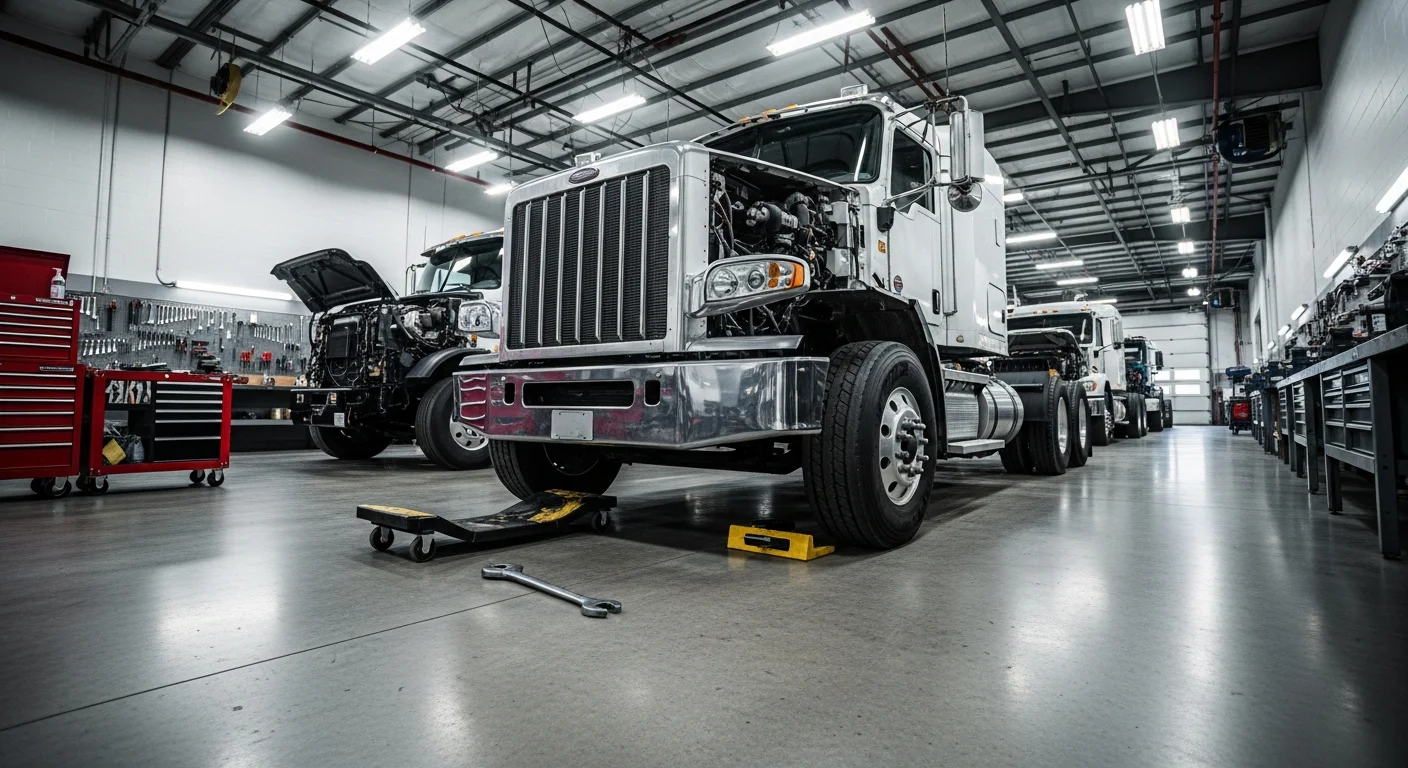
Steering play in a heavy-duty truck means the steering wheel has too much free movement before the tires actually respond, and that is never something to brush off. If you have to keep correcting the truck, the wheel feels loose on center, or the truck does not come back cleanly after a turn, there is a problem somewhere in the steering, suspension, tire, or coupling setup.
For a driver or fleet, this is not just a comfort issue. Steering play can lead to wandering, poor lane control, faster tire wear, driver fatigue, failed inspections, and in the worst case, loss of control. A truck with excessive steering looseness also burns time because the first guess is often wrong, and that leads to repeat shop visits instead of a real fix.
Excessive steering play can turn into a safety problem long before a part fully fails.
The first sign is usually not a broken part hanging loose. It is a truck that just does not feel planted.
Drivers usually describe it as a loose wheel, wandering, delayed response, or needing constant small corrections to stay in the lane. Some say the truck feels worse with a loaded trailer, in crosswinds, or on rough pavement. Others notice the steering does not recover the same way after a right or left turn.
That matters because loose or excessive steering can become an inspection and uptime problem. Under 49 CFR Part 396, steering systems are part of required inspection, repair, and maintenance standards, and steering defects serious enough to affect safe operation can put the truck out of service until repaired.
A lot of trucks get misdiagnosed at this stage. The driver feels looseness in the wheel and assumes it is just the steering box. Sometimes it is. A lot of times it is not.
Most steering play comes from wear that adds up across several components, not just one bad part. A truck can have a little movement in the tie rod ends, a little wear in the kingpins, some steering gear slack, and a tire or alignment issue on top of that. Put it all together and the driver feels a truck that will not track straight.
Worn ball joints, tie rod ends, and kingpins are some of the main mechanical causes. These parts take a beating from heavy loads, potholes, curbs, rough job sites, and uneven roads. When they wear, the steering input does not transfer cleanly to the wheels, and that free play shows up at the steering wheel.
There are also causes that get missed during a quick look underneath. Loose steering gear mounting bolts, binding hydraulic hoses, and improper steering gear adjustment can all create steering looseness or strange steering feel. Fleets and drivers sometimes chase suspension parts first and overlook a steering gear that is moving on the frame or a hydraulic issue that changes steering response.
Another one many people do not think about is the tractor-trailer connection. A dry fifth wheel can contribute to wandering and poor steering recovery after turns. If the fifth wheel is not lubricated, the trailer can resist movement and change how the tractor tracks, especially in turns and during lane corrections.
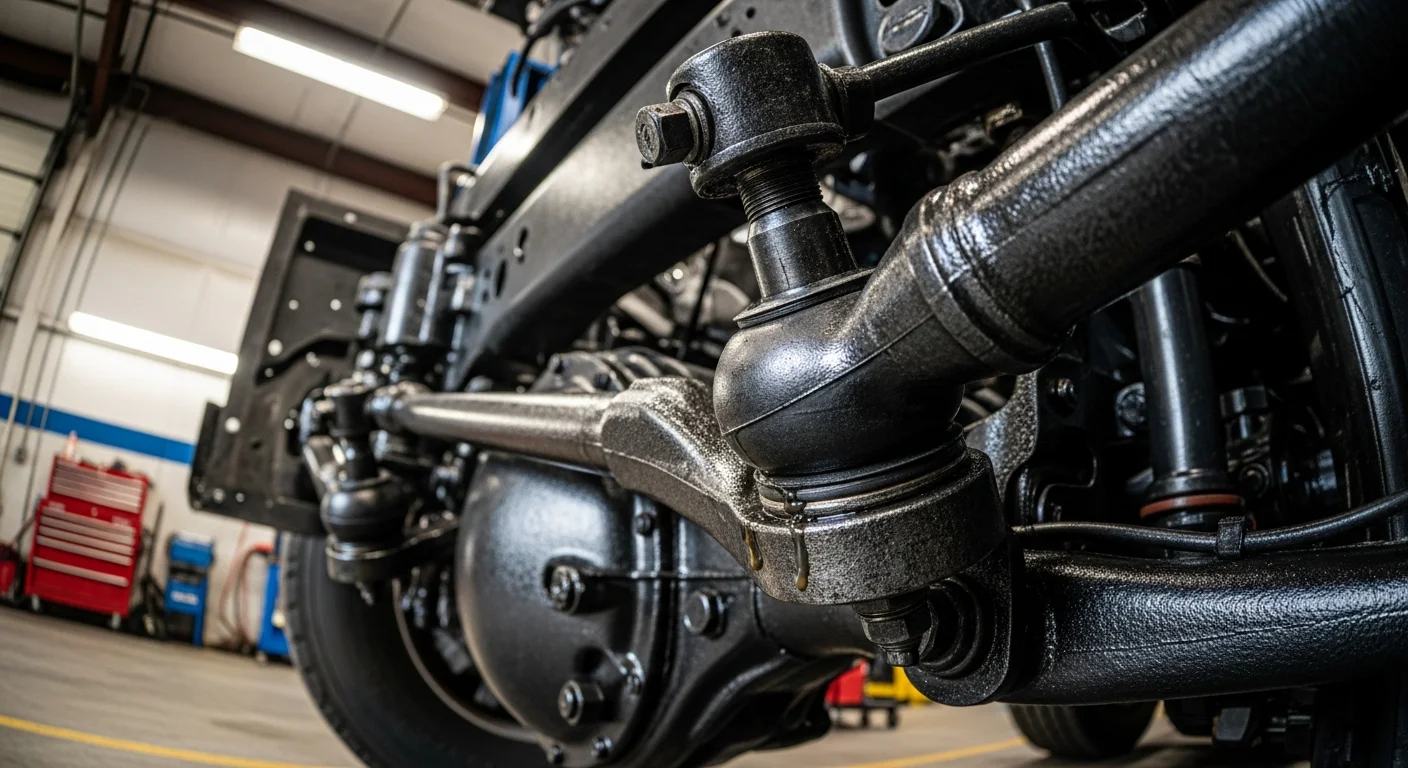
Do not start with parts cannon repairs. Steering play needs a step-by-step inspection, because the truck can feel the same from the driver seat whether the problem is in the steering linkage, tires, fifth wheel, or alignment.
Start with the basics while the complaint is still fresh in your mind. If the driver says it wanders more loaded than empty, or only after a turn, that helps narrow it down.
Check these items first:
Do not skip the tires. A truck can act like it has steering gear problems when it really has poor steer tire condition or a pressure difference side to side. Improper alignment and uneven left-right tire pressure can create steering play symptoms, wandering, and poor steering recovery after turns.
This is also where a good road test matters. Some steering play complaints are really driveline vibration, dog tracking, or suspension wear showing up through the steering wheel. If the truck pulls only under braking, the issue may not be steering play at all. If it wanders only with one trailer, check the trailer before you condemn the tractor.
A lot of trucks get one obvious worn part replaced and still come back with the same complaint. That happens because steering looseness is often cumulative.
For example, replacing tie rod ends may tighten the front end some, but if the kingpins are worn and the alignment is off, the truck still will not feel right. The same thing happens when a steering gear gets adjusted to hide looseness caused by worn linkage. That can make the steering bind or fail to return properly, and now you have a different handling problem.
The right way is to inspect the system loaded with force, not just with a flashlight. That means having someone move the wheel while a tech watches each connection point for delay or movement. You want to see where the play starts. Is the steering shaft moving before the pitman arm? Is the drag link moving before the steering arm? Is the wheel end shifting at the kingpin?
This is also where suspension and frame condition matter. Worn spring eye bushings, torque rod wear, or axle shift can make a truck feel unstable and get reported as steering play. If the complaint is vague, the inspection has to go wider than just the steering box.
If the truck has major free play, poor lane control, clunking in the steering, or visible movement in steering linkage parts, it should not stay in service until somebody “gets around to it.” Steering problems have a way of showing up worst in bad weather, heavy traffic, and tight job site conditions.
Minor looseness caught early may only need a few parts, lubrication service, tire correction, and alignment. Left alone, that same truck can eat a set of steer tires, wear out more front-end parts, and put the driver on the shoulder waiting for a tow or roadside inspection decision.
Typical repairs depend on what the inspection finds. They may include replacing tie rod ends, drag link ends, kingpins, or ball joints, tightening or repairing steering gear mounts, correcting steering gear adjustment, replacing damaged hydraulic hoses, aligning the front end, correcting tire pressure, or servicing the fifth wheel. After parts replacement, the truck should be road tested again and checked for steering recovery, on-center feel, and tire tracking.
If your truck has loose steering, wandering, or poor return after turns, do not wait for it to turn into tire damage or an out-of-service problem. HDTR in Homer Glen, IL can inspect heavy-duty steering, suspension, tire wear, alignment-related handling complaints, and fifth wheel issues under one roof. Walk-ins are welcome, and if the truck is within 50 miles during business hours, road service may be able to check whether it is safe to move or if a tow-in makes more sense. A proper inspection now is a lot cheaper than chasing repeat breakdowns and driver complaints later.
If the steering wheel has noticeable free movement before the steer tires respond, the truck needs to be checked. The exact limit depends on the steering system design and condition, but if the truck wanders, needs constant correction, or feels loose on center, it is already too much from an operating standpoint.
Yes. Uneven wear, feathering, cupping, or a pressure difference between the left and right steer tires can make the truck wander or feel loose. That is why tire condition and pressure need to be checked before replacing steering parts.
The most common wear points are tie rod ends, drag link ends, kingpins, ball joints on applicable setups, and steering gear related components. In some cases, loose steering gear mounts or suspension wear add to the same complaint.
Yes. A dry or poorly lubricated fifth wheel can change how the trailer follows the tractor and can contribute to wandering or poor steering recovery after turns. It is not the first thing most people think of, but it can absolutely affect handling.

Heavy Duty Truck Repair is currently going through an exciting period of reorganization and relocation to a new facility. As we prepare for this…
Tomas Labinskis
Aug 24, 2026
Your truck can need body repair even when the obvious crash damage looks minor, because hidden structural movement often shows up in the way…
Tomas Labinskis
Jul 17, 2026
A warning light on a heavy-duty truck is not just a reminder on the dash. It is the truck telling you a system has…
Tomas Labinskis
Jul 14, 2026