Heavy Duty Truck Repair Is Moving to a New Location
Heavy Duty Truck Repair is currently going through an exciting period of reorganization and relocation to a new facility. As we prepare for this…
 Tomas Labinskis
Aug 24, 2026
Heavy Duty Truck Repair is Temporarily Closed While We Get Settled Into Our New Space. Read more

Homer Glen, IL
Tomas Labinskis
Jul 4, 2026
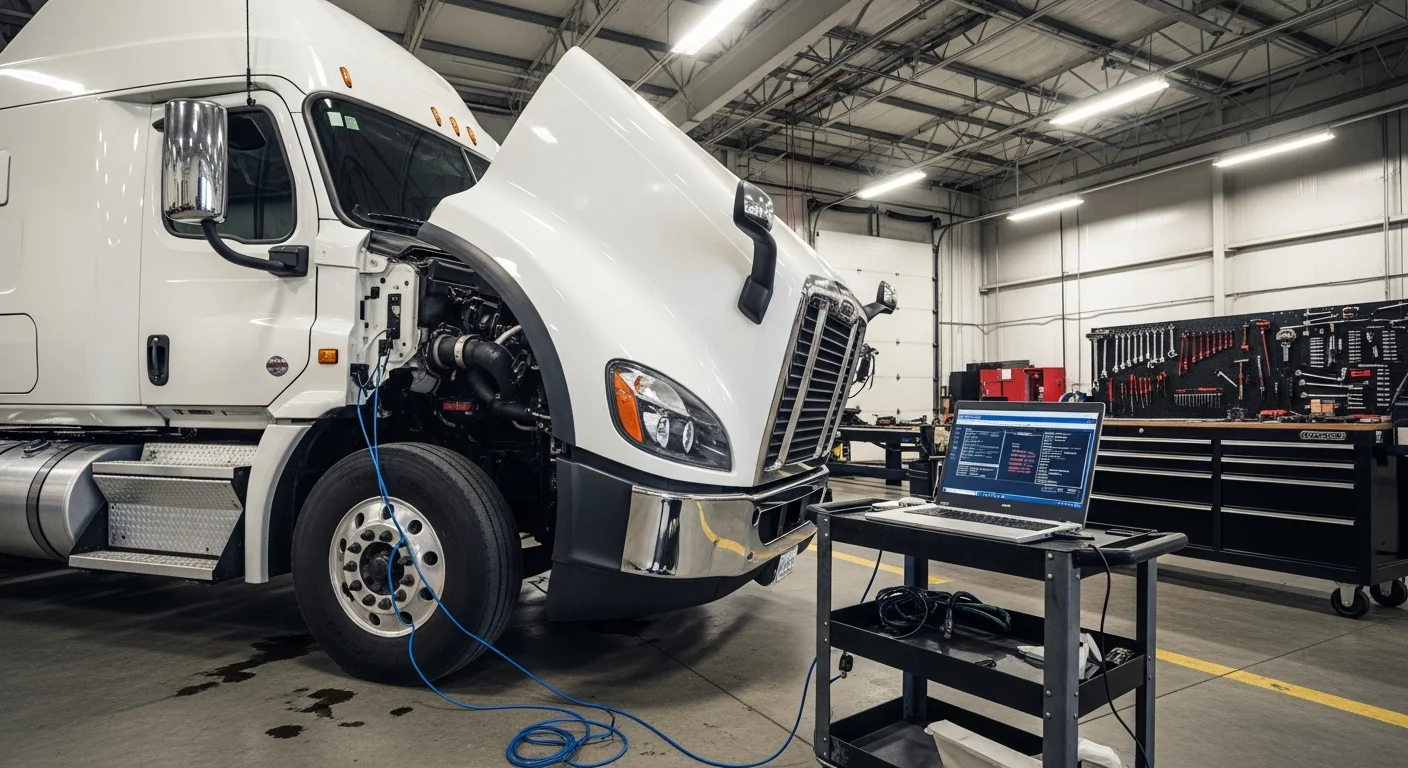
A truck fault code needs professional help when it points to a shutdown-level problem, keeps coming back, affects power or braking, or cannot be traced to something obvious like a loose connector. The code itself is not the repair. It is the truck telling you which system is seeing a problem, and sometimes that problem is electrical, mechanical, or aftertreatment-related far beyond what a quick code clear can fix.
For an owner-operator or fleet, the wrong call here costs money twice. First in downtime, missed loads, and roadside delays. Then again when a truck gets a repeat breakdown because the first step was just clearing the light instead of diagnosing the cause. A bad decision can also turn into a tow bill, an out-of-service issue, or engine damage that could have been avoided.
A recurring fault code is usually a warning that the truck needs testing, not just a reset.
Fault codes tell you where to start, not what part to throw at the truck. That is where a lot of owners get burned.
On heavy-duty trucks, the scan tool is usually reading SPN and FMI information, not just a simple car-style code. Modern heavy-duty trucks often need a heavy-duty diagnostic scanner to read those codes correctly because many passenger-car OBDII tools cannot interpret manufacturer-specific truck data.
That matters because two trucks can show a similar warning light and need completely different repairs. One may have a bad sensor. Another may have low fuel pressure, wiring damage, soot loading, a failed actuator, or a derate command from the engine computer.
Codes also have different status levels. Active and pending DTCs are not the same thing. An active code is a current failure that has met the conditions to trigger the warning. A pending code is an intermittent fault that has not fully matured yet. That difference helps you decide whether you are looking at a one-time glitch, an early warning, or a problem that is already affecting truck operation.
If the truck is running normally and you only have a pending code once, you may not need to stop everything immediately. If the code is active, the truck is derating, or the warning returns right after clearing, you are past the watch-and-wait stage.
Some codes are shop-now codes. Some are stop-now codes.
If a code points to overheating, oil pressure loss, or brake system failure, the truck should be taken out of service until it is checked. Problems like these can destroy an engine, create a brake safety issue, or leave the driver stuck in a much worse spot than where the warning first appeared. A fault tied to engine overheating, low oil pressure, or brake failure means the truck needs immediate service to avoid major damage or a safety incident.
Even when the truck still moves, these symptoms mean the code is not just an electrical nuisance:
Once you have one of those, the decision is not whether the light is annoying. The decision is whether you want to risk turning a controlled repair into a roadside failure.
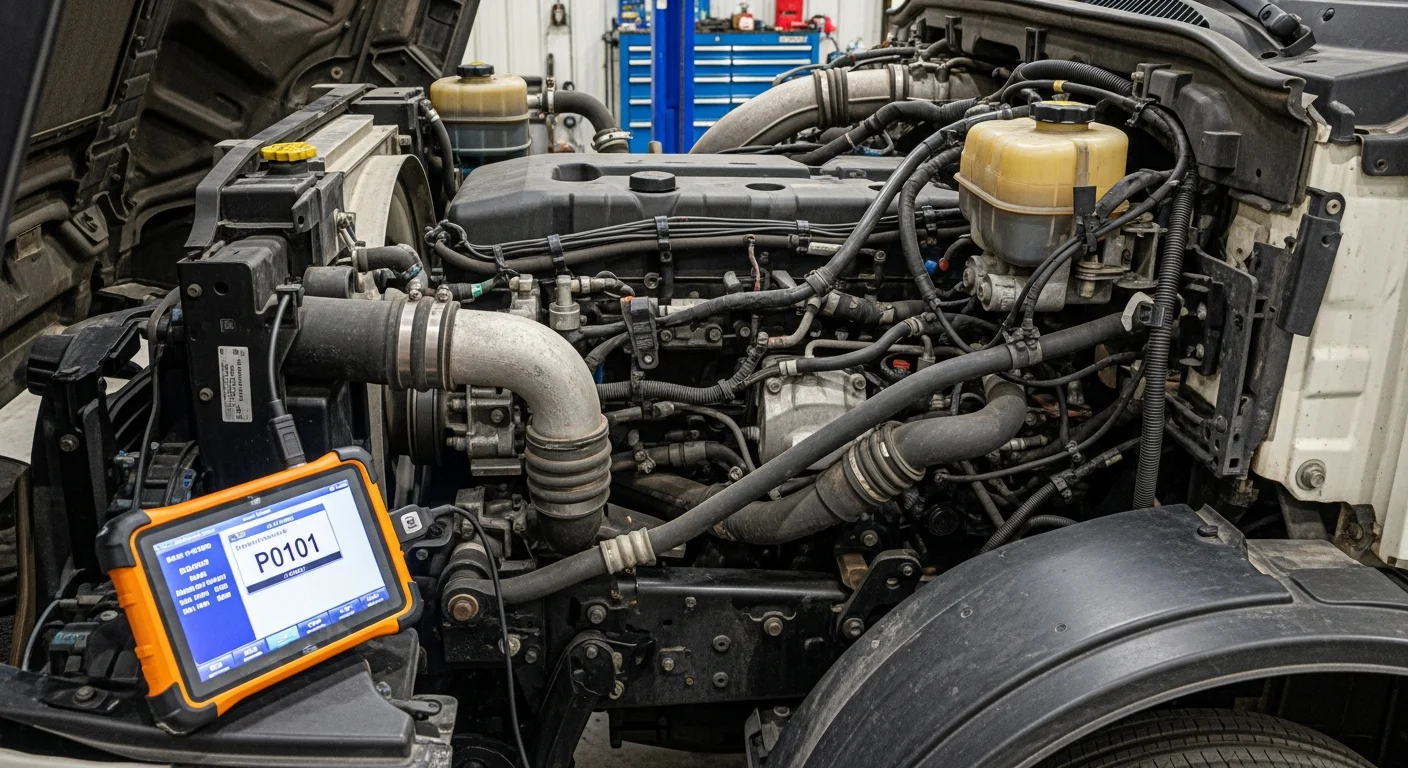
Clearing a code too early can make diagnosis harder. It wipes out clues that a technician needs.
Before clearing any code, techs should check for related recalls or Technical Service Bulletins from the OEM. That matters because some repeat faults are known issues with updated parts, revised software, or factory diagnostic steps. If you skip that part, you can waste money replacing the wrong component and still end up with the same truck back in the shop.
This is common on aftertreatment and electrical faults. A driver sees a check engine light, someone clears it, the truck runs fine for a day or two, and then it derates again. The first code was not the real problem. It was the first symptom.
Professional diagnosis makes more sense than a reset when:
Those are the situations where live data, pin checks, voltage drop testing, and guided OEM steps save time. Without that, parts swapping starts, and the repair bill climbs fast.
Not every code means a major breakdown. But every code should get a basic system check before anybody guesses.
A visual inspection is one of the first things that should happen because scanners miss physical problems. Loose connectors, rubbed-through harnesses, damaged sensor pins, oil-soaked wiring, and disconnected components can all set codes and come back again if nobody actually looks at the truck. A good inspection of the affected circuit or component often finds what the code alone does not.
For an owner or driver, the practical first checks are simple:
That information helps the shop narrow it down faster. “Check engine light came on” is not enough. “SPN/FMI came on after 40 minutes under load, temp climbed, fan stayed on, and power dropped” is useful.
It also helps separate roadside repair from a shop job. A damaged connector, broken air line sensor feed, or battery cable issue might be handled on-site. A code that needs forced regen diagnostics, network testing, injector cutout tests, or deeper electrical tracing usually needs the truck in the shop.
The smart decision comes down to symptom severity, code status, and truck behavior. If the code changes how the truck runs, brakes, starts, or builds pressure, get it checked right away.
Use this simple breakdown:
| What you are seeing | Best next step |
|---|---|
| Single pending code, no warning light, truck runs normal | Monitor it closely and schedule diagnostics if it returns |
| Active code with check engine light, but no drivability issue yet | Schedule professional diagnostics soon before it becomes a derate or roadside problem |
| Repeat code after clearing, intermittent shutdown, or multiple system codes | Get professional diagnostics instead of clearing again |
| Overheating, low oil pressure, brake-related warning, no-start, or severe derate | Stop operating the truck and have it serviced immediately |
The tradeoff is simple. Waiting can save a service call if the issue was truly minor. Waiting can also turn a one-hour electrical repair into a major engine, aftertreatment, or towing problem. If the truck makes money every day, repeat codes are rarely something to gamble on.
If your truck has a fault code that keeps returning, is causing a derate, or points to overheating, oil pressure, braking, or aftertreatment trouble, get it checked before it turns into roadside downtime. HDTR in Homer Glen, Illinois handles heavy-duty diagnostics, electrical repair, and mechanical problems under one roof, and road service is available during business hours within 50 miles when the truck cannot make it in safely. If the issue needs deeper testing, the shop can handle proper diagnostics instead of just clearing the code and sending the truck back out to fail again.
Sometimes, but it depends on what the code is doing to the truck. If there is no power loss, no overheating, and no brake or oil pressure warning, you may be able to finish a short run and schedule diagnostics. If the truck is derating, running hot, losing oil pressure, or showing brake-related warnings, stop and get it serviced.
Because the original problem is still there. The code may be caused by a failed sensor, wiring damage, low voltage, an air or fluid problem, or a mechanical issue that the reset did not fix. A repeat code usually means the truck needs actual testing, not another reset.
Yes, in many cases. Heavy-duty trucks often use SPN and FMI fault information that basic passenger-car scan tools do not read correctly. A proper truck diagnostic tool and live data are usually needed to pinpoint the cause.
It can be, but only for certain faults. A loose connector, battery cable issue, or obvious harness damage may be handled roadside during business hours. If the truck needs live diagnostics, forced regen testing, electrical tracing, or multiple systems are involved, it usually needs the shop.
Heavy Duty Truck Repair is currently going through an exciting period of reorganization and relocation to a new facility. As we prepare for this…
Tomas Labinskis
Aug 24, 2026
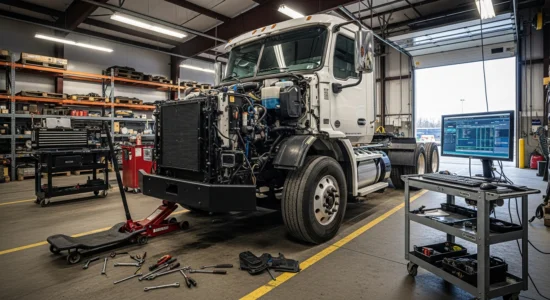
Your truck can need body repair even when the obvious crash damage looks minor, because hidden structural movement often shows up in the way…
Tomas Labinskis
Jul 17, 2026
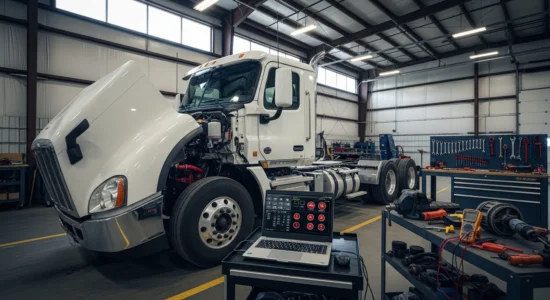
A warning light on a heavy-duty truck is not just a reminder on the dash. It is the truck telling you a system has…
Tomas Labinskis
Jul 14, 2026