Heavy Duty Truck Repair Is Moving to a New Location
Heavy Duty Truck Repair is currently going through an exciting period of reorganization and relocation to a new facility. As we prepare for this…
 Tomas Labinskis
Aug 24, 2026
Heavy Duty Truck Repair is Temporarily Closed While We Get Settled Into Our New Space. Read more

Homer Glen, IL
Tomas Labinskis
Jul 14, 2026
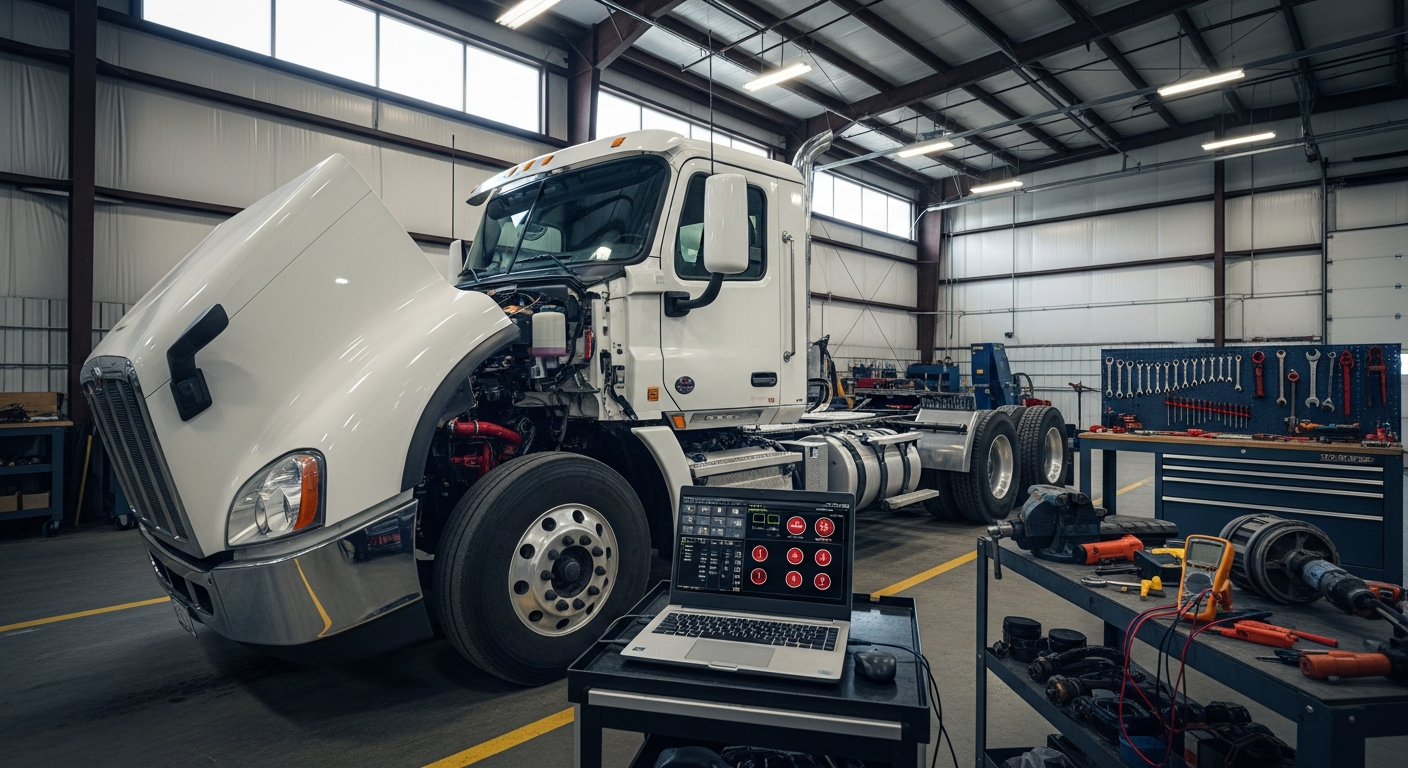
A warning light on a heavy-duty truck is not just a reminder on the dash. It is the truck telling you a system has drifted out of normal operation, and some lights mean you need to stop before a small repair turns into engine, brake, or transmission damage.
For a driver or fleet, the real problem is not the light itself. It is the missed load, roadside downtime, tow bill, failed inspection, or repeat breakdown that comes from guessing wrong and pushing the truck too far. A warning light that gets ignored in the yard often becomes a derate on the road.
A dash light matters because it helps you decide whether the truck can keep working, needs roadside help, or needs to come straight into the shop.
The color matters because it tells you how urgent the problem is. Drivers get in trouble when they treat every light the same.
In general, red warning light conditions can mean the system is in an emergency mode or has reached a point where continued driving may damage parts or create a safety issue. Yellow lights usually mean the truck still runs, but a component or system needs service soon, often tied to wear or performance issues in areas like EGR, DPF, or turbo operation.
That does not mean every yellow light is safe to ignore. A yellow check engine light can still turn into a hard derate. A yellow aftertreatment warning can become a no-start countdown. A yellow ABS or brake-related light can still lead to an inspection problem if another fault is present.
The mistake many drivers make is waiting to see if the light goes away on its own. Sometimes it does. A lot of times it comes back worse, with stored fault codes, limited power, and a truck that now has to be towed instead of driven in.
Your first move should be based on what system is involved and how the truck is acting. If the truck still runs normally, the light is steady, and there is no noise, smoke, overheating, or brake problem, you may have enough time to check the basics before deciding whether to keep moving.
If a Check Engine or Brake Warning light appears, the smart next step is to pull over safely, check the truck, and get the codes read right away. One practical guide on warning lights recommends scanning for fault codes immediately and checking fluid levels like oil, coolant, and DEF before continuing, because waiting through active countdowns or derates leads to forced power reduction.
That is how a driver should think about it in the field:
Do not clear codes just to make the light disappear. Clearing codes without fixing the cause can wipe out useful history and make the truck harder to diagnose once it gets to the shop.
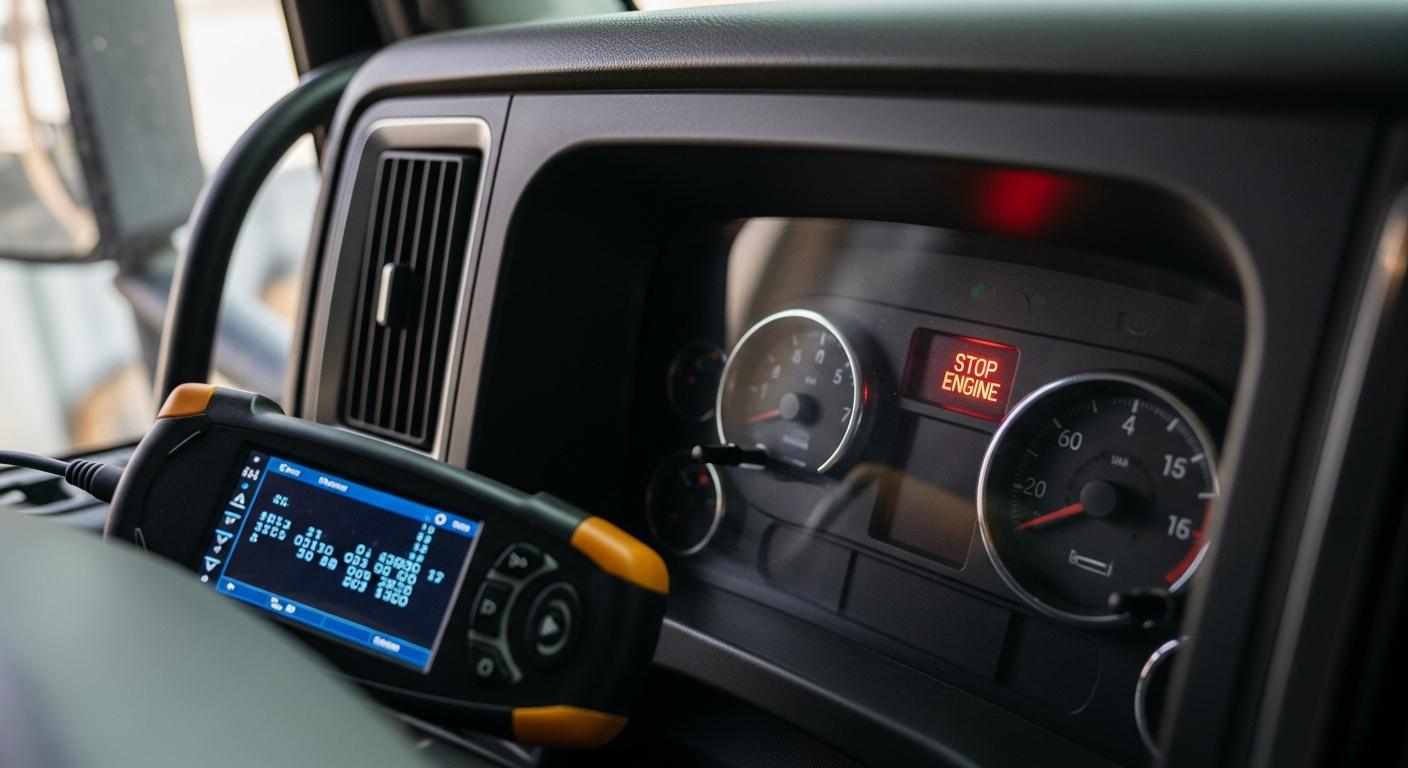
Some lights give you a little time. Others do not. This is where bad decisions get expensive.
Flashing lights, transmission failure warnings, and overheating need an immediate stop and engine shutdown. Restarting and trying to limp the truck farther can turn a manageable repair into a wiped-out engine, failed aftertreatment system, or major transmission damage.
Overheating is one of the clearest examples. A coolant temperature warning means the engine is too hot and continued driving can damage the head, liner sealing area, turbo, or other hard parts. Guidance on a coolant temperature light is simple: pull over, let the engine cool, check coolant level, and top it off if it is low before you call for help. If you see steam, active coolant loss, or the gauge keeps climbing, do not keep driving.
Brake-related lights also need respect. Even if the truck still moves, a brake warning paired with low air pressure, poor pedal feel, or an air leak sound can put you into a safety problem fast. That can become a roadside violation or out-of-service issue, not just a repair bill.
Most heavy-duty warning lights fit into a few big categories. What matters is the symptom behind the light.
An engine or check engine light often means the ECM has seen a sensor fault, emissions issue, fuel system problem, boost problem, or cooling issue. The truck may still run, but live data and fault codes tell you whether it is a bad sensor, low boost, high soot load, DEF problem, or something that is already causing derate.
Aftertreatment lights usually build in stages. You might start with a DPF or SCR warning, then get a regen request, then a stronger warning, then limited power. A truck that still runs today may not finish tomorrow’s run if the root cause is not fixed. That is why these lights should not be treated like routine maintenance reminders.
Transmission lights are another one drivers wait too long on. A transmission warning can point to slipping, hard shifts, overheating, sensor faults, or loss of hydraulic pressure. Information on transmission warning lights ties them to slipping gears, hard shifts, and power loss, and the right call is to stop and pull codes before deciding whether the truck can move any farther.
If the truck is hunting between gears, slamming shifts, or refusing to engage correctly, do not let the driver keep forcing it down the road. That is how a sensor or clutch-control problem turns into internal damage.
The best decision is the one that prevents the second failure. The first question is not “Can it still move?” The better question is “Will moving it make this repair bigger?”
| What you see | Practical next step |
|---|---|
| Steady yellow light, truck runs normal, no leak or heat issue | Check fluids, inspect for visible problems, scan codes, then decide if it can finish a short run or needs shop time first |
| Yellow light with low power, derate message, failed regen, or rough shifting | Schedule diagnostics immediately and limit operation until the fault is identified |
| Red light, flashing warning, overheating, major transmission issue, or brake problem | Pull over, shut it down, and arrange repair before more damage happens |
Roadside repair can make sense if the problem is something visible and accessible, like a failed sensor connection, low coolant from a minor loose clamp, damaged wiring, or a fault that can be confirmed without tearing into the truck. It usually does not make sense for internal engine trouble, hard transmission faults, repeated aftertreatment problems, or anything involving overheating damage.
If the same warning light has come back after a recent repair, that is a sign the first repair may have addressed the symptom but not the cause. You may be dealing with a wiring issue, poor ground, bad sensor data, a failed actuator, or an underlying mechanical problem that was missed because the truck was pushed back into service too fast.
If your truck has a warning light that keeps returning, is going into derate, or is showing a brake, transmission, or overheating alert, HDTR in Homer Glen can help you figure out whether it needs diagnostics, roadside repair during business hours within 50 miles, or a tow-in for full shop repair. Walk-ins are welcome, and if roadside is not enough, the truck can be brought in for proper mechanical and electrical diagnosis under one roof. That is the right move when the goal is not just to clear the light, but to stop the breakdown from happening again.
Sometimes, but only after you check how the truck is acting. If the light is steady and the truck has no low power, overheating, leaks, or brake issues, you may have time to read the codes and inspect it first. If the truck is derating or showing other symptoms, get it checked before the problem gets bigger.
Red lights, flashing warnings, overheating alerts, major brake warnings, and serious transmission warnings should be treated as stop-now problems. Pull over safely and shut the truck down. Continuing to drive can turn a repairable issue into major engine, transmission, or safety-related damage.
That usually means the root cause was not fixed. The first repair may have handled a failed part, but not the wiring problem, bad ground, fluid issue, or mechanical condition that triggered the fault in the first place. Repeat faults need proper diagnostics, not just another code clear.
It depends on the fault. Roadside repair may work for visible wiring damage, low fluids, loose connections, or a simple sensor problem. If the truck is overheating, derating badly, shifting hard, or showing repeated aftertreatment faults, it usually needs full shop diagnostics.

Heavy Duty Truck Repair is currently going through an exciting period of reorganization and relocation to a new facility. As we prepare for this…
Tomas Labinskis
Aug 24, 2026
Your truck can need body repair even when the obvious crash damage looks minor, because hidden structural movement often shows up in the way…
Tomas Labinskis
Jul 17, 2026
After a collision, a truck should not go back into service just because the visible damage looks repaired. A post-collision unit has to be…
Tomas Labinskis
Jul 10, 2026