Heavy Duty Truck Repair Is Moving to a New Location
Heavy Duty Truck Repair is currently going through an exciting period of reorganization and relocation to a new facility. As we prepare for this…
 Tomas Labinskis
Aug 24, 2026
Heavy Duty Truck Repair is Temporarily Closed While We Get Settled Into Our New Space. Read more

Homer Glen, IL
Tomas Labinskis
Jul 10, 2026
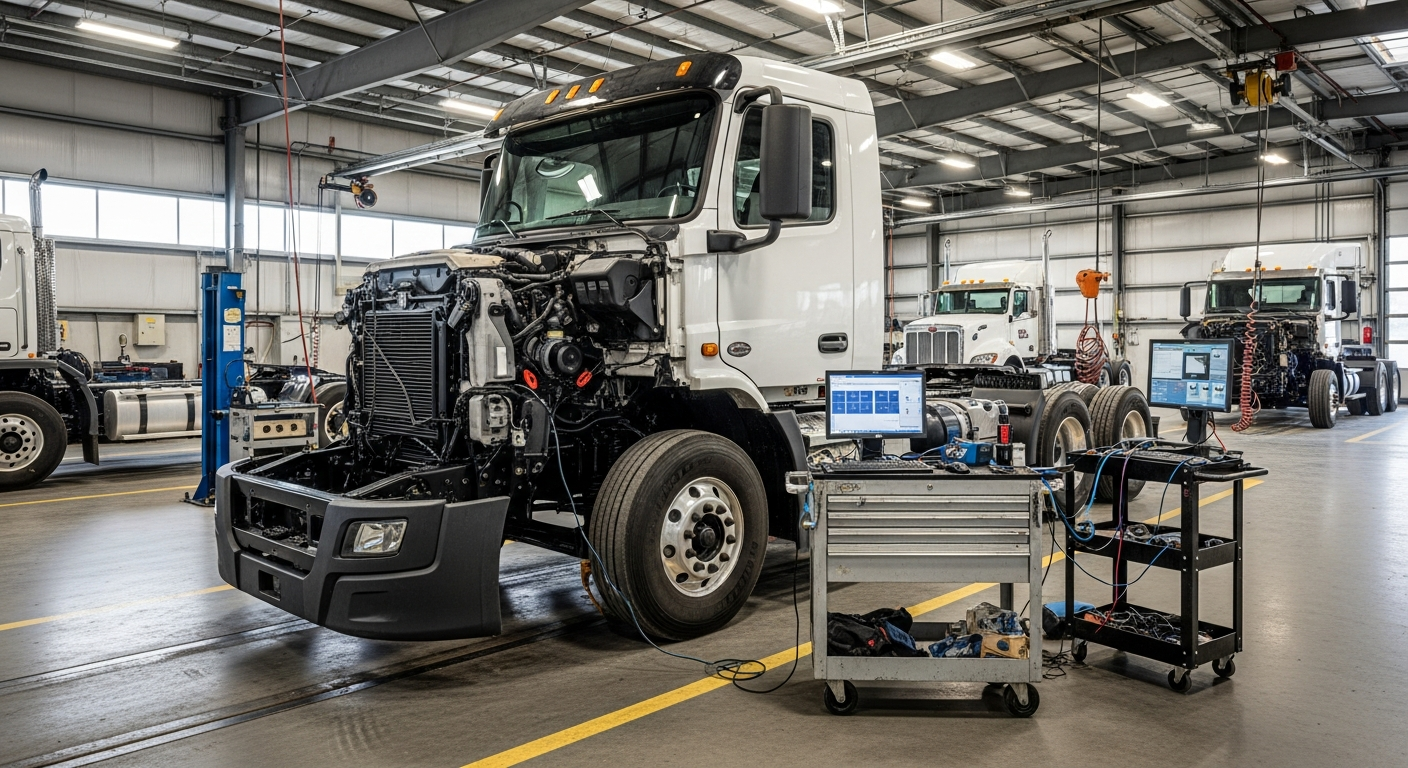
After a collision, a truck should not go back into service just because the visible damage looks repaired. A post-collision unit has to be checked like a safety item, not just a body job, because bent brackets, hidden steering damage, light issues, tire rub, brake problems, and frame alignment trouble can still put that vehicle at risk on the road.
For a fleet, this is where repair cost can get worse fast. A truck that returns too early can fail a roadside inspection, pick up violations, go out of service, damage tires, or break down again under load. That means missed loads, tow bills, schedule problems, and a second repair that usually costs more than doing it right the first time.
A collision-repaired truck is only ready for dispatch after the safety systems, inspection paperwork, and repair records all line up.
One of the biggest mistakes fleets make is treating collision repair and DOT compliance like two separate jobs. They are not. If the bumper, hood, cab, frame area, axle, suspension, lighting, or trailer connection got hit, the truck needs a real post-repair inspection before a driver takes it back out.
Collision damage rarely stays in one spot. A front-end hit can affect the bumper, hood, radiator support, headlights, steering linkage, axle alignment, and even tire wear. A side impact can damage suspension parts, wheel ends, air lines, crossmembers, trailer wiring, or load securement points. A rear hit can turn into lighting problems, underride guard issues, brake chamber damage, or frame trouble.
That is why post-collision DOT inspections need to verify that repaired safety components meet the federal inspection items in Appendix G, including brakes, tires, lights, steering, suspension, frame condition, and load-related items. If any of those areas were part of the impact, they should be checked like a compliance item, not assumed good because the body panels line up.
This matters even more when the truck starts showing small symptoms after the repair. Pulling on the highway, feathering tires, uneven ride height, air leaks, ABS light activity, trailer light faults, or dog tracking are all signs that the repair may look finished but the truck is not really inspection-ready.
If a truck has already been inspected and violations were found, those items cannot just be ignored because the vehicle made it back to the yard. FMCSA 396.3 requires carriers to repair non-out-of-service violations before re-dispatching the vehicle and certify the repair within 15 days of the inspection.
That requirement matters after a collision because fleets sometimes focus on what insurance approved instead of what the inspection and repair records require. Those are not always the same thing. A body estimate may cover visible damage, but it may not catch a worn tie rod, cracked lamp, rubbing tire, loose mud flap bracket, or damaged air line that a DOT inspector will still write up.
Drivers also have a role here. Before operating a collision-repaired truck, the driver needs to do a written pre-trip and certify that the vehicle is safe to operate. If defects are found or reported, they need to be repaired and documented before dispatch. That means the handoff from shop to fleet to driver has to be clear. If the driver says the truck still pulls, the steering wheel is off-center, the trailer plug cuts out, or there is an air leak, that truck needs another look before it goes back on a load.
A good post-collision release process should include:
Skipping one of those steps is how fleets end up paying twice.
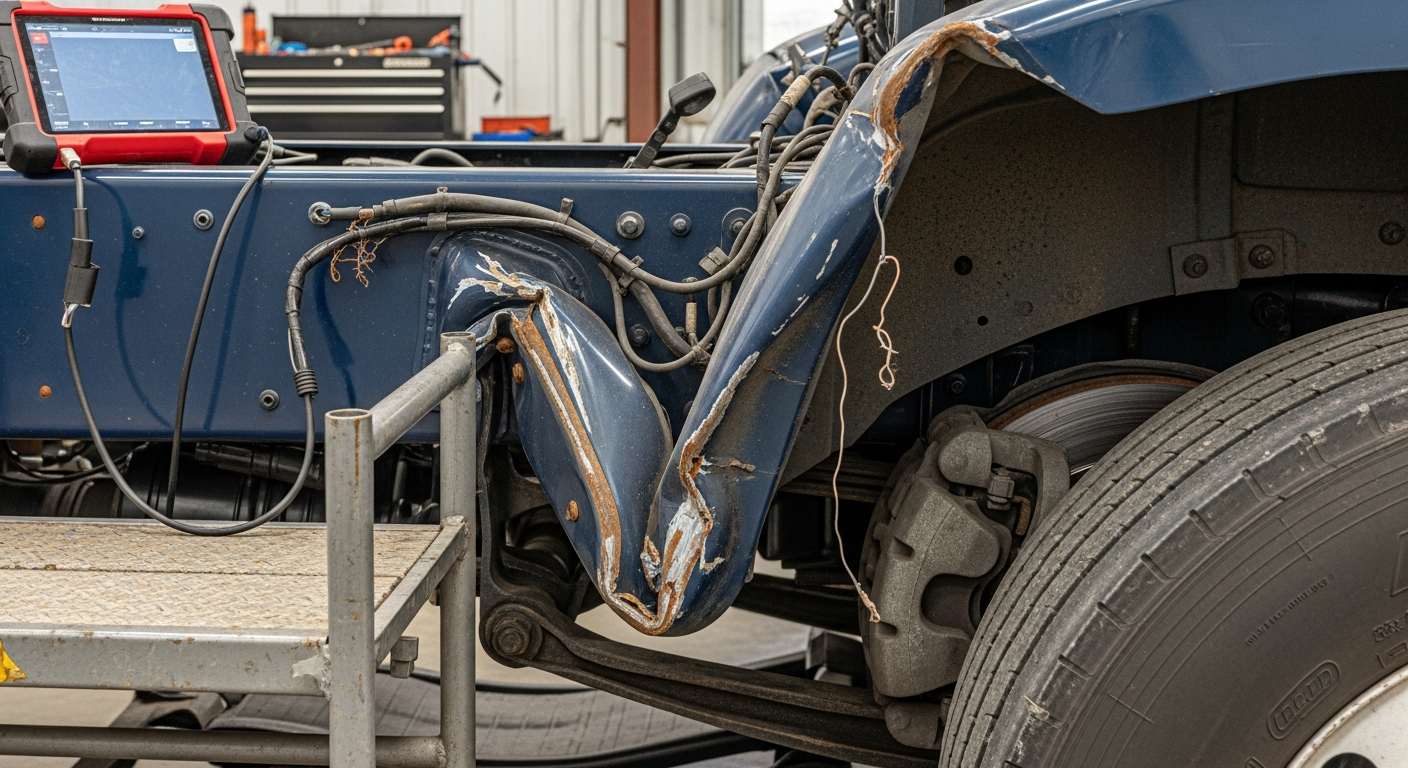
A truck can be mechanically sound and still create compliance trouble if the records are incomplete. Fleets need to keep the driver vehicle inspection report, certification of repairs, and proof of the driver review for 14 months, and the most recent periodic inspection proof needs to stay with the vehicle.
This is where a lot of post-collision confusion starts. The truck got repaired, the unit number is back in service, and everyone assumes the file is complete. Then a safety audit, roadside event, or internal fleet review shows missing repair certification, no driver review, or no clean record showing what was fixed after the accident.
That can also create trouble if the same unit has another issue later. If there is no clear paperwork trail, it gets harder to prove whether the problem came from the collision, from a poor repair, or from a separate maintenance issue. Good documentation protects the carrier, the driver, and the repair history of the truck.
Collision work does not replace the truck’s normal inspection schedule. Commercial vehicles still need a full periodic inspection at least once every 12 months, and that inspection covers the items required under 49 CFR 396 Appendix A.
That matters because some fleets assume a major body or mechanical repair somehow resets the annual inspection clock. It does not. If the sticker or documentation is close to expiration, the truck may need both post-collision repair verification and its regular periodic inspection before it is truly ready to go back into normal service.
For owner-operators and smaller fleets, this is an easy one to miss. You get the truck back from body work, you are trying to recover lost revenue, and the focus is on getting it loaded again. But if the annual is due, or if collision damage involved safety items that still need formal inspection, putting it back on the road too early can turn one accident into a compliance problem.
The right next step depends on where the truck was hit and what parts were repaired. Not every collision needs the same level of follow-up, but every collision-repaired truck needs more than a quick walk-around.
Here is a practical way to think about it:
| If the damage was here | What should be checked before dispatch |
|---|---|
| Front end | Steering play, axle alignment, tire rub, cooling pack mounts, headlights, bumper mounting, hood fit, ADAS or sensor-related faults if equipped |
| Side impact | Suspension wear, wheelbase alignment, crossmembers, air lines, fuel tank mounts, side marker lights, body clearance to tires |
| Rear impact | Brake chambers, slack adjusters, lights, rear frame area, underride protection, trailer connection, mud flap brackets |
| Cab or body damage | Door latches, mirrors, windshield, glass visibility, seat belt condition, electrical wiring, marker lights |
| Trailer contact or fifth wheel area | Fifth wheel security, apron damage, airlines, pigtail wiring, deck plate clearance, frame cracking, load securement points |
If the truck shows drivability problems after the repair, do not keep rotating drivers through it hoping the complaint goes away. A truck that wanders, shakes, loses air, rubs a tire, or has intermittent lights is already telling you the repair process is not finished.
The cheapest time to catch that is in the yard. The expensive time is after a DOT stop, a roadside failure, or a second accident caused by something that should have been found after the first one.
If you have a collision-repaired truck that still has steering, lighting, brake, suspension, frame, or inspection paperwork questions, HDTR in Homer Glen, IL can help you sort out what still needs to be checked before that unit goes back to work. HDTR handles mechanical repair, diagnostics, DOT inspections, body work, paint, and fabrication under one roof, which helps when collision damage crosses over into compliance and safety items. Walk-ins are welcome during business hours, and if the truck cannot safely make it in, road service is available within 50 miles of Homer Glen during business hours when the issue can be handled on-site. If it needs more than a roadside fix, HDTR can also help arrange a tow-in for proper inspection and repair.
Not automatically. The truck should be checked for safety items affected by the impact, including brakes, lights, steering, suspension, tires, and alignment-related problems, and the repair records should be complete before dispatch. If the driver still notices pulling, air loss, warning lights, or wiring issues, it needs more inspection.
Keep the driver vehicle inspection report, repair certification, and proof that the driver reviewed the repaired vehicle record. You also need to keep current periodic inspection documentation with the vehicle. Missing paperwork can create compliance trouble even if the repair itself was done correctly.
No. Collision repair does not replace the required periodic inspection schedule. If the annual inspection is due or close to due, the truck may need both the repair verification and its regular inspection before it is ready for normal use.
The common misses are hidden steering damage, suspension wear, axle or frame alignment issues, trailer wiring faults, light problems, tire rub, and air system damage. These are the problems that often show up later as uneven tire wear, pulling, ABS warnings, failed pre-trips, or roadside violations.

Heavy Duty Truck Repair is currently going through an exciting period of reorganization and relocation to a new facility. As we prepare for this…
Tomas Labinskis
Aug 24, 2026
Your truck can need body repair even when the obvious crash damage looks minor, because hidden structural movement often shows up in the way…
Tomas Labinskis
Jul 17, 2026
A warning light on a heavy-duty truck is not just a reminder on the dash. It is the truck telling you a system has…
Tomas Labinskis
Jul 14, 2026