Heavy Duty Truck Repair Is Moving to a New Location
Heavy Duty Truck Repair is currently going through an exciting period of reorganization and relocation to a new facility. As we prepare for this…
 Tomas Labinskis
Aug 24, 2026
Heavy Duty Truck Repair is Temporarily Closed While We Get Settled Into Our New Space. Read more

Homer Glen, IL
Tomas Labinskis
Jun 30, 2026
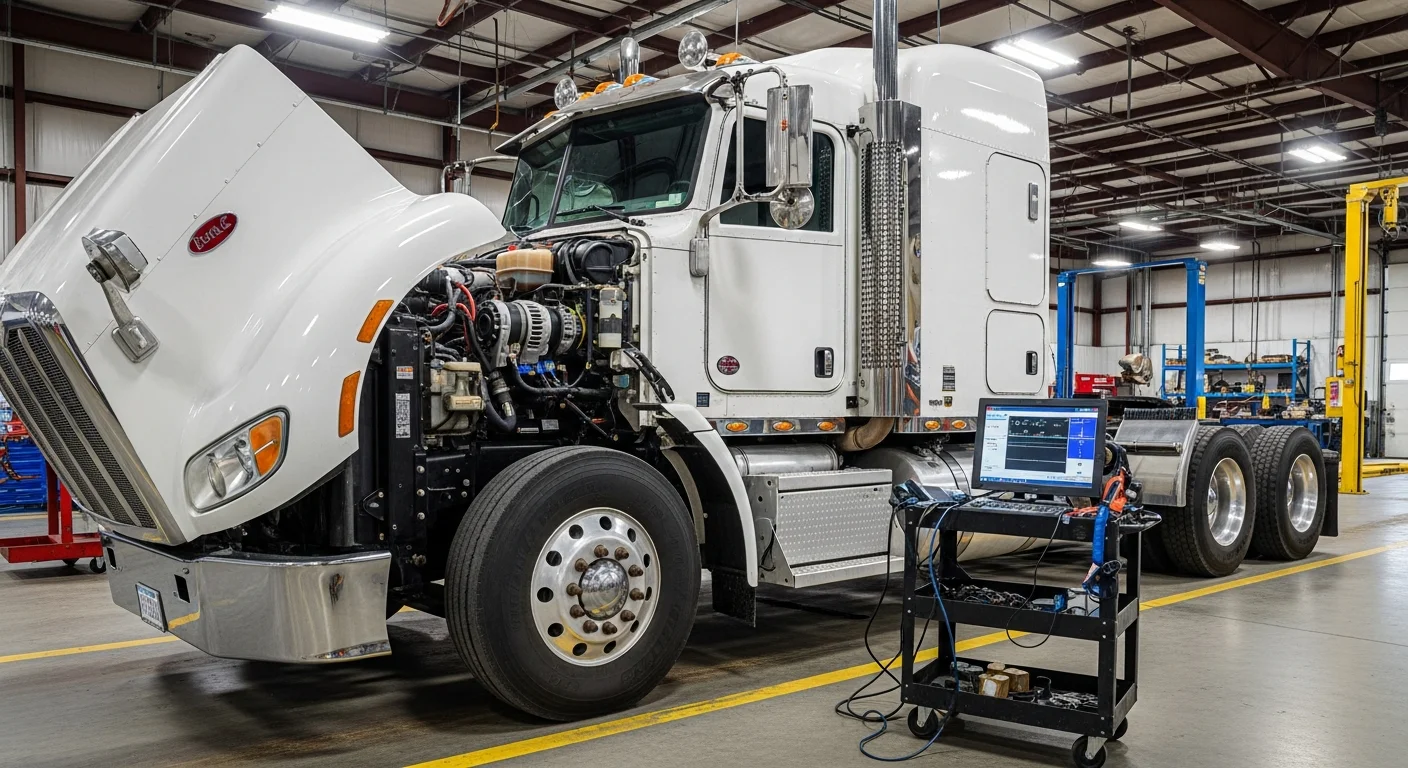
Common electrical problems in a heavy-duty truck usually show up first as small, inconsistent issues like a slow crank, flickering lights, warning lamps that come and go, dead batteries, or accessories that work one day and fail the next.
That is exactly why electrical trouble gets expensive. A truck can still run well enough to finish a load while the real problem keeps getting worse in the background. Then it turns into a no-start at a fuel island, trailer light failure during a DOT stop, or a charging problem that cooks batteries and leaves the driver waiting on a jump or tow.
Intermittent electrical faults are often early warning signs, not random glitches.
For an owner-operator or fleet, the decision point is usually this: is it safe to keep running and monitor it, or does the truck need electrical diagnostics now before it becomes roadside downtime?
Electrical failures do not always start with a truck that is completely dead. A lot of them begin with odd behavior that seems unrelated.
You might see the dash lights dim during cranking. The starter may click once and then nothing. The ABS light may come on with no clear brake complaint. Trailer lights may work with one trailer but not another. Gauges may drop out, then come back. The truck may start fine in the morning and refuse to restart after a hot shutdown.
Those symptoms matter because modern heavy-duty trucks depend on stable voltage. Low voltage can create false sensor faults, communication errors between modules, regen problems, and no-start complaints that look like bigger engine issues.
One of the most common root causes is still basic battery and cable trouble. Battery failures are common in heavy-duty trucks, and loose or corroded battery terminals and starter cable connections are a frequent reason. That is simple hardware, but it can create major downtime if it gets missed.
The fastest way to avoid wasted parts is to separate the problem into three buckets: battery power, charging system, or wiring and connection faults.
If the truck cranks slowly, needs frequent jump-starts, or loses power after sitting, start with the batteries and cable connections. A weak battery set, bad crossover cable, corrosion between the terminal and post, or excessive voltage drop on the ground side can all cause that. On heavy-duty trucks, a battery can test decent with no load and still fail during actual cranking.
If the truck starts but batteries keep going dead, look harder at the charging system. That means alternator output, belt condition, charging cable condition, and grounds. A bad alternator is not the only reason charging voltage drops. A loose charge wire, dirty ground, or high resistance connection can keep batteries from getting what they need.
If the truck starts and charges but random faults keep appearing, suspect wiring, connectors, fuse issues, or module power and ground problems. This is where drivers get frustrated because the problem comes and goes. Vibration, moisture, heat, and road salt are hard on harnesses, especially near frame rails, battery boxes, trailer pigtails, and engine components.
In plain language, batteries store power, the alternator replaces power, and the wiring has to carry that power cleanly. If any one of those three is weak, the whole truck can act up.
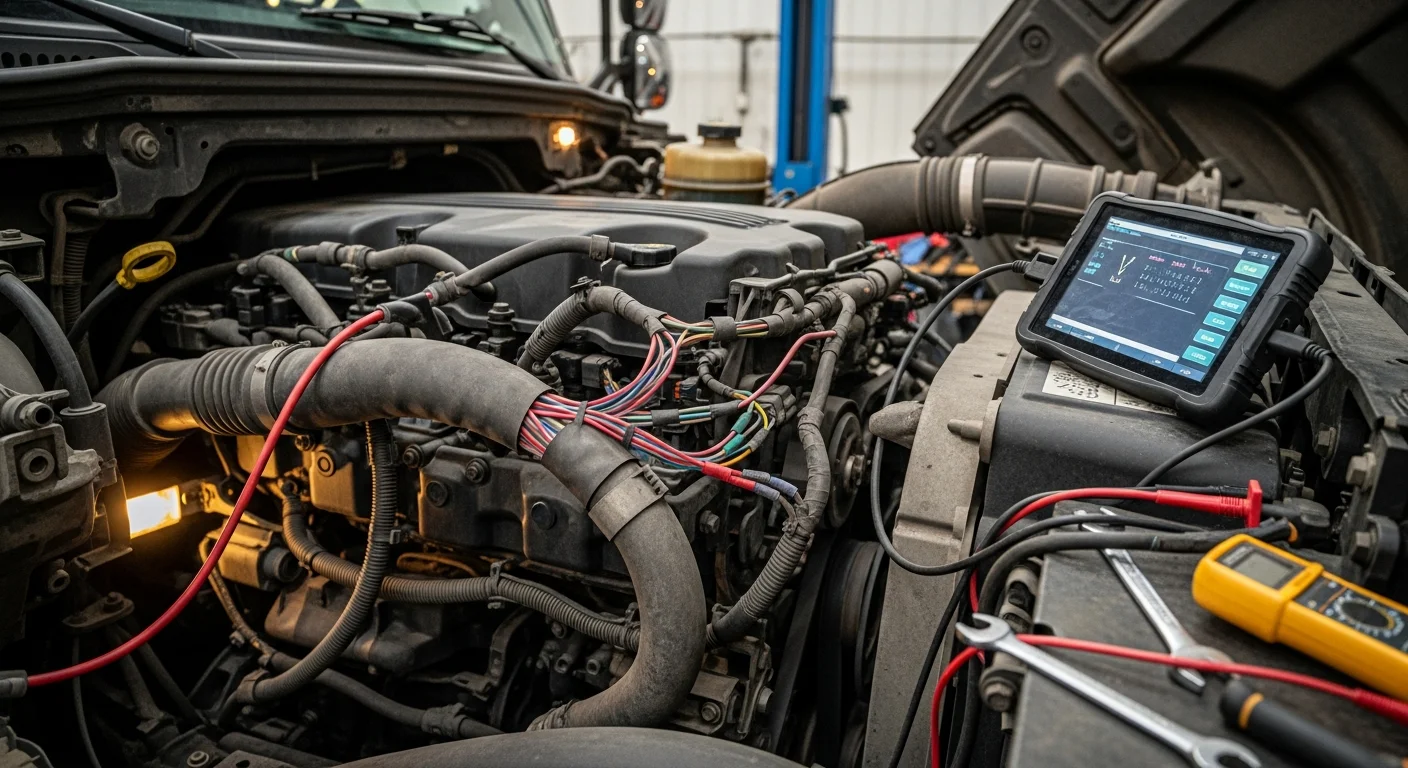
You do not need to tear into the whole harness on the side of the road. Start with the things that fail most often and the things you can actually verify.
Check these first before the truck ends up with a repeat breakdown:
If the issue is lighting, do not assume the bulb is the whole problem. Trailer light complaints are often caused by ground issues, corroded pins, damaged wiring near the plug, or broken wiring inside the trailer harness. If one side of the trailer works and the other does not, or lights change when you move the pigtail, that usually points to wiring or connection trouble instead of a control module.
If the complaint is a no-start, pay attention to what happens when the key is turned. A single click, rapid clicking, dimming lights, or total silence all mean different things. That information helps a shop narrow the problem much faster.
Intermittent faults waste money when people start guessing with parts. A truck gets batteries, then a starter, then maybe an alternator, and the original bad ground or rubbed-through wire is still there.
This happens because electrical problems are not always failed parts. Sometimes the part is fine, but it is not getting proper voltage or ground. A sensor fault can be real, but it can also be caused by low system voltage. A starter can test bad if battery voltage is dropping too far under load. An alternator can get blamed when the actual issue is resistance in the charging cable.
That is why proper diagnostics matter. A good electrical diagnosis on a heavy-duty truck usually includes battery testing under load, charging system checks, voltage drop testing on power and ground circuits, visual inspection of high-failure harness areas, and scan tool review of fault codes and live data if modules are involved.
Live data matters because some electrical complaints are really communication issues. If one module keeps losing voltage reference or dropping off the network, the truck may throw several unrelated fault codes. Without testing, that can turn into a long list of unnecessary repairs.
Some electrical issues can wait until the truck gets back to the yard. Some should not.
Do not keep pushing the truck if you have repeated no-starts, battery cables getting hot, burning electrical smell, lights failing during operation, charging voltage problems, or warning lights tied to braking, steering, or engine protection. Those problems can turn into a roadside no-start, failed inspection, or derate at the worst time.
For fleets, the hidden cost is not just one service call. It is the missed load, the driver delay, the schedule change, and the second repair if the first one was only a jump-start instead of a real fix.
If the complaint is isolated to one loose battery terminal, a roadside tightening may get the truck moving again. But if the batteries are weak, the cables have internal corrosion, the alternator is not charging, or the truck has multiple electrical faults, that is shop-level work. At that point, the goal is to find the cause before the truck eats more parts or strands the driver again.
If your truck has a dead battery, intermittent no-start, charging issue, trailer light failure, or electrical faults that keep coming back, the next step is proper testing instead of guessing. Heavy Duty Truck Repair handles truck electrical repair for heavy-duty trucks in Homer Glen, IL, and can check batteries, cables, charging voltage, wiring, grounds, and fault-related electrical issues. Road service is available during business hours within 50 miles when the truck cannot make it in, and tow-in can be arranged if needed. For shop diagnostics or electrical repair planning, contact Heavy Duty Truck Repair.
The most common causes are weak batteries, a failing alternator, corroded or loose battery and starter cable connections, or a parasitic draw that keeps pulling power with the truck off. A truck can also kill batteries if high resistance in the cables prevents proper charging. The right next step is battery and charging system testing, not just another jump-start.
Sometimes you can, but it depends on the symptom. If the issue is limited to a minor accessory problem, you may be able to make it to the shop. If you have repeated no-starts, lighting failures, charging problems, or warning lights tied to critical systems, keep running it only increases the chance of a roadside breakdown or inspection trouble.
Intermittent trailer lights are usually caused by poor grounds, corroded plug pins, damaged pigtails, or broken wiring in the trailer harness. Movement and vibration can make the circuit connect one minute and fail the next. That is why the problem often shows up only while turning, braking, or hitting bumps.
A proper diagnosis usually starts with battery load testing, charging system checks, and voltage drop testing on power and ground circuits. If the truck has warning lights or module-related issues, the shop will also pull fault codes and look at live data. That process helps separate a bad part from a wiring or connection problem.

Heavy Duty Truck Repair is currently going through an exciting period of reorganization and relocation to a new facility. As we prepare for this…
Tomas Labinskis
Aug 24, 2026
Your truck can need body repair even when the obvious crash damage looks minor, because hidden structural movement often shows up in the way…
Tomas Labinskis
Jul 17, 2026
A warning light on a heavy-duty truck is not just a reminder on the dash. It is the truck telling you a system has…
Tomas Labinskis
Jul 14, 2026