Heavy Duty Truck Repair Is Moving to a New Location
Heavy Duty Truck Repair is currently going through an exciting period of reorganization and relocation to a new facility. As we prepare for this…
 Tomas Labinskis
Aug 24, 2026
Heavy Duty Truck Repair is Temporarily Closed While We Get Settled Into Our New Space. Read more

Homer Glen, IL
Tomas Labinskis
May 23, 2026
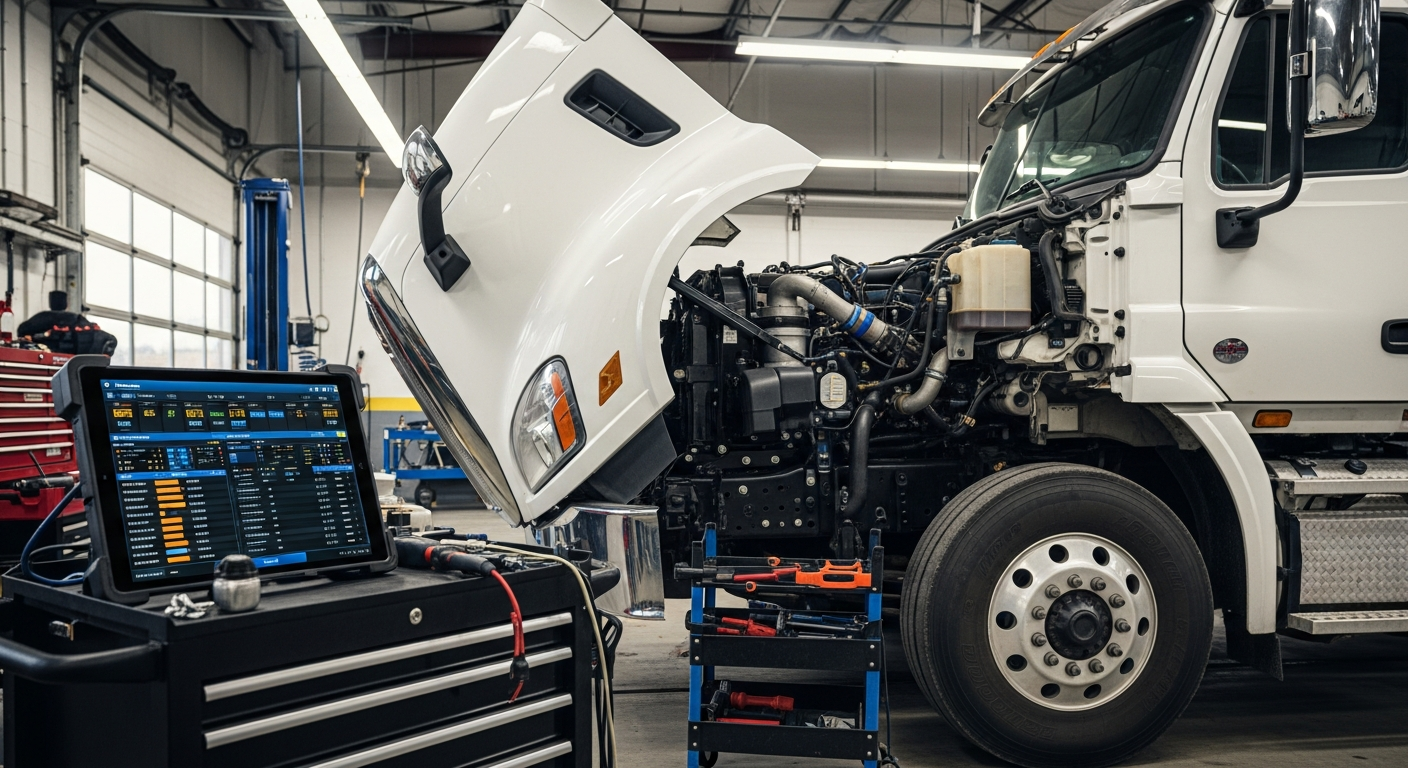
A truck fault code is not a repair by itself. It is the truck’s way of telling you which system saw a problem, what kind of problem it detected, and where diagnostics should start.
That matters because a lot of expensive mistakes start with the wrong reaction to a warning light. Some owners replace a sensor just because the code names it. Others clear the code and keep running until the truck derates, fails an inspection, or breaks down on the road. A fault code can point to a bad part, but it can also point to wiring damage, low voltage, poor DEF quality, air system problems, or a failure that only shows up under load.
A fault code tells you where to investigate, not what to guess and replace.
If you run trucks for a living, reading codes the right way helps you decide whether the truck can finish the day, needs a shop visit soon, or needs to come out of service now.
A stored code means the computer saw something outside its normal range. It does not automatically mean the named component failed.
That is where a lot of drivers and fleet managers get burned. A code may mention a pressure sensor, NOx sensor, wheel speed sensor, or coolant temp sensor, but the real cause could be a rubbed-through harness, corrosion in a connector, poor battery voltage, a ground issue, air in the system, or another part upstream causing bad readings.
On heavy-duty trucks, technicians use the code to identify the system and type of failure, then confirm the cause with inspection, live data, voltage drop checks, pressure checks, or mechanical testing before replacing anything. That fits the repair-and-maintenance standard in FMCSA 396.3, and it is also how you avoid throwing parts at the truck.
Think of the code as a map pin, not the full story. The code gets you into the right neighborhood. Diagnostics finds the actual house.
Some fault codes are nuisance warnings. Others are safety problems or roadside inspection problems.
If the code is tied to braking, steering, or suspension, do not treat it like something you can ignore until next week. Under roadside inspection rules, a commercial vehicle with an inoperative component in those systems can be placed out of service under the North American Standard Out-of-Service Criteria.
That is why the symptom matters as much as the code. If a brake warning comes with low air pressure, an ABS code comes with a pull or poor stopping, or a steering-related code comes with wander, steering play, or uneven tire wear, the truck may already be telling you this is not just an electronic problem.
Here are the codes and symptoms that should move to the front of the line:
Even if the truck is still moving, a code in one of these systems can turn into a failed inspection, tow bill, or crash risk fast.
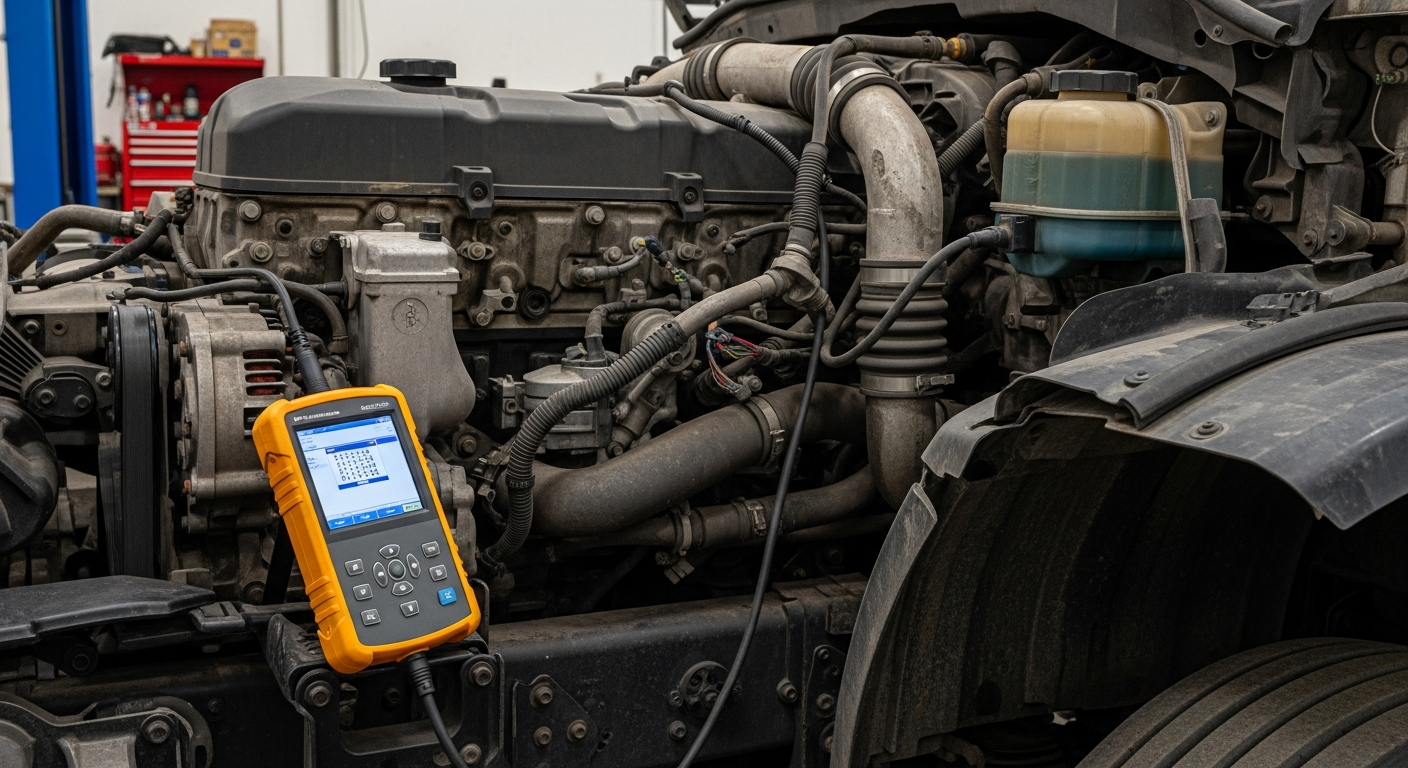
Emissions codes are some of the most misunderstood codes on a diesel truck. Drivers often think the truck just needs a regen, or that any DEF-related warning means the DEF pump is bad.
In reality, aftertreatment faults can come from several places: the DPF, SCR, DEF dosing system, NOx sensors, temperature sensors, failed regens, contaminated DEF, or operating conditions that kept the truck from cleaning itself out. EPA guidance and OEM diagnostic information both point back to proper diagnosis before parts replacement, because these faults can push a truck into derate or shutdown if they are ignored.
This is where drivers lose time and money by making the wrong call. If the truck has an emissions light but still pulls normally, you may have time to get it in for diagnostics before it derates. If it already has reduced power, repeated failed regens, heavy soot load, or multiple aftertreatment faults stacked together, waiting usually makes the repair bigger.
Common bad decisions include:
On emissions faults, the practical question is not just “What code is it?” The better question is “Is this truck still able to complete its regen and dose DEF correctly, or is it headed toward derate?”
One code by itself can mislead you. A pattern of codes tells a better story.
Federal inspection rules require drivers and motor carriers to inspect, repair, and maintain vehicles systematically and keep records of repairs and inspections under 49 CFR Part 396. That matters in the shop because repeat code history often shows whether you are dealing with a one-time event or a truck that has an ongoing electrical, air, cooling, or aftertreatment problem.
For example, if the same low-voltage, communication, and sensor reference codes keep coming back, the real issue may be weak batteries, charging problems, or a bad ground path. If a truck keeps showing DPF efficiency, NOx, and regen faults every few weeks, the first repair may have handled the symptom but not the root cause. If wheel speed sensor codes keep returning on one axle position, look harder at tone rings, wheel end condition, hub play, rust jacking, and harness routing.
Fault history is also useful for fleets deciding whether to keep patching a truck between loads or pull it in for a deeper diagnostic appointment. If the same truck has already had roadside clears, temporary wiring repairs, or repeated warning lights, the cheapest move is often a proper diagnostic session before the next missed load or tow.
Before you authorize parts, ask what was tested to prove the failure. A good heavy-duty diagnostic process should connect the code to an actual failed part, wiring issue, air issue, mechanical issue, or operating condition.
Ask questions like these:
If the answer is only “the code said replace this part,” that is not enough. Modern trucks are too interconnected for parts guessing.
The right repair decision usually falls into one of three buckets. First, the truck is safe to run short-term and can be scheduled in. Second, it can be temporarily addressed roadside but still needs follow-up shop repair. Third, it needs to come out of service now because the code is tied to a safety system, major derate risk, or symptoms that show the fault is no longer just electronic.
If your truck has warning lights, active fault codes, repeated derates, or codes tied to brakes, steering, suspension, or aftertreatment, get the problem diagnosed before it turns into roadside downtime. HDTR in Homer Glen, IL handles heavy-duty diagnostics, mechanical repair, electrical work, and inspections under one roof. Road service is available during business hours within 50 miles when the truck cannot make it in, and if roadside repair is not enough, HDTR can help arrange tow-in for proper testing and repair.
Sometimes, but it depends on the system and the symptoms. A stored code with no drivability issue may allow you to schedule diagnostics, but codes tied to brakes, steering, suspension, overheating, or derate risk should be treated as urgent.
No. The code points to the system and failure type, not a guaranteed bad part. Wiring damage, connector corrosion, low voltage, bad grounds, air leaks, or mechanical problems can all trigger a code for a sensor or actuator.
Usually because the first repair handled the symptom, not the root cause. Repeat codes often mean there is still a wiring issue, a related failed component, poor operating conditions for regen, or a problem that was never verified with proper testing.
Pull it out of service if the code affects braking, steering, suspension, wheel-end safety, severe engine protection, or if the truck is already in derate or showing dangerous symptoms. If there is a chance of out-of-service status, failed inspection, or unsafe operation, waiting usually costs more.

Heavy Duty Truck Repair is currently going through an exciting period of reorganization and relocation to a new facility. As we prepare for this…
Tomas Labinskis
Aug 24, 2026
Your truck can need body repair even when the obvious crash damage looks minor, because hidden structural movement often shows up in the way…
Tomas Labinskis
Jul 17, 2026
A warning light on a heavy-duty truck is not just a reminder on the dash. It is the truck telling you a system has…
Tomas Labinskis
Jul 14, 2026