Heavy Duty Truck Repair Is Moving to a New Location
Heavy Duty Truck Repair is currently going through an exciting period of reorganization and relocation to a new facility. As we prepare for this…
 Tomas Labinskis
Aug 24, 2026
Heavy Duty Truck Repair is Temporarily Closed While We Get Settled Into Our New Space. Read more

Homer Glen, IL
Tomas Labinskis
Jun 25, 2026
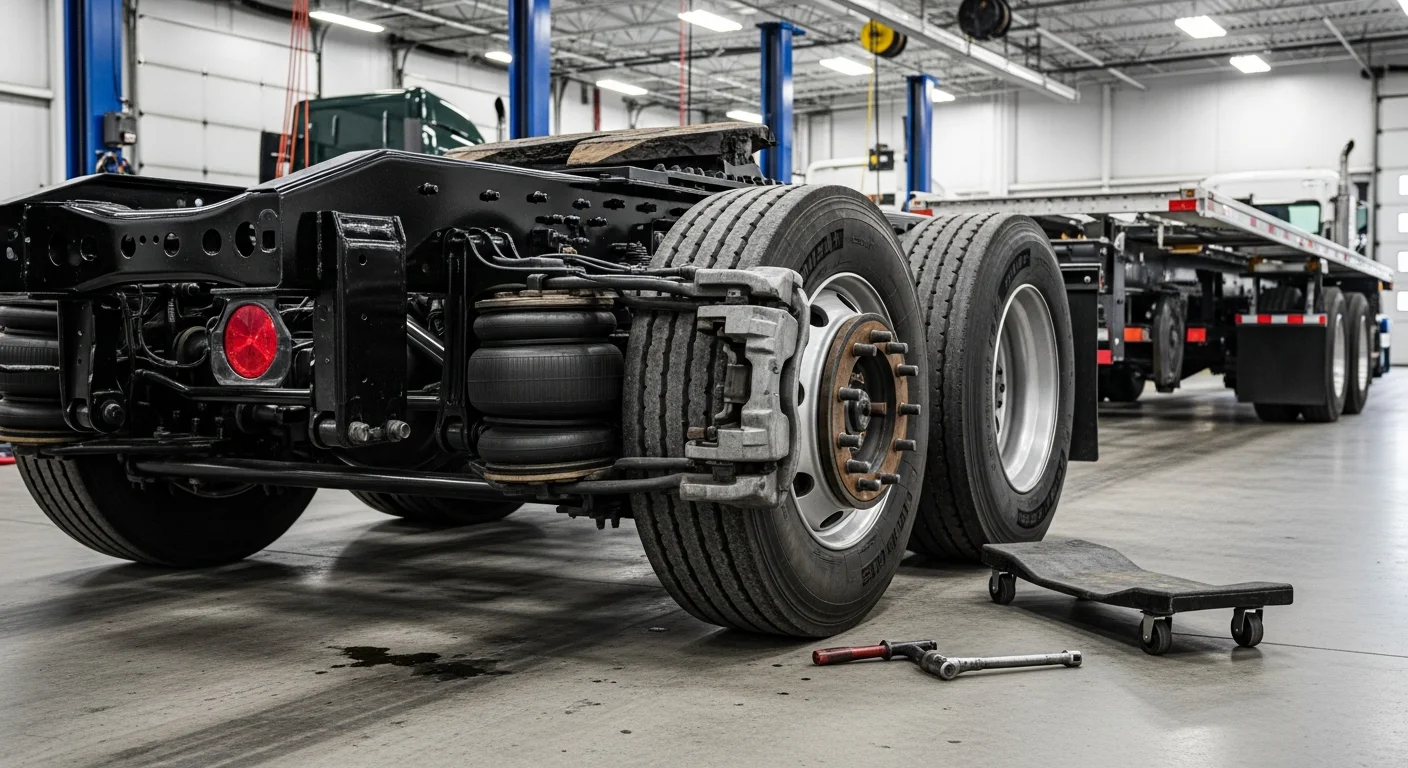
Trailer suspension problems usually show up before a breakdown, but a lot of drivers only notice them after the trailer starts wearing tires, pulling oddly, or beating the load up on rough pavement. If you catch the warning signs before the next trip, you can avoid a roadside delay, a blown tire from bad alignment, or a trailer that starts dog tracking down the highway.
For an owner-operator or fleet, suspension trouble is not just a ride issue. It can turn into uneven tire wear, higher fuel and tire cost, load stability problems, missed delivery time, and repair bills that get bigger once axle alignment and wheel end parts are affected. A trailer with suspension wear can also draw attention during a pre-trip, roadside stop, or shop inspection.
Uneven tire wear on a trailer is often the first visible sign that the suspension is not holding the axle where it belongs.
The most common sign is tire wear that does not look normal for the miles on the trailer. If one tire is scrubbing, feathering, cupping, or wearing faster than its mate, something underneath needs a closer look.
Uneven tire wear is a primary symptom of trailer suspension failure, often pointing to axle misalignment caused by damaged suspension parts such as worn shackles or bent springs. Many drivers first call it a tire problem, but the tire is often just showing you what the suspension is doing wrong.
You may also feel the trailer differently behind the truck. A bad suspension can make the trailer seem unstable over bridge joints, rough shoulders, or patched pavement. It may bounce more than usual, lean to one side, or feel like it is not tracking square behind the tractor.
Another clue is noise. Clunking, banging, or shifting sounds from the trailer suspension area usually mean parts are moving that should stay tight. That can come from worn equalizers, loose mounting hardware, cracked hangers, or spring connection points that have opened up from wear.
These signs matter because the suspension does more than soften the ride. It keeps the axles located correctly, helps the tires carry the load evenly, and keeps the trailer level enough for stable braking and handling.
You do not need a full tear-down to catch a lot of suspension issues. A good walk-around and under-trailer look can tell you whether the trailer is safe to run or whether it needs the shop first.
Start with the tires. Compare tread wear side to side and axle to axle. If one position is wearing much faster, or the tread is chopped up instead of wearing evenly across the face, stop blaming the tire until the suspension and alignment are checked.
Then look at the leaf springs and shocks. Cracked, sagging, or bent leaf springs and excessive shock wear are direct visual signs of suspension failure that need attention before the next trip. A broken leaf or sagging spring can shift load to other components fast, and that is how a manageable repair becomes a bigger one.
If the trailer runs air ride, inspect the bags closely. Cracks or leaks in air bags can cause unstable ride height and axle misalignment. If one side sits lower, takes longer to come up, or leaks down parked, the trailer may not be carrying weight evenly.
Pay attention to the mounting points too. Worn hardware in the suspension does not stay a small problem for long. Excessive bouncing after a bump or failure to settle points to failed shocks or internal spring damage, and that can affect load distribution during heavy hauls.
Before dispatching the trailer, check these areas:
If the trailer is loaded, compare how it sits on both sides. A leaning trailer is telling you something. It may be an air issue, spring issue, worn pivot point, or shifted component. Any of those can turn into tire scrub or a handling complaint on the road.
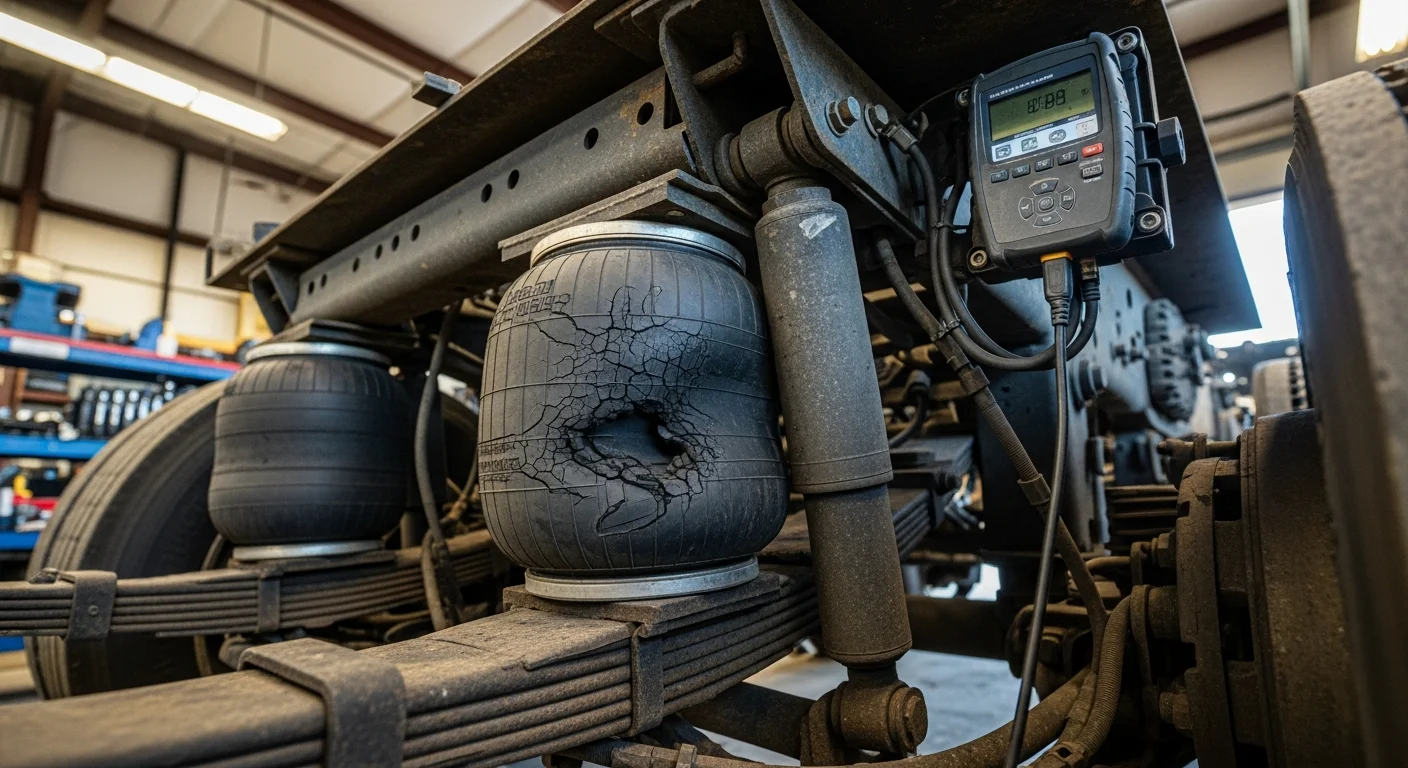
A lot of expensive suspension repairs start with a part that was loose for too long. A little play at a shackle or mounting bolt becomes wallowed-out holes, damaged hangers, and axles that no longer sit square under the frame.
Loose or worn shackles and bolts at suspension mounting points can create gaps, clunking noises, and poor trailer level control. Once that movement starts, the suspension geometry changes every time the trailer hits a bump or shifts load.
That is when you start seeing the real cost. Tires wear out early. Brakes on one axle may work harder because load is not distributed evenly. Wheel ends can take extra stress. Drivers may report the trailer feels like it is steering itself, especially on uneven pavement or during braking.
Ignore it long enough and the repair may go past replacing a spring or shock. Now you may need bushings, hangers, alignment work, tires, and maybe related brake or wheel end repair. That is the difference between a planned shop stop and a trailer sitting loaded while dispatch scrambles to cover the freight.
Some suspension issues can wait for a scheduled shop visit. Others should stop the trip before it starts. The hard part for a lot of owners is knowing which is which.
If the trailer has light wear starting on one tire and no handling complaint yet, you may have time to get it inspected right away before damage spreads. But if the trailer is leaning, bouncing badly, clunking over bumps, or showing obvious broken or shifted suspension parts, it should not go out loaded for another run.
Red-flag signs that call for immediate repair include:
If a driver reports one of these symptoms after the first repair attempt, do not assume the issue was fixed because one bad part was replaced. Trailer suspension problems often come in groups. A new spring will not correct a bent hanger. A new tire will not fix axle misalignment. A replaced shock will not stop movement from worn shackle points.
The practical next step is a full undercarriage inspection with the suspension unloaded as needed, followed by alignment checks if tire wear or tracking problems are present. That is how you find the root cause instead of paying for the same trailer twice.
If your trailer is wearing tires unevenly, leaning, clunking, or bouncing too much, get it checked before the next trip turns into roadside downtime. HDTR in Homer Glen, Illinois handles trailer suspension repair, inspections, and related trailer work under one roof. Walk-ins are welcome, and if the trailer cannot safely make the trip, HDTR can help with the next step and tow-in planning during business hours.
In many cases, the first sign is uneven tire wear. If one trailer tire is feathering, cupping, or wearing faster than the others, the suspension may not be keeping the axle aligned correctly.
You should be careful with that. Excessive bouncing can mean failed shocks, spring damage, or worn suspension parts, and that can affect load stability, tire wear, and braking behavior.
A clunking noise often points to loose or worn suspension hardware such as shackles, bolts, equalizers, or mounting points. Those parts can shift under load, which changes axle position and can lead to bigger suspension damage.
No, not by itself. A new tire may fail the same way if the real problem is a bent spring, worn shackle, air ride issue, or axle alignment problem that was never repaired.

Heavy Duty Truck Repair is currently going through an exciting period of reorganization and relocation to a new facility. As we prepare for this…
Tomas Labinskis
Aug 24, 2026
Your truck can need body repair even when the obvious crash damage looks minor, because hidden structural movement often shows up in the way…
Tomas Labinskis
Jul 17, 2026
A warning light on a heavy-duty truck is not just a reminder on the dash. It is the truck telling you a system has…
Tomas Labinskis
Jul 14, 2026