Heavy Duty Truck Repair Is Moving to a New Location
Heavy Duty Truck Repair is currently going through an exciting period of reorganization and relocation to a new facility. As we prepare for this…
 Tomas Labinskis
Aug 24, 2026
Heavy Duty Truck Repair is Temporarily Closed While We Get Settled Into Our New Space. Read more

Homer Glen, IL
Tomas Labinskis
May 21, 2026
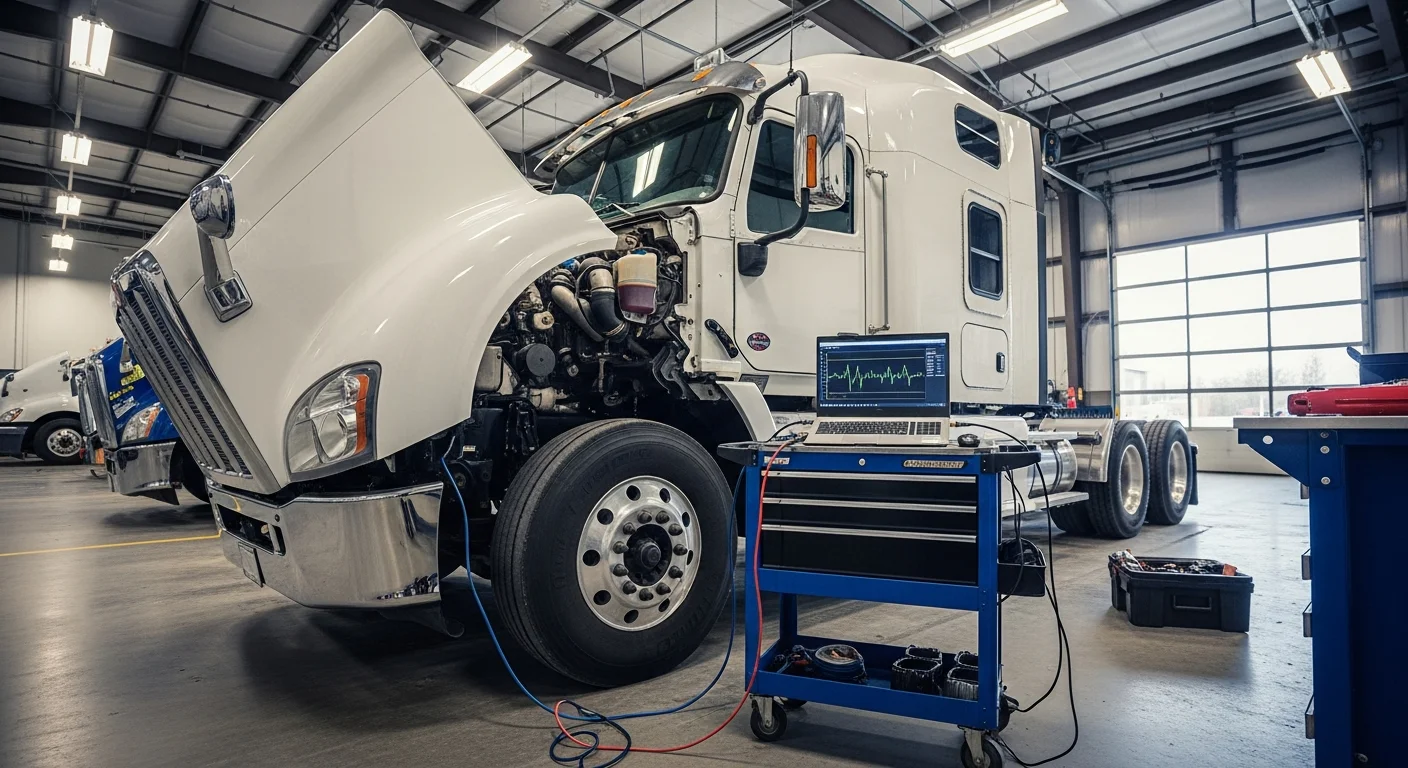
Faulty sensors can make a heavy-duty truck run weak, idle rough, waste fuel, derate, or act like it has a major engine problem when the real issue starts with bad data going into the ECU.
For an owner-operator or fleet manager, that matters because sensor faults often create the kind of breakdown that wastes the most time: the truck still runs, but not right. It may lose power on grades, burn extra DEF, throw an aftertreatment warning, or start cycling into repeat repairs because a part was replaced before the root cause was confirmed. That means missed loads, unnecessary parts cost, tow bills, roadside downtime, and inspection risk if the truck derates or smokes.
A bad sensor can turn a small electrical or emissions issue into a low-power complaint, a derate, or an expensive aftertreatment repair.
Modern diesel trucks make decisions based on sensor input. Fuel delivery, turbo response, EGR flow, DEF dosing, regen timing, and throttle response all depend on signals that have to be accurate.
When one sensor lies, the truck may still crank, start, and move. That is what fools people. The symptom looks mechanical, but the trigger may be electronic.
A common example is the throttle position sensor. A miscalibrated TPS can send the wrong pedal demand to the ECU, which can cause erratic throttle response, poor fuel economy, safety issues from inconsistent speed control, and extra engine wear over time. That kind of bad input can also raise emissions and create compliance trouble, as explained in this TPS sensor overview.
This is where fleets lose money. If a truck has poor acceleration and the first guess is turbo, injector, or fuel pump without checking live data first, the truck may get expensive parts and still come back with the same complaint.
Good diagnostics look at fault codes, but they also look at what the sensor is reporting in real time. If the commanded value and actual value do not make sense together, the shop has to verify the circuit, power supply, reference voltage, ground, connector condition, and the sensor itself before calling the repair done.
Not every sensor failure acts the same way. Some create an obvious warning light. Others cause a truck to feel lazy under load long before the dash tells the driver much of anything.
MAF and MAP sensors are big ones for performance complaints. When those sensors report bad airflow data, the ECU can miscalculate fueling and boost demand. That can lead to low power, sluggish acceleration, rough idle, and fuel mileage dropping off. In some cases, the truck may not throw an immediate warning even though drivability is already getting worse.
Throttle position sensors can make the truck feel unpredictable. Drivers may describe it as delayed pedal response, surging, or a truck that does not pull evenly. On a loaded truck, that matters a lot more than it would on a pickup. In traffic, on ramps, and grades, inconsistent throttle response becomes a safety problem fast.
DEF and NOx sensor faults are where downtime really starts to snowball. A sensor may fail, but the truck treats it like an emissions event because the aftertreatment system cannot trust what it is seeing. That can trigger inducement steps and eventually a derate.
According to EPA derate guidance discussed by Trucking Info, newer guidance was aimed at reducing severe downtime from failing DEF quality sensors by allowing replacement strategies based on NOx readings and delaying the harshest derates in some cases. The practical takeaway is simple: if the truck starts showing DEF quality or inducement warnings, diagnose it early. Waiting can still put the truck out of service or leave it needing a tow.
NOx sensors also create expensive chain reactions. When they fail, the truck may overuse DEF, idle erratically, and drive up fuel cost while the SCR system tries to correct bad readings. If the fault is ignored, it can contribute to bigger aftertreatment damage and turn a sensor issue into catalyst work.
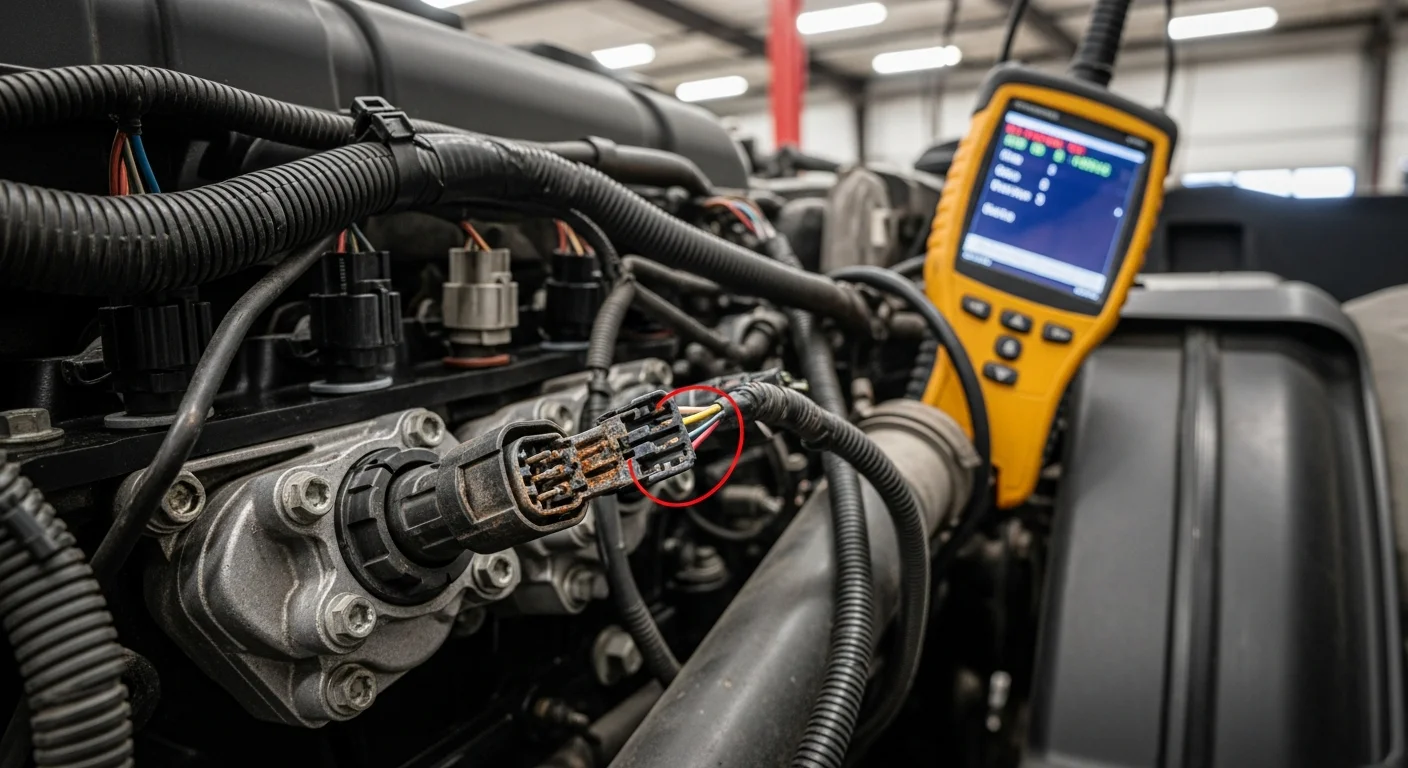
The right move is not to guess. The right move is to confirm whether the symptom matches the data.
Before approving major repairs, a fleet manager or owner-operator should ask a few direct questions:
This matters because a bad sensor and a bad circuit can look the same on the dash. Replacing the sensor without checking the harness can create a repeat breakdown. Replacing a major component because of a sensor-driven code can get even more expensive.
For example, low power with no obvious smoke may be caused by airflow data that is wrong, not by a failed turbocharger. A derate warning may point toward aftertreatment hardware, but the trigger could be a sensor fault or wiring problem that skewed the readings. A truck that idles rough and burns extra DEF may not need a full aftertreatment teardown if the real issue is upstream data.
That is the decision point where many fleets either save money or waste it. If the first shop or roadside attempt replaced a part but did not verify the signal path, the next step should be a proper diagnostic session, not another round of guessing.
Ignoring sensor problems usually makes the final repair bigger than it had to be.
At first, the truck may just feel off. Fuel mileage drops. Throttle response gets lazy. Regen frequency changes. DEF use climbs. The driver starts working around the problem.
Then the secondary damage starts. An engine running on bad airflow data can overfuel or underfuel. An aftertreatment system working off bad NOx or DEF information can overcorrect, stack up fault codes, and move the truck toward inducement. A repeated derate can upset dispatch, force load swaps, and put pressure on maintenance decisions that should have been made earlier.
There is also inspection risk. If a sensor fault affects emissions behavior, warning lights, or overall drivability, the truck is more likely to get sidelined at the worst time. Even if it is not an immediate out-of-service issue, fleets still deal with lost time, driver frustration, and extra roadside exposure.
The cost problem is not just the part. It is the downtime around the part. One bad sensor can lead to a tow, a missed load, rental coverage, rescheduling, and a second diagnostic bill if the first repair missed the actual cause.
If the truck has repeat warning lights, intermittent low power, random derates, poor fuel mileage, or aftertreatment complaints that keep coming back, it needs diagnostics before it needs more parts.
A good heavy-duty diagnostic process should include code retrieval, live data review, circuit testing, connector inspection, and confirmation that the repair changed the readings the way it should. On newer trucks, that may also mean checking software status, calibration issues, and whether one failed sensor is affecting values from another system.
Roadside repairs can help if the problem is obvious, like a damaged connector, broken harness, or failed sensor that is easy to access and confirm. But if the truck has multiple related codes, chronic derates, or conflicting symptoms, shop-level diagnostics are usually the smarter call.
If your truck is losing power, burning too much DEF, or going into repeat derates, do not keep throwing parts at it. Heavy Duty Truck Repair handles heavy-duty and commercial truck computer diagnostics to trace sensor faults, wiring problems, and bad data before they turn into bigger engine or aftertreatment repairs. For trucks in and around Homer Glen, walk-ins are welcome, and road service is available during business hours within 50 miles when the issue can be handled on site. If roadside repair is not enough, Heavy Duty Truck Repair can help get the truck into the shop for proper testing and repair.
Yes. Sensors feed the ECU the information it uses to control fueling, boost, throttle response, and aftertreatment operation. If a sensor sends the wrong data, the truck can feel weak, hesitate under load, or even go into a derate.
Not always. A fault code can point to the circuit or reading, not just the sensor itself. Wiring damage, poor grounds, connector corrosion, or reference voltage problems can trigger the same complaint, so testing comes first.
DEF quality sensors, NOx sensors, pressure sensors, and temperature sensors are common causes. When those readings do not make sense, the aftertreatment system may limit performance because it cannot verify emissions operation correctly.
Roadside repair may be enough if the issue is a clear connector problem, damaged wiring, or an accessible failed sensor that can be confirmed quickly. If the truck has multiple codes, repeated derates, or the cause is not obvious, it usually needs shop diagnostics with live data and circuit testing.

Heavy Duty Truck Repair is currently going through an exciting period of reorganization and relocation to a new facility. As we prepare for this…
Tomas Labinskis
Aug 24, 2026
Your truck can need body repair even when the obvious crash damage looks minor, because hidden structural movement often shows up in the way…
Tomas Labinskis
Jul 17, 2026
A warning light on a heavy-duty truck is not just a reminder on the dash. It is the truck telling you a system has…
Tomas Labinskis
Jul 14, 2026