Heavy Duty Truck Repair Is Moving to a New Location
Heavy Duty Truck Repair is currently going through an exciting period of reorganization and relocation to a new facility. As we prepare for this…
 Tomas Labinskis
Aug 24, 2026
Heavy Duty Truck Repair is Temporarily Closed While We Get Settled Into Our New Space. Read more

Homer Glen, IL
Tomas Labinskis
May 17, 2026
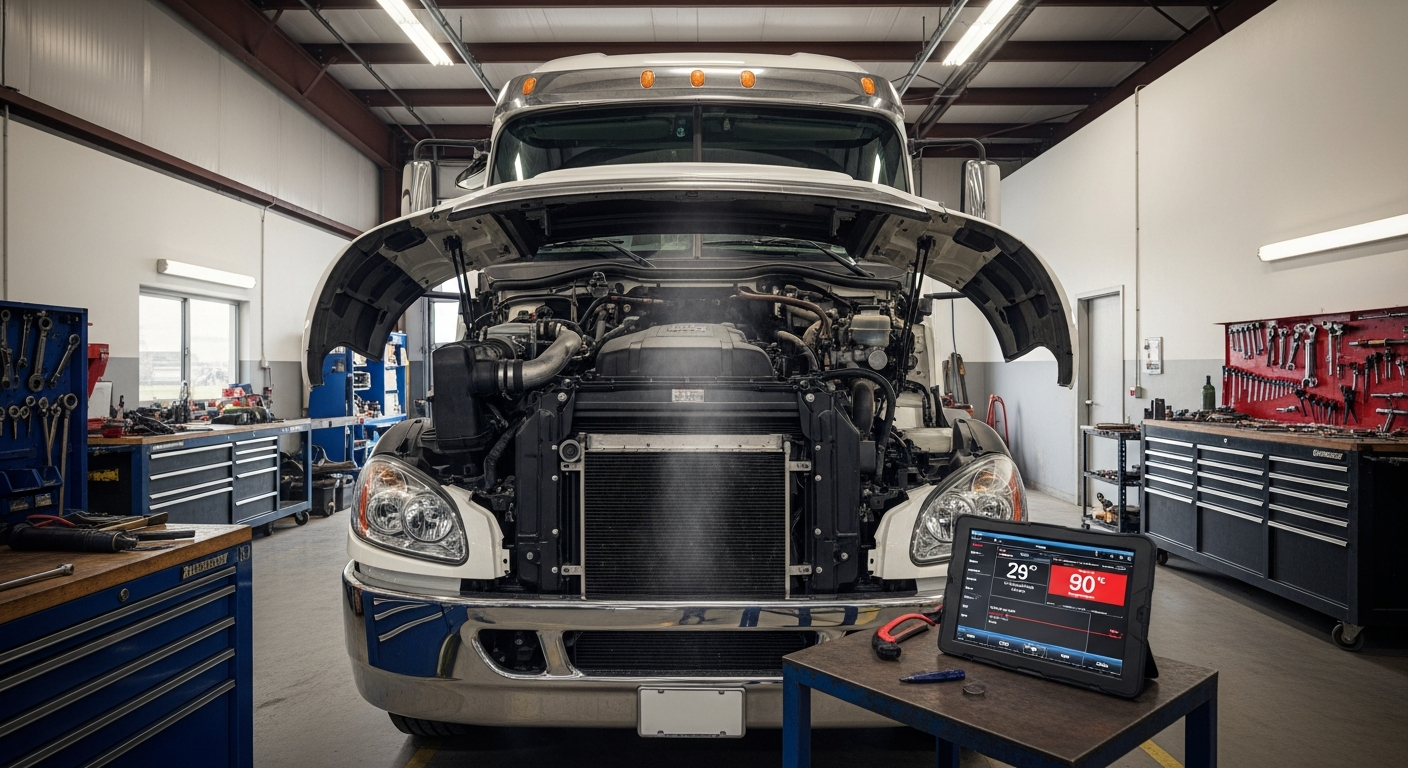
If your truck’s engine temperature is climbing, treat it like a real breakdown warning, not something to “watch for a while.” If the temperature gauge climbs into the red, the driver should safely pull over and shut the engine down before overheating causes head-gasket, piston, or turbo damage, as outlined in the CMV driver checklist.
For an owner-operator or fleet, overheating is not just a coolant problem. It can turn into roadside downtime, a missed load, a tow bill, and a much bigger engine repair if the truck keeps running hot. A truck that overheats once and gets ignored often comes back with warped parts, repeat coolant loss, or low-power complaints that cost a lot more to sort out later.
An overheating truck needs to be shut down early and diagnosed in order, not guessed at.
The hard part is that several different failures can cause the same symptom. A truck may run hot because it is low on coolant, because airflow is blocked, because the water pump is not moving coolant, or because another engine condition is adding heat faster than the cooling system can remove it. The right next step is to narrow it down fast before the engine gets hurt.
Engine overheating means the cooling system is not removing heat as fast as the engine is making it. That is the basic problem, but the root cause can be simple or serious.
One of the most common mistakes is assuming every overheating complaint is just “low coolant.” That can be part of it, but it is rarely the full story. A low coolant level, coolant leak, bad thermostat, failed water pump, or blocked radiator airflow can all prevent the cooling system from removing heat fast enough, which is why these are standard first checks for an overheating truck, as noted by common causes of engine overheating.
Drivers usually notice overheating in a few ways. The gauge creeps up on a pull, the fan seems to stay engaged longer, the truck starts pushing coolant, a warning light comes on, or the engine derates to protect itself. On some trucks, you may also see weak cab heat, coolant smell, steam, or wet spots around hoses, the surge tank, radiator, or water pump weep hole.
If the truck keeps getting hot only under load, think about airflow, fan operation, radiator restriction, or a cooling system that cannot keep up at highway power. If it starts overheating even at idle or in city traffic, the problem may be coolant circulation, fan clutch performance, low coolant, or a thermostat issue.
The first check is whether the truck can be operated safely at all. If it is already in the red or actively pushing coolant, shut it down and do not try to “limp it in” unless you want to risk engine damage.
After the engine cools enough to inspect safely, start with the obvious basics. The goal is not to tear the truck apart on the shoulder. The goal is to find signs that point you in the right direction.
Look at these items first:
Cooling system checks are not just good shop practice. 49 CFR 392.7 requires the driver to be satisfied the vehicle is in safe operating condition before driving, and that includes catching obvious cooling system problems during inspection.
A dirty or restricted radiator can reduce heat transfer and air movement through the cooling stack, so checking for bent fins, debris, and blocked airflow is a key diagnostic step when a truck starts running hot, according to blocked airflow guidance. This is common on trucks that run construction sites, gravel, mulch, or dirty yards. It is also common when oil and road grime build up in the cooling stack and trap dirt between the cores.
Do not skip the oil check. Overheating can also be caused by low oil level or poor oil circulation, because engine oil helps carry heat away from moving parts as well as reduce friction, as explained in failures caused by heat. If oil is low, overheated, or contaminated, the engine may be dealing with more than one problem at the same time.
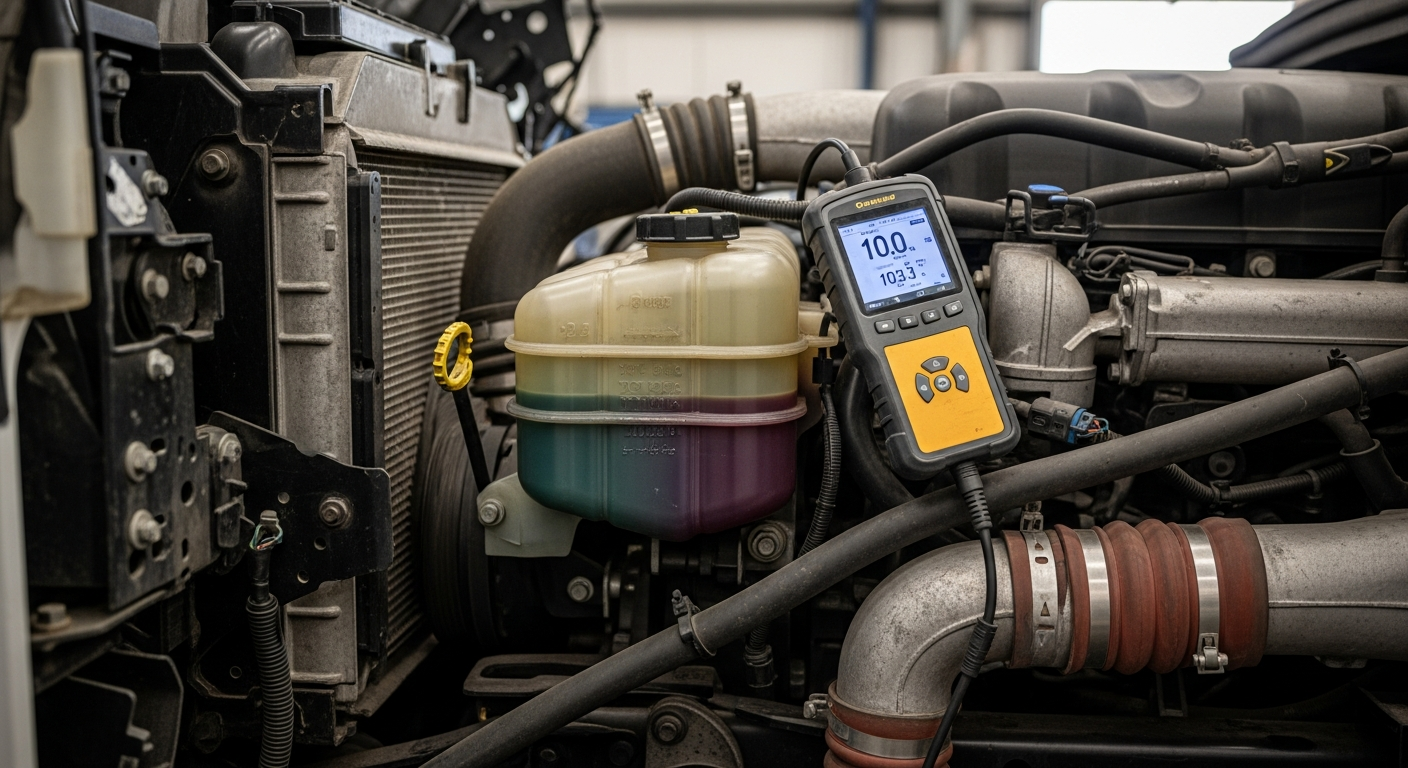
Good overheating diagnostics follow a process. Guessing gets expensive fast.
The first step is to verify the complaint. A shop will want to know whether the truck overheats at idle, in traffic, under load, only on hills, or all the time. That pattern matters because it points toward airflow problems, circulation problems, or internal engine issues.
From there, the basic diagnostic path usually includes:
That last part matters more than some drivers think. A bad sensor or wiring problem can make the dash reading wrong, but a true overheating event can also trigger protective engine logic. If live data shows unstable temperature readings, fan command problems, or a sensor fault, the issue may be electrical as much as mechanical.
A pressure test is one of the quickest ways to separate a leak problem from a circulation problem. If the system will not hold pressure, coolant is going somewhere. That could be an external leak you can see, or it could point toward an internal problem if there are no obvious wet spots. Internal failures are where repair costs rise fast, especially if the truck has already been driven hot more than once.
Keep driving it hot long enough and a manageable repair can turn into an engine job. That is the main decision point for most owners.
A truck that overheats once may need a hose, thermostat, coolant service, radiator cleaning, or water pump. A truck that is repeatedly driven hot can end up with a blown head gasket, cracked head, damaged pistons, cooked turbo, or bearing damage. The repair bill changes fast once metal parts start seeing too much heat.
There is also the business side of it. A truck that breaks down on the road can miss its delivery window, disrupt dispatch, and leave the driver stranded waiting on roadside help or a tow. If the same truck keeps overheating because the first repair only addressed the symptom, now you have repeat downtime on top of the original repair cost.
This is also why pre-trip inspection matters. Catching a low coolant level, damaged hose, or visible leak in the yard is a lot cheaper than losing a truck loaded on the shoulder in summer traffic.
Some overheating problems can be handled on-site. Others need full diagnostics in the shop.
Roadside repair may make sense if the problem is a visible hose leak, a loose clamp, minor coolant loss, or another straightforward failure that can be safely repaired and tested where the truck sits. But roadside work has limits. If the system needs a pressure test, cooling stack tear-down, fan diagnosis, thermostat replacement, water pump work, or engine data review, shop time is usually the smarter move.
If the truck has pushed coolant hard, overheated more than once, mixed oil and coolant, or gone into derate, do not assume topping it off fixed anything. That is where fleets lose money by sending the truck back out and getting the same breakdown again, only worse.
If your truck is running hot, losing coolant, or overheating under load, get it checked before it turns into head-gasket or engine damage. HDTR in Homer Glen, IL handles heavy-duty cooling system diagnostics and repair, and road service is available during business hours within 50 miles if the truck cannot make it in safely. If the problem cannot be fixed roadside, HDTR can help arrange tow-in and diagnose the full cause instead of just cooling it down and guessing.
You should not assume it is safe just because the gauge comes back down for a moment. Intermittent overheating often means a coolant loss, airflow restriction, fan problem, or thermostat issue that can come back under load. If it has already run hot, get it inspected before it turns into engine damage.
Start with coolant level, visible leaks, hose condition, and whether the radiator or cooling stack is plugged with dirt or debris. Also check engine oil level, because low oil can add heat and increase friction. If the truck is already in the red, shut it down before doing anything else.
Yes. Engine oil does more than lubricate parts; it also helps carry heat away from internal engine components. If oil is low or circulation is poor, the engine can run hotter and suffer damage faster.
It depends on the cause. A simple hose leak or clamp issue may be handled roadside, but repeated overheating, coolant loss with no visible leak, fan problems, or circulation issues usually need shop diagnostics. If the truck has overheated badly or gone into derate, a full inspection is the safer next step.

Heavy Duty Truck Repair is currently going through an exciting period of reorganization and relocation to a new facility. As we prepare for this…
Tomas Labinskis
Aug 24, 2026
Your truck can need body repair even when the obvious crash damage looks minor, because hidden structural movement often shows up in the way…
Tomas Labinskis
Jul 17, 2026
A warning light on a heavy-duty truck is not just a reminder on the dash. It is the truck telling you a system has…
Tomas Labinskis
Jul 14, 2026