Heavy Duty Truck Repair Is Moving to a New Location
Heavy Duty Truck Repair is currently going through an exciting period of reorganization and relocation to a new facility. As we prepare for this…
 Tomas Labinskis
Aug 24, 2026
Heavy Duty Truck Repair is Temporarily Closed While We Get Settled Into Our New Space. Read more

Homer Glen, IL
Tomas Labinskis
Jun 4, 2026
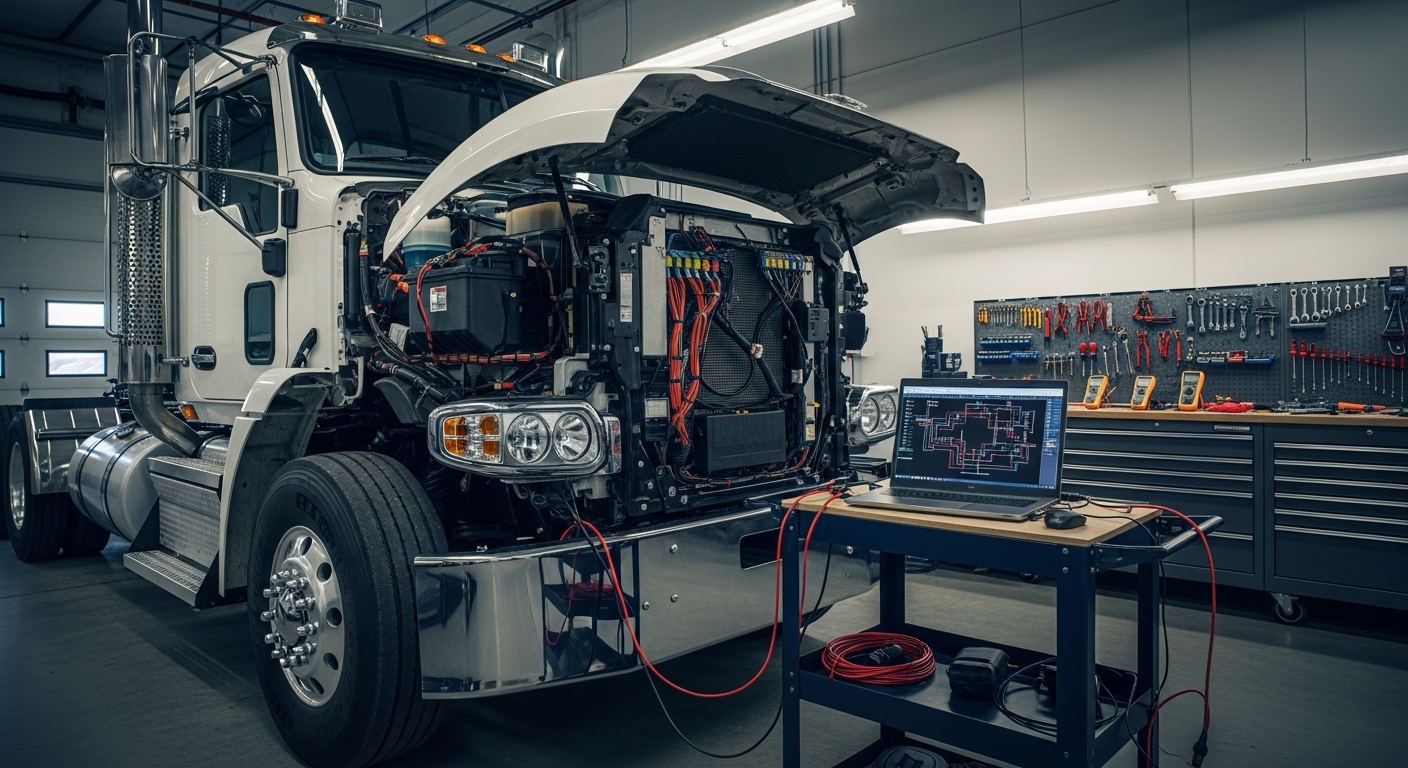
Electrical system failures in a heavy-duty truck need professional help when the problem is intermittent, affects multiple systems, keeps blowing fuses, causes a no-start, or cannot be traced to one obvious bad battery, cable, or connection. A lot of truck electrical problems get worse because the first response is guessing, swapping parts, or clearing a fault code without finding the real voltage drop, short, ground issue, or module problem.
For an owner-operator or fleet, this is not just an inconvenience. Electrical trouble can create roadside downtime, missed loads, no-start mornings, failed trailer light checks, repeat breakdowns, and repair bills that climb because good parts were replaced for no reason. It can also turn into a DOT problem if lights, ABS, or other safety-related systems are affected.
Most repeat electrical failures happen because the truck was treated like it had one bad part when it really had a wiring, power supply, charging, or communication problem.
The most common mistake is treating every electrical complaint like a battery or alternator issue. Sometimes it is that simple, but a weak ground, damaged harness, corroded fuse box connection, rubbed-through trailer wiring, or bad ignition feed can create the same symptoms.
Another mistake is chasing the first symptom instead of the full pattern. If the truck cranks slow, the dash resets, and the trailer lights act up, that points toward system voltage or connection problems. If the engine runs fine but warning lamps, gauges, or aftertreatment faults come and go, that may be a power distribution or data communication issue.
Parts swapping is where money gets wasted. It is common to see batteries replaced, then an alternator, then a starter, and the truck still has the same problem because nobody checked voltage drop across the cables, load-tested the batteries, or inspected the grounds from frame to engine and cab.
Clearing codes too early is another bad move. A fault code is not a full diagnosis. It is a clue. If you erase it before checking freeze-frame data, active conditions, and related circuits, you can lose the evidence that points to the real cause.
Electrical failures also fool people because heat, vibration, and moisture make them intermittent. The truck may start fine in the yard, then die on the road after the harness moves, the cab tilts, or water reaches a connector.
If one simple item is clearly bad, you may not need deep diagnostics right away. But once several systems are involved, guessing usually costs more than proper testing.
These are the signs that tell a driver or fleet manager it is time for a real electrical diagnosis:
At that point, the issue is usually not about one visible broken part. It is about tracing where voltage is lost, where resistance is too high, where a ground path is weak, or where a harness is shorting under movement.
That matters because electrical issues do not stay in one lane. A bad power or ground feed can look like an engine problem, an aftertreatment problem, a starting problem, or a lighting problem depending on which circuit is being affected that day.
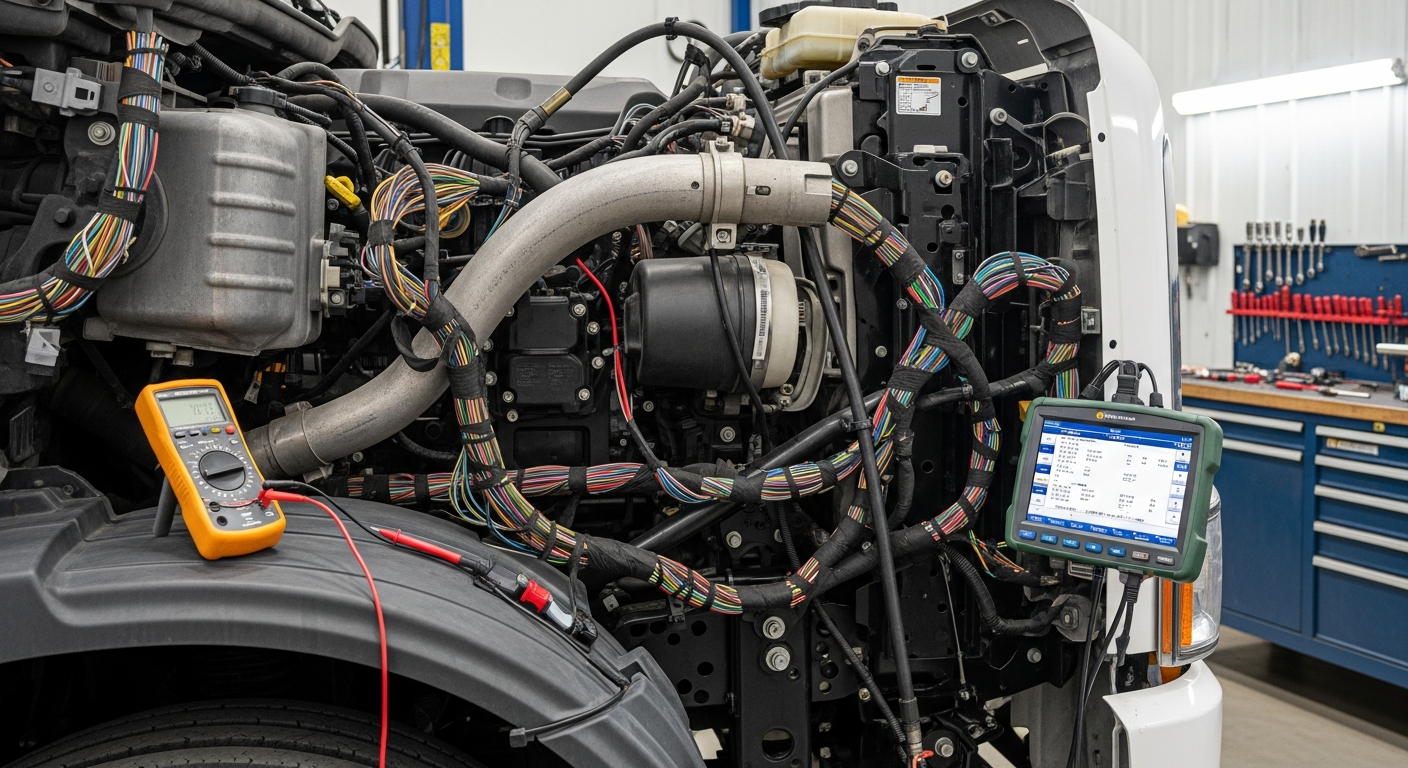
Drivers and fleet managers can do a few smart checks before sending the truck out for diagnostics. The key is to inspect, not guess.
Start with the batteries. Look for loose terminals, corrosion, swollen cases, bad hold-downs, and mismatched battery condition. A battery cable that looks fine from the top may be corroded inside the terminal or under the insulation.
Then check the main grounds. Heavy-duty trucks depend on solid ground paths between battery, frame, engine, cab, and sleeper. A loose or rusted ground strap can create slow crank, no-start, sensor faults, and weird dash behavior all at once.
Inspect for harness damage where trucks normally rub through wiring:
If the complaint involves trailer lights, do not assume the trailer is always the cause. Check the tractor-side connector for spread pins, corrosion, heat damage, broken mounting, and wiring repairs that were twisted together instead of properly sealed.
What you should not do is start bypassing circuits with jumper wires, oversize a fuse, or keep resetting breakers to “get through one more load.” That can turn a small wiring repair into a burned harness or module failure.
Professional diagnostics make sense when the failure is hidden, repeatable only under certain conditions, or tied into multiple systems. That is where proper test equipment and a wiring diagram save time.
A real electrical diagnosis usually includes battery and charging system testing under load, voltage drop testing on positive and ground sides, fuse and relay checks, connector inspection, continuity checks, and live data review if modules are involved. If the issue is intermittent, the tech may need to wiggle-test harness sections, load the circuit, or test it hot after the truck has been running.
This is especially important on newer trucks. A no-start can be caused by low cranking voltage, but it can also come from a module wake-up problem, bad ignition power feed, datalink problem, starter control issue, or anti-theft and body controller fault. Replacing the starter because the truck clicks once is not a diagnosis.
The same goes for warning lights. A sensor fault does not always mean the sensor failed. The real issue could be low reference voltage, poor ground, water intrusion at the connector, damaged pins, or resistance in the harness.
If the truck has already had one repair attempt and the problem came back, that is another strong sign to stop guessing. Repeat electrical failures usually mean the root cause was missed the first time.
Electrical problems are cheaper to fix when they are still small. A rubbed harness section, loose ground, or corroded power stud is one thing. A truck that keeps being driven with unstable voltage can end up with burned wiring, failed modules, damaged alternator output wiring, shutdown events, and tow bills.
There is also the hidden cost of lost confidence in the truck. If a driver cannot trust the lights, charging system, or starting system, that truck stops being dependable. Fleets feel it in schedule disruption. Owner-operators feel it in missed revenue and repeat downtime.
Waiting can also create inspection risk. A truck with lighting issues, ABS warnings, or charging problems may make it back to the yard today, but it can still fail the next roadside check or pre-trip if the fault shows up at the wrong time.
The practical decision is simple: if the problem is isolated and obvious, inspect it carefully. If it is intermittent, repeated, or affecting multiple circuits, get it diagnosed before the truck strands a driver or burns more money in swapped parts.
If your truck has a no-start, charging problem, recurring blown fuse, trailer light fault, or electrical issue that keeps coming back, get it checked before it turns into a roadside breakdown. Heavy Duty Truck Repair handles truck electrical repair in Homer Glen, IL, including diagnostics for wiring, charging, starting, and lighting problems. Road service is available during business hours within 50 miles when the issue can be handled on-site. If the truck needs deeper shop testing, Heavy Duty Truck Repair can help get it diagnosed and fixed the right way.
If the truck still has the same no-start, dim light, or reset issue after the batteries test good or were recently replaced, you may be dealing with cable resistance, a bad ground, or a wiring fault. Battery problems are only one part of the system. Voltage drop testing usually tells the difference faster than swapping more parts.
You can, but it is risky. Intermittent electrical faults often get worse with vibration, heat, or moisture, and they can leave the truck stranded with no warning. If the issue affects starting, charging, lights, ABS, or engine controls, it should be diagnosed before the truck goes back out.
A fuse usually blows because the circuit is drawing too much current or shorting to ground. Replacing the fuse without finding the cause does not fix anything. Common causes include rubbed-through wiring, water in connectors, failed components, or bad repairs in the harness.
Not by itself. Fault codes help point a technician in the right direction, but many electrical issues require hands-on testing with a meter, load testing, voltage drop checks, and harness inspection. A code may show the affected circuit, but it does not always identify the failed part.

Heavy Duty Truck Repair is currently going through an exciting period of reorganization and relocation to a new facility. As we prepare for this…
Tomas Labinskis
Aug 24, 2026
Your truck can need body repair even when the obvious crash damage looks minor, because hidden structural movement often shows up in the way…
Tomas Labinskis
Jul 17, 2026
A warning light on a heavy-duty truck is not just a reminder on the dash. It is the truck telling you a system has…
Tomas Labinskis
Jul 14, 2026